mychesco.com
Cure8 news brief
FDA Approves TREMFYA® for Crohn's Disease, Offering New Treatment Options
Medications
Guselkumab
IL-23 inhibitor
Regulatory Update
Adult patients
Patients On Biologics
Clinicians
Researchers
Cure8 news brief
This FDA approval adds another biologic option (an IL-23 inhibitor) for adults with moderate-to-severe Crohn’s disease, including both self-administered subcutaneous dosing and an IV induction route. New options may matter for people who haven’t responded to or tolerated existing therapies.
Adults with moderately to severely active Crohn’s disease, patients who have not responded to other biologics or conventional therapies, clinicians treating IBD, and researchers tracking IBD drug development and comparative effectiveness.
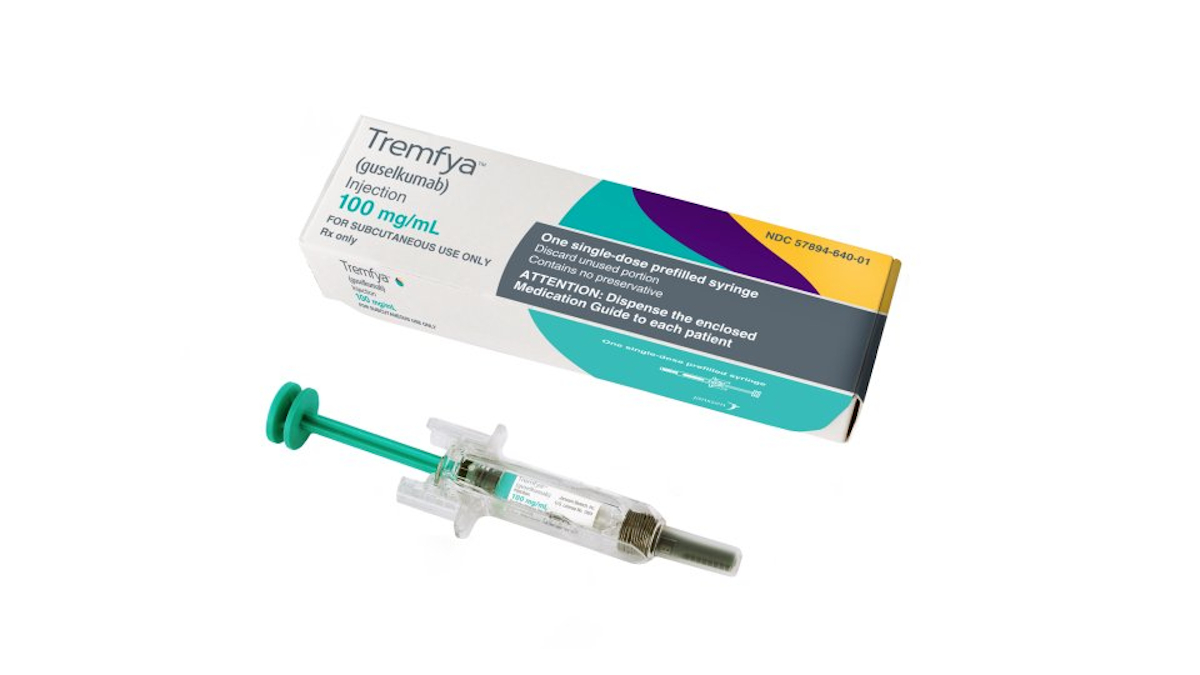
FDA approved TREMFYA (guselkumab) for adults with moderately to severely active Crohn’s disease. The article highlights that TREMFYA is an interleukin-23 (IL-23) inhibitor and notes it is the first IL-23 drug for Crohn’s with both subcutaneous (SC) and intravenous (IV) induction options.
Dosing details reported: SC induction 400 mg at Weeks 0, 4, and 8 with maintenance 100 mg every 8 weeks or 200 mg every 4 weeks as needed; an IV induction option is also available.
The approval is said to be supported by Phase 3 trial data (GRAVITI and GALAXI) including >1,300 patients and comparisons versus STELARA were mentioned for key endoscopic endpoints. The article also references a company patient-support program (TREMFYA® withMe) to help access.
This is a regulatory/news announcement summarizing the approval and company comments; it does not provide full trial data or safety details.
If you are considering treatment options, discuss with your gastroenterologist whether an IL-23 inhibitor like guselkumab could be appropriate, and ask about the evidence, administration routes (SC vs IV), dosing, safety, insurance coverage, and access support.
This article is a news report of an FDA approval and summarizes company and investigator statements plus high-level Phase 3 trial references. It does not include detailed efficacy or safety data, head-to-head trial methodology, or prescribing information beyond the dosing schedule mentioned.
Talk with a clinician for individualized interpretation and to review full prescribing and trial information.
Review the original publication for the complete reporting, methods, and context.
This Cure8 brief is based on source text from the linked article. Cure8 is informational only and is not a substitute for professional medical advice, diagnosis, or treatment.
A newly FDA‑approved IL‑23 drug for Crohn’s may increase treatment options for people with IBD, including an IV and a subcutaneous formulation. The approval could affect switching decisions for patients not responding to...
A new FDA approval means another IL-23 option is formally available for people with moderately to severely active Crohn’s disease, including patients whose disease did not respond to other therapies. This could affect...
A newly FDA-approved biologic (guselkumab/Tremfya) offers another treatment option for adults with moderate to severe Crohn’s disease, including both IV and SC induction choices. This could matter for patients who have...