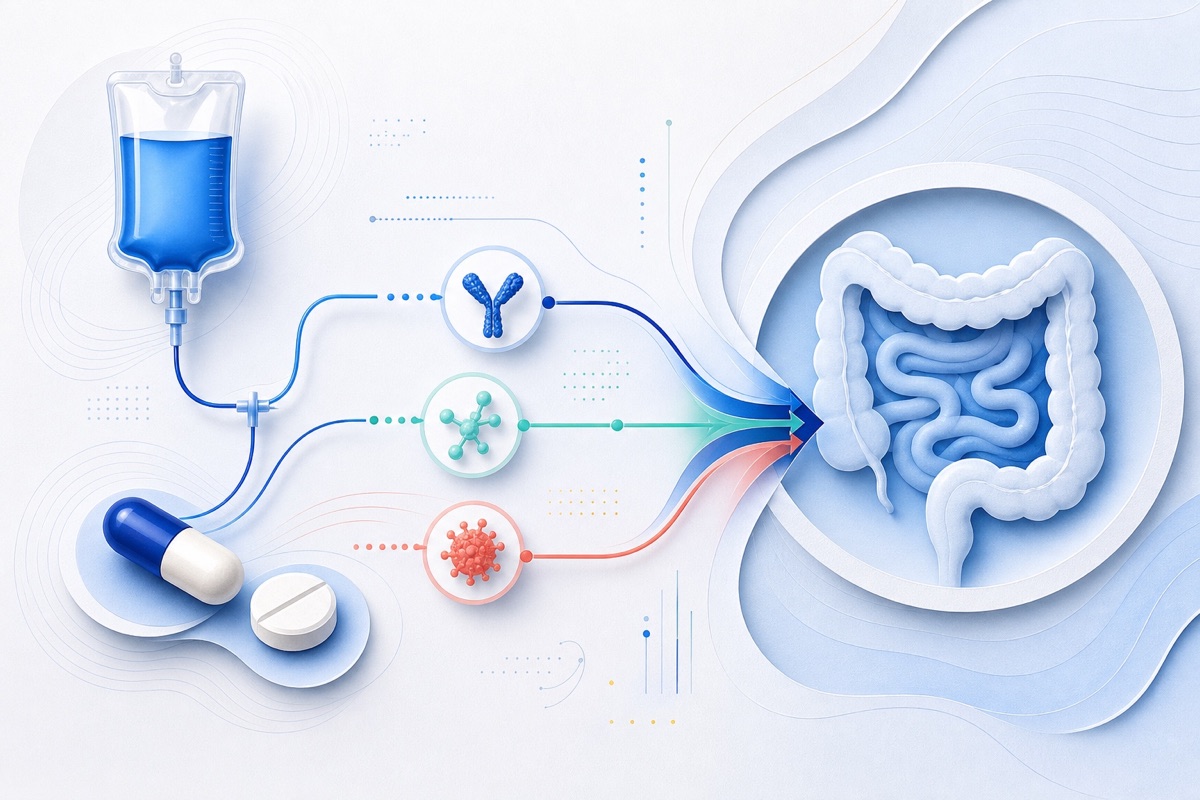
Johnson & Johnson investigational co-antibody therapy JNJ-4804 shows potential to raise the bar for clinical efficacy in treating refractory inflammatory bowel disease
This reports Phase 2b results for a new investigational biologic (JNJ-4804) that targets both IL-23 and TNF and showed higher clinical and endoscopic responses in patients with refractory UC and CD — a group with few effective options.
If confirmed in Phase 3, it could offer a new option for people who haven’t responded to multiple therapies.
Who Should Pay Attention
Adults with moderate-to-severe UC or Crohn's disease who have failed multiple biologics or other systemic therapies; clinicians treating refractory IBD; researchers and patients following new biologic developments.
Study Snapshot
Story typeResearch news
Evidence typePhase 2 clinical trial
Source depthFull source text
What To Know
Johnson & Johnson presented Phase 2b DUET study results for JNJ-4804, an investigational co-antibody that simultaneously targets IL-23 and TNF, showing higher clinical and endoscopic response rates at Week 48 versus golimumab and numerically versus guselkumab in both UC and CD populations described as highly refractory.
The company plans Phase 3 DUET ENCORE trials based on these data. The article frames JNJ-4804 as a fixed-dose “co-antibody” designed for molecular synergy by blocking complementary inflammatory pathways (IL-23 and TNF).
Safety was reported as generally consistent with known profiles of the component monotherapies; the report highlights the potential for this approach in patients who have failed multiple systemic therapy classes. If you follow IBD treatment development, this is an example of a combination-targeting biologic moving from Phase 2b toward Phase 3.
The article is a press-style report summarizing company-presented data at Digestive Disease Week (DDW) 2026 rather than a peer-reviewed paper; it emphasizes improvements in a highly refractory subgroup.
Read the original source or conference abstracts for detailed methods, exact patient counts, statistical analyses, and full safety data before drawing conclusions about clinical impact.
Keep In Mind
This is a company press release-style summary of Phase 2b data presented at DDW 2026. Press releases can highlight favorable results; the full conference abstracts or peer-reviewed publications are needed to assess study design, subgroup definitions, statistical significance, and comprehensive safety.
No immediate changes to care are implied until Phase 3 results and regulatory review.
Source Details
Review the original publication for the complete reporting, methods, and context.
Phase 2 clinical trialArticle type assigned from Cure8 classification; confirm details in the original source.
Publicationfinanznachrichten.de
Indexed viaBing News
Source typeResearch news
PublishedMay 5, 2026, 5:05 AM
Content availableFull source text
This Cure8 brief is based on source text from the linked article. Cure8 is informational only and is not a substitute for professional medical advice, diagnosis, or treatment.
If approved, Tremfya SC induction could provide a fully subcutaneous induction and maintenance option for people with moderately to severely active ulcerative colitis, which may be more convenient than IV induction.
A new FDA approval expands treatment options for adults with moderately to severely active Crohn’s disease, including a fully subcutaneous IL-23 inhibitor regimen that could offer more flexibility. The approval was based...
A CHMP recommendation is a major regulatory step toward EU approval — that could mean a new biologic option (guselkumab/Tremfya) for adults with moderate–severe Crohn’s disease, including people who haven’t responded to...