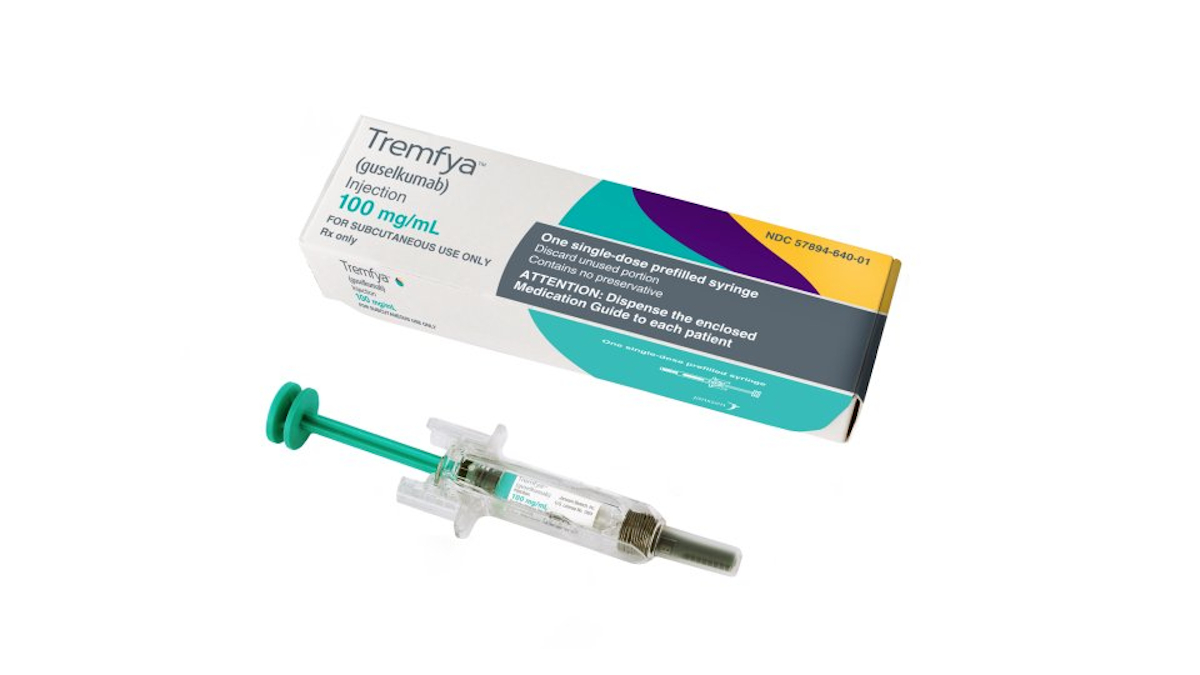
A newly FDA-approved option (Tremfya/guselkumab) may offer more flexible dosing that could affect how people with moderate-to-severe Crohn’s start biologic treatment.
The approval includes head-to-head trial data versus an established therapy (Stelara), which may influence treatment choices and insurance coverage over time.
Who Should Pay Attention
Adults with moderate-to-severe Crohn’s disease, patients currently on or considering biologic therapy, gastroenterologists, IBD clinical teams, and researchers tracking comparative biologic effectiveness.
Study Snapshot
Story typeResearch news
Evidence typeRegulatory update
Source depthFull source text
What To Know
Tremfya is now an FDA-approved treatment option for moderate-to-severe Crohn’s disease and is notable for providing a fully subcutaneous induction regimen as well as IV induction.
The report highlights pooled phase 3 findings that the subcutaneous regimen showed higher rates of endoscopic and clinical endpoints versus placebo and that pooled analyses found statistical superiority versus ustekinumab on several endoscopic outcomes.
Practical points: The fully subcutaneous induction option may make starting and managing therapy easier for some patients and clinics compared with IV induction followed by subcutaneous maintenance.
The article draws on a Johnson & Johnson press release and includes expert perspective noting the potential for Tremfya to compete with or supplant existing therapies.
Limitations: This is a news summary of trial results and a company press release; it does not provide full study datasets, long-term safety beyond trial reports, or independent peer-reviewed analysis. Discuss treatment decisions with your gastroenterology team.
Keep In Mind
The article reports on FDA approval and company-reported phase 3 trial results (GRAVITI, GALAXI 2/3) including pooled analyses versus ustekinumab; it cites a Johnson & Johnson press release and expert commentary.
As a news piece, it summarizes results rather than presenting full trial data or independent peer-reviewed publications; no immediate treatment changes should be made without clinician consultation.
Source Details
Review the original publication for the complete reporting, methods, and context.
This Cure8 brief is based on source text from the linked article. Cure8 is informational only and is not a substitute for professional medical advice, diagnosis, or treatment.
A newly FDA‑approved IL‑23 drug for Crohn’s may increase treatment options for people with IBD, including an IV and a subcutaneous formulation. The approval could affect switching decisions for patients not responding to...
A new FDA approval means another biologic option for people with moderately to severely active Crohn’s disease, including patients who have failed or not tolerated prior therapies.
A new FDA approval means another IL-23 option is formally available for people with moderately to severely active Crohn’s disease, including patients whose disease did not respond to other therapies. This could affect...