The study provides real-world data on ozanimod effectiveness, safety, and how prior biologic exposure (notably vedolizumab) may affect treatment persistence—information relevant for treatment planning in UC.
Who Should Pay Attention
Adult patients with ulcerative colitis, clinicians treating UC, and patients considering or already on advanced therapies after biologic exposure.
Study Snapshot
Story typeResearch paper
Evidence typeResearch paper
Source depthJournal abstract
What To Know
This study pooled data on 79 adult UC patients treated with ozanimod and assessed clinical response (partial Mayo score), endoscopic improvement/remission, biochemical markers, safety, and treatment persistence at weeks 12 and 48.
Reported week-12 clinical response and remission were high among those with available assessments; endoscopic remission was less common. When discontinuations for lack of efficacy were counted as failures, effectiveness rates were substantially lower. Prior exposure to vedolizumab was associated with higher risk of stopping ozanimod during follow-up.
Adverse events were reported in about 14% of patients.
Keep In Mind
Retrospective design, modest sample size, and missing follow-up data mean results should be interpreted cautiously. The provided content is based on the article abstract.
Source Details
Review the original publication for the complete reporting, methods, and context.
This Cure8 brief is based on source text from the linked article. Cure8 is informational only and is not a substitute for professional medical advice, diagnosis, or treatment.
Patients with UC who fail both anti-TNF and JAK inhibitor therapies have limited options. This report suggests tacrolimus can be used as a short-term bridge or in combination to reach another maintenance drug, with many...
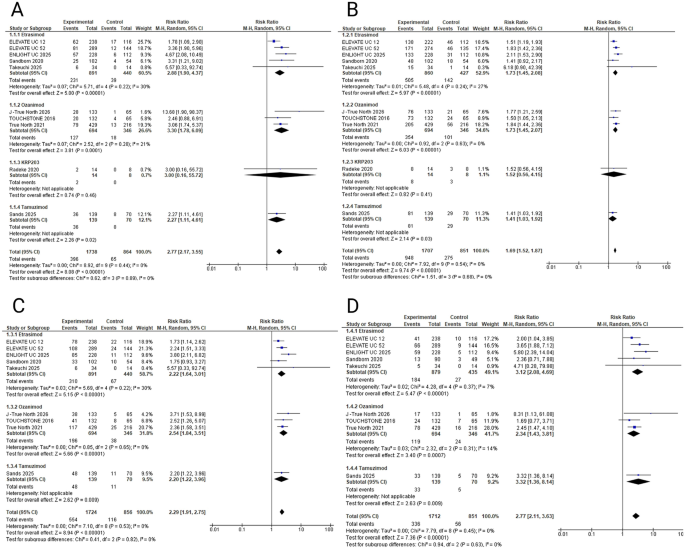
S1P receptor modulators are an emerging oral class of advanced therapy for moderate-to-severe ulcerative colitis; a systematic review that pools multiple RCTs helps clarify how effective and safe the class appears to be...
This study compares many targeted IBD drugs indirectly to help clarify how subcutaneous vedolizumab stacks up against other biologics and newer oral therapies — information that could inform treatment discussions for...