Cancers
Cure8 research brief
Advanced Therapies for the Management of Immune Checkpoint Inhibitor-Induced Colitis
Medications
Biomarkers
Drug Discovery
Biomarker
Systematic Review or Meta Analysis
Inflammatory bowel disease
Cure8 research brief
Patients receiving immune checkpoint inhibitors can develop ICI‑induced colitis that resembles IBD and may not respond to steroids. This review discusses advanced biologic and targeted therapies used when steroids fail, which directly affects management and quality of life.
The evidence base is limited and mostly retrospective, so findings guide but do not definitively establish best treatment sequences or long‑term safety.
Oncologists, gastroenterologists, clinicians treating ICI toxicities, researchers in immune‑related adverse events, and patients receiving ICIs or biologic therapy for steroid‑refractory colitis.
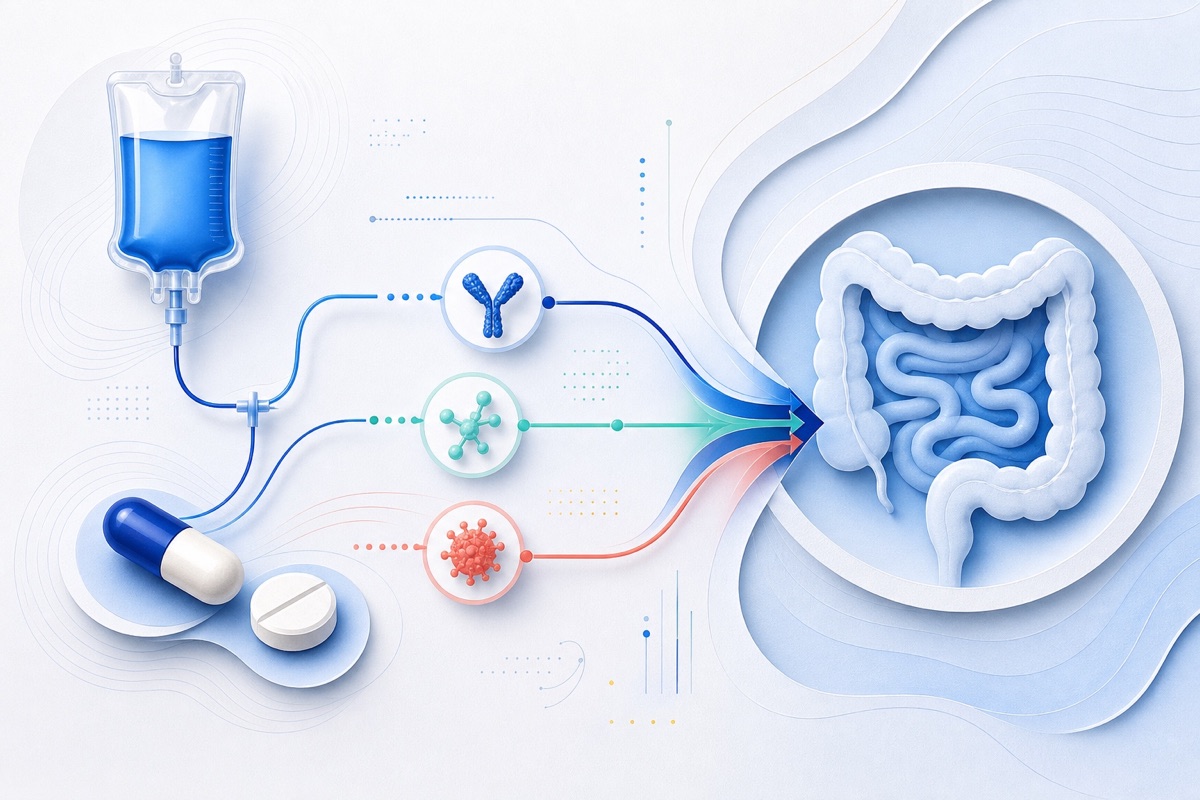
The article reports that corticosteroids are first-line for ICI‑colitis but a substantial minority are steroid-refractory. Infliximab (anti‑TNF) and vedolizumab (anti‑integrin) are highlighted as effective salvage therapies, with infliximab linked to faster symptom control and vedolizumab to steroid‑sparing benefit.
For multi‑refractory cases, limited evidence from small series supports agents including ustekinumab and tofacitinib; however, data are sparse and mainly retrospective. The review emphasizes that most evidence is retrospective and that prospective randomized trials are needed, especially studies that measure both cancer outcomes and GI endpoints.
It also notes interest in biomarker and mechanistic research to guide therapy selection.
Structured-content depth for this source is abstract-level; the review synthesizes mostly retrospective studies and case series. Prospective randomized data and biomarker‑driven guidance are still lacking. Interpret conclusions accordingly.
Review the original publication for the complete reporting, methods, and context.
This Cure8 brief is based on source text from the linked article. Cure8 is informational only and is not a substitute for professional medical advice, diagnosis, or treatment.
If true, using infliximab drug-level modeling plus routine blood tests could help predict who has mucosal healing without immediate endoscopy, potentially reducing invasive procedures and improving monitoring for people...
Many people with IBD also have overweight or obesity; GLP-1 receptor agonists are being used for weight loss and may affect inflammation and IBD outcomes. This review summarizes current evidence on safety, effectiveness,...
The study identifies specific induction exposure targets and biomarkers tied to higher chances of deep remission at 12 months in children on anti-TNF therapy, which could inform earlier dose optimization to improve...