medscape.com
Cure8 news brief
Cure8 news brief
Researchers and clinicians are increasingly studying combinations of IBD drugs because single‑drug remission rates have plateaued; dual therapy may improve outcomes for patients who have failed prior treatments.
The article summarizes trial evidence and clinical thinking about who might benefit and safety considerations.
Adults with Crohn's disease, patients on biologics or small molecules, gastroenterology clinicians, and IBD researchers interested in combination/dual therapy strategies.
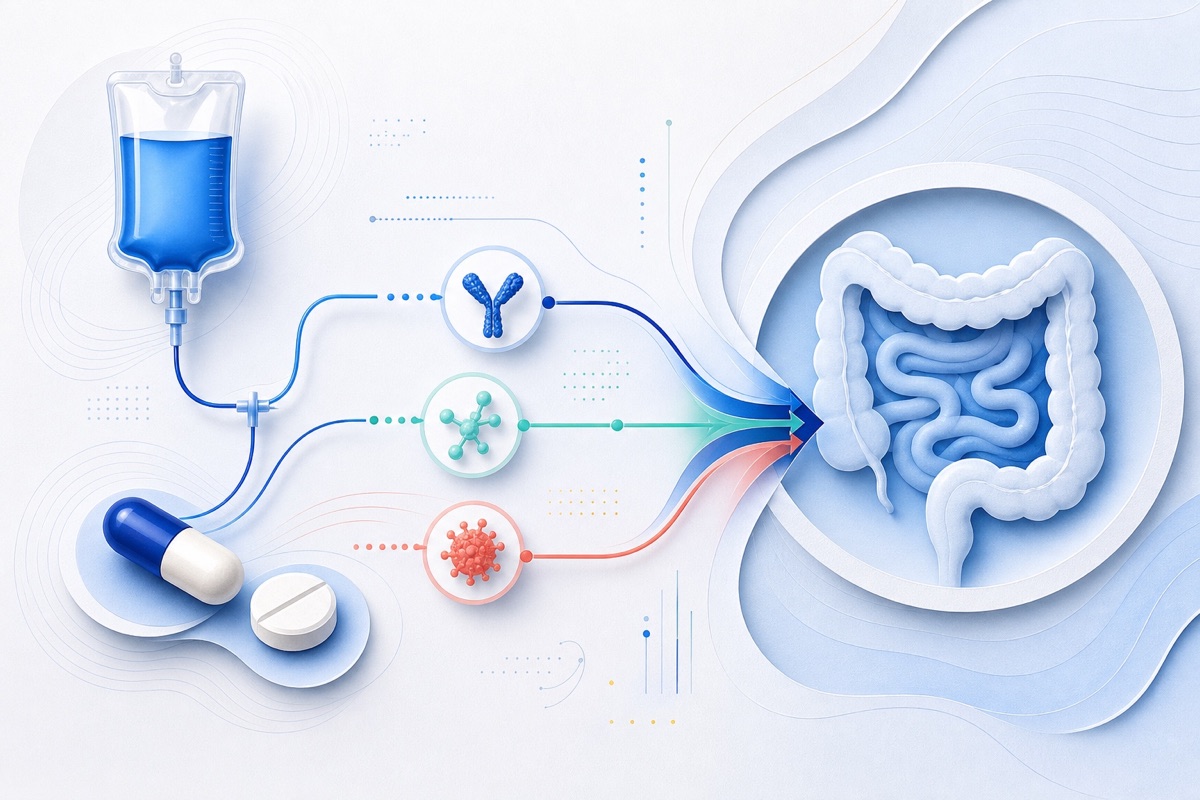
This Medscape feature reviews evidence and clinical perspectives on using dual or "combination" therapy for Crohn's disease — meaning either a conventional immunomodulator plus a biologic, or two advanced agents together.
It summarizes key trials (SONIC, EXPLORER, DUET series, DUET ENCORE, VICTRIVA) and discusses which patients might benefit, efficacy signals, and safety observations from trials and ongoing studies.
The article highlights that combination therapy strategies range from thiopurine or methotrexate plus an anti‑TNF to dual biologic or biologic plus small‑molecule regimens under investigation.
It notes randomized and open‑label trial data are growing but that many trials are ongoing and that safety signals so far have not shown major new risks compared with monotherapy in the studies discussed.
If you’re reading this because you or a family member are considering more intensive therapy, discuss trial evidence, prior treatment history, and infection/immunization status with your IBD clinician; combinations are still an evolving area and are often considered for patients who are refractory to prior therapies.
The piece is a clinical review/opinion-style article summarizing published and ongoing trials (some phase 3 programs referenced). Many combination approaches remain investigational; ongoing randomized trials will better define efficacy and safety. This is not treatment advice — decisions should be individualized and made with a clinician.
Review the original publication for the complete reporting, methods, and context.
This Cure8 brief is based on source text from the linked article. Cure8 is informational only and is not a substitute for professional medical advice, diagnosis, or treatment.
Combination (dual) therapy is an active area of research because many people with Crohn’s disease don’t achieve lasting remission on a single advanced therapy. New trials suggest some combinations may improve remission...
This video quickly outlines the range of medical treatments now available for Crohn’s disease, including newer approvals. Knowing drug classes and recent options can help patients and clinicians discuss treatment plans...
This trial is testing whether adding vedolizumab after autologous stem cell transplant can improve remission rates for people with severe Crohn's disease that has failed multiple therapies.