The study suggests B cells can protect against colitis through secretory IgA that reshapes the gut microbiota, a mechanism separate from known regulatory B cell cytokines. This could point to new directions for IBD research into immune–microbiome interactions and potential biomarkers or therapies.
Who Should Pay Attention
Researchers in IBD and mucosal immunology; microbiome scientists; clinicians interested in IBD pathogenesis and translational research.
Study Snapshot
Story typeResearch paper
Evidence typeResearch paper
Source depthJournal abstract
What To Know
This is a preclinical mechanistic study in mice (T cell transfer colitis model). The work suggests a B cell–mediated, IgA-dependent pathway that modulates microbiota composition and reduces inflammation in this model. The findings point to an alternate, Breg-cytokine–independent regulatory role for IgA-producing B lineage cells.
These results do not directly translate to patient care; they identify mechanisms that could guide future translational research (biomarkers or microbiome-targeted therapies) but do not imply immediate clinical interventions.
Keep In Mind
Findings come from a mouse T cell transfer colitis model and are reported at the abstract/full-text level in a research journal. These are mechanistic preclinical results and do not demonstrate clinical benefit in humans.
Source Details
Review the original publication for the complete reporting, methods, and context.
Funding disclosed by the source: National Institute of Diabetes and Digestive and Kidney Diseases, award R01DK132242; National Institute of Diabetes and Digestive and Kidney Diseases, award R01DK131532; National Institute of Diabetes and Digestive and Kidney Diseases, award K26DK138378; National Institute of Diabetes and Digestive and Kidney Diseases, award P30DK120515; Veterans Administration Merit, award BLRD-I01BX005951
This Cure8 brief is based on source text from the linked article. Cure8 is informational only and is not a substitute for professional medical advice, diagnosis, or treatment.
The work links a PD risk gene (LRRK2 G2019S) to increased intestinal NET formation and enteric α-synuclein in mouse colitis, suggesting a neutrophil-mediated inflammatory route by which gut inflammation and microbiota...
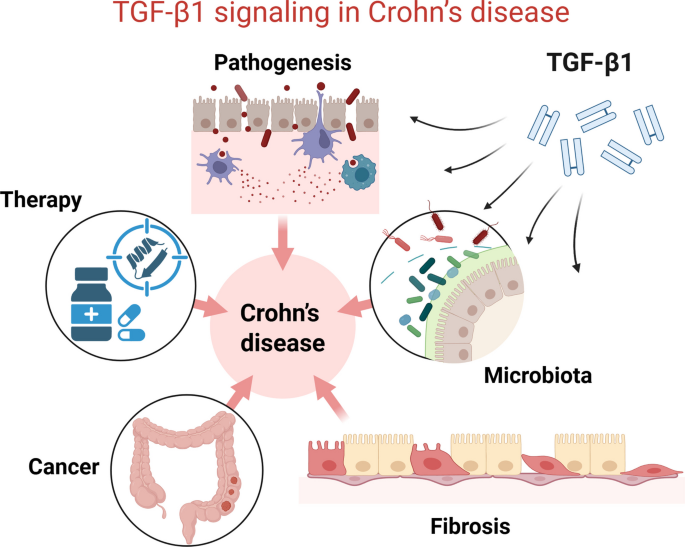
TGF-β1 is a central regulator implicated in inflammation control, development of fibrosis, and possible cancer progression in Crohn’s disease; advances in this area could inform future treatments or biomarker...
The article connects psoriasis and Crohn's disease through shared immune pathways and the gut-skin axis, which may matter because people with one condition could have signs or risks related to the other. It emphasizes...