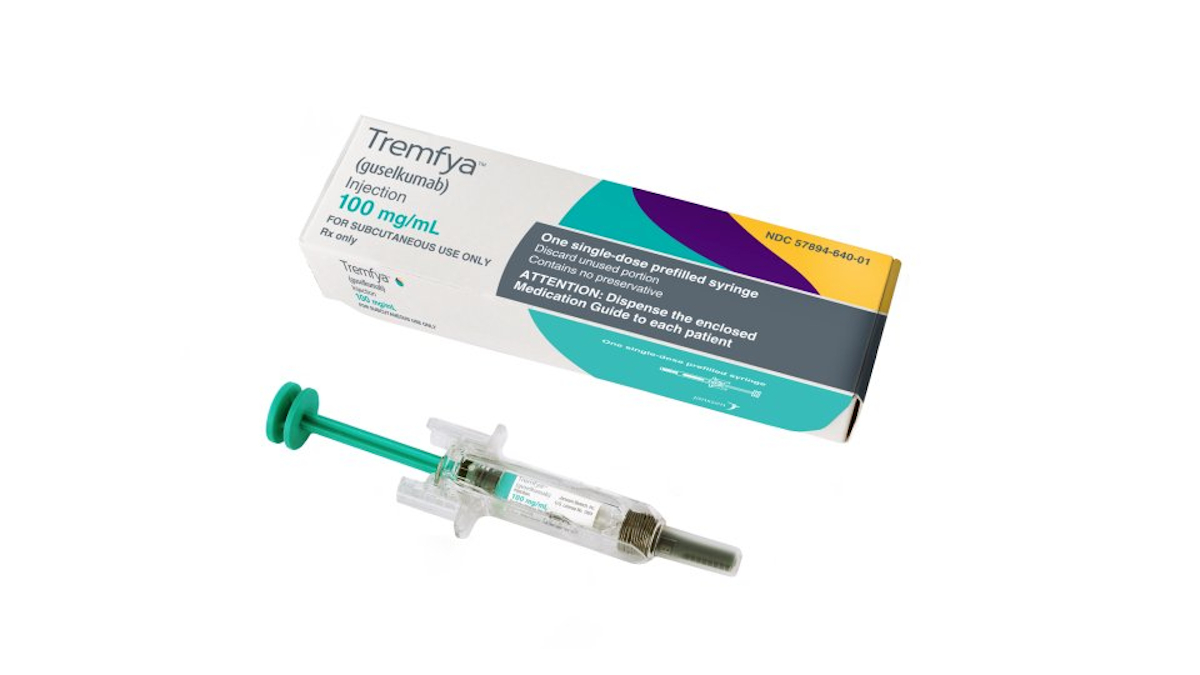
An FDA approval means TREMFYA is now an additional, officially authorized treatment option for adults with moderately to severely active Crohn's disease. The drug offers both IV and SC induction choices and established maintenance regimens, which may affect treatment planning and insurance coverage.
Who Should Pay Attention
Adults with moderately to severely active Crohn's disease, patients considering or on biologic therapy, gastroenterologists and IBD care teams, and payers/insurance coordinators.
Study Snapshot
Story typeResearch news
Evidence typeRegulatory update
Source depthFull source text
What To Know
TREMFYA (guselkumab) is an IL-23 inhibitor and is described here as a fully human monoclonal antibody that also binds CD64. The approval gives clinicians and patients an additional FDA‑approved treatment option for moderately to severely active Crohn's disease, with both IV and SC induction pathways and different maintenance dosing schedules.
The article is a news release-style summary and does not report clinical trial data, safety details, or comparative effectiveness. Practical points: If you or a clinician are considering new or additional treatment options, discuss how TREMFYA’s dosing routes and schedules might fit with prior therapies, safety monitoring, and insurance coverage.
This article does not replace prescribing information; for dosing specifics and safety, consult the full prescribing information and your healthcare team. The piece is a company/financial-newswire-style report summarizing the FDA decision rather than a detailed clinical analysis.
Keep In Mind
This is a regulatory news announcement summarizing the approval and dosing recommendations; it does not provide new clinical-trial outcome data, safety analyses, or comparative effectiveness. Patients should consult prescribing information and clinicians for individualized decisions. The article is a newswire-style release from RTTNews published on Nasdaq.
Source Details
Review the original publication for the complete reporting, methods, and context.
Regulatory updateArticle type assigned from Cure8 classification; confirm details in the original source.
Publicationnasdaq.com
Indexed viaGoogle News
Source typeResearch news
PublishedMar 21, 2025, 3:24 AM
Content availableFull source text
This Cure8 brief is based on source text from the linked article. Cure8 is informational only and is not a substitute for professional medical advice, diagnosis, or treatment.
A newly FDA-approved biologic (guselkumab/Tremfya) offers another treatment option for adults with moderate to severe Crohn’s disease, including both IV and SC induction choices. This could matter for patients who have...
A newly FDA‑approved IL‑23 drug for Crohn’s may increase treatment options for people with IBD, including an IV and a subcutaneous formulation. The approval could affect switching decisions for patients not responding to...
A new FDA approval means another IL-23 option is formally available for people with moderately to severely active Crohn’s disease, including patients whose disease did not respond to other therapies. This could affect...