Cureus
Cure8 research brief
Cure8 research brief
Biologics and newer small molecules have markedly changed IBD care and outcomes for many patients, but their population-level impact depends on access, cost, and how they are used. Understanding this helps patients and clinicians weigh treatment strategies and system-level barriers.
Adult patients with Crohn’s disease or ulcerative colitis, patients on or considering biologic/small-molecule therapy, clinicians treating IBD, health policy makers, and researchers studying treatment impact and access.
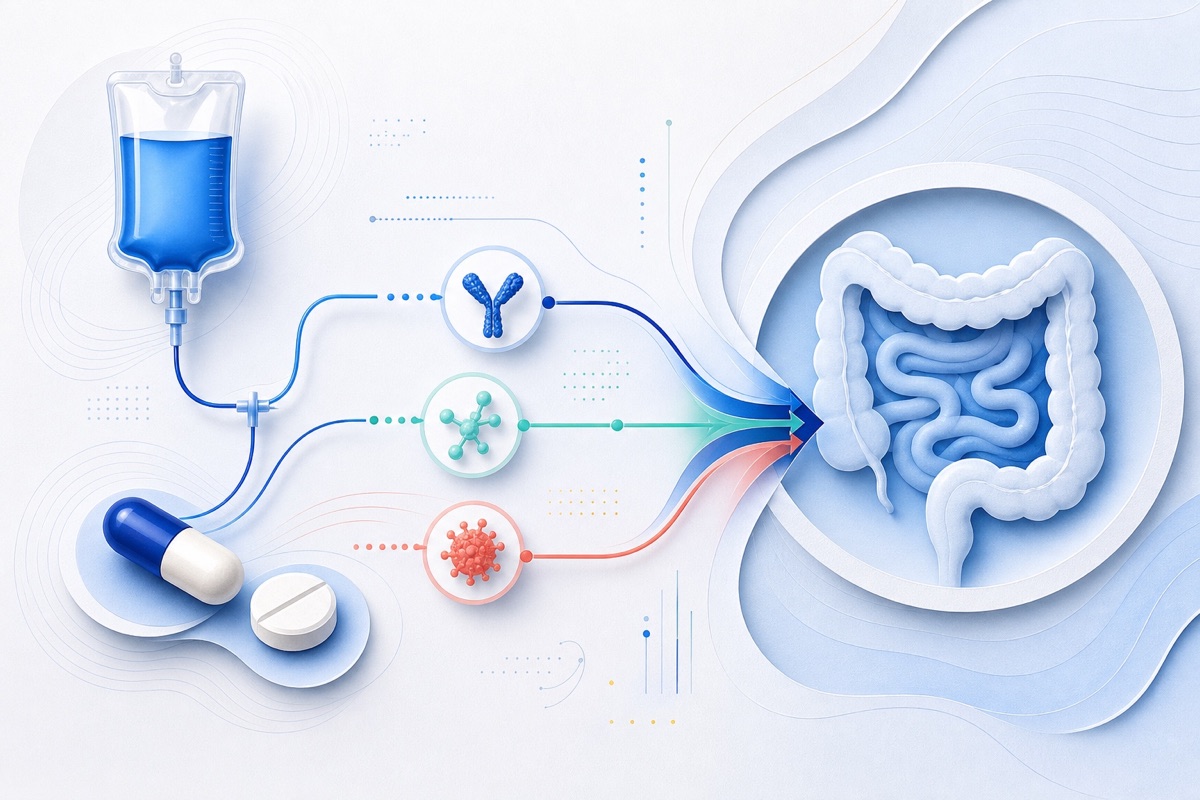
This narrative review summarizes how biologic therapies (anti-TNF agents, anti-integrin, IL‑12/23 and IL‑23 inhibitors) and newer oral small molecules (JAK inhibitors and S1P modulators) have changed IBD treatment worldwide.
It reviews epidemiology, key randomized trials, and population-level outcomes such as mucosal healing, surgery, hospitalization, disability, mortality, healthcare utilization, and costs.
The authors highlight that trial-level benefits for individuals are clear, but ecological and observational population data show inconsistent reductions in surgery and hospitalization, and rising overall costs driven by pharmaceuticals.
The review also discusses the role of biosimilars in improving affordability and documents persistent global access disparities between high-income and resource-limited settings. Because much of the population-level evidence is observational or ecological, the authors caution against interpreting associations as proof of causation.
This is grounded in the article abstract and framed as a high-level synthesis rather than new trial results or individual patient recommendations.
This entry is based on the article’s abstract (narrative review). The authors note much population-level evidence is ecological or observational, so associations with reduced complications are not definitive proof of causation. The review synthesizes trial and epidemiological literature rather than reporting new primary data.
Review the original publication for the complete reporting, methods, and context.
This Cure8 brief is based on source text from the linked article. Cure8 is informational only and is not a substitute for professional medical advice, diagnosis, or treatment.
A new FDA approval means another IL-23 option is formally available for people with moderately to severely active Crohn’s disease, including patients whose disease did not respond to other therapies. This could affect...
This video quickly outlines the range of medical treatments now available for Crohn’s disease, including newer approvals. Knowing drug classes and recent options can help patients and clinicians discuss treatment plans...
There are many new drugs and trials underway for Crohn’s disease, which could expand future treatment options. Recent phase 2 and phase 3 starts from major pharma show active investment in IBD research.