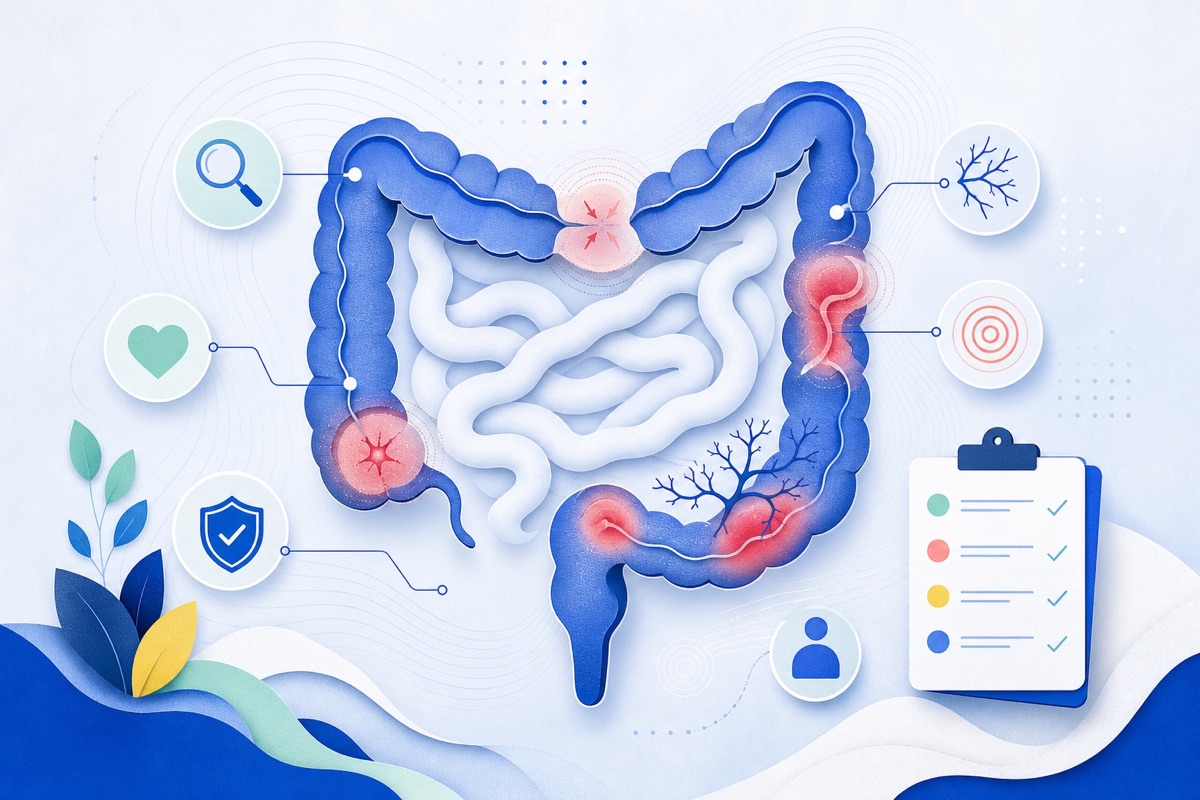
Active IBD was linked to higher risk of RSV infection and more severe respiratory outcomes in this large observational study. That could be relevant for prevention and monitoring during periods of active disease.
Who Should Pay Attention
Adults with IBD (especially those with recent active disease), gastroenterology clinicians, and care teams managing infection risk and vaccinations.
Study Snapshot
Story typeResearch paper
Evidence typeResearch paper
Source depthJournal abstract
What To Know
This study used a large electronic health-record network (TriNetX) to compare adults with active versus nonactive IBD and measured respiratory syncytial virus (RSV) infections and related outcomes over 180 days. Active IBD was defined by recent complications, IBD-related surgery, or elevated inflammatory markers in the prior 6 months.
After matching, active IBD was associated with higher odds of RSV infection and worse respiratory outcomes (bacterial pneumonia, ICU admission, mechanical ventilation).
The authors report that increased RSV risk was seen regardless of systemic corticosteroid exposure, and that among patients who had received RSV vaccination, infection rates were not significantly different between active and nonactive IBD.
How this matters to people with IBD If confirmed, people with active IBD may be at higher risk for RSV and for severe respiratory complications during the months after an active disease episode.
The finding that vaccinated patients did not show a significant difference suggests vaccination might modify that risk, but the study is observational and cannot prove cause.
Limitations and context This is a retrospective cohort study using electronic health records, which can be affected by coding differences, unmeasured confounding, and ascertainment bias. The authors call for prospective studies to validate the results.
The abstract provides the study design and main adjusted odds ratios; Cure8 did not review the full article beyond the provided abstract.
Keep In Mind
Retrospective EHR studies can show associations but not prove causation. Definitions of “active” IBD and RSV detection depend on recorded codes and tests; authors recommend prospective validation.
Source Details
Review the original publication for the complete reporting, methods, and context.
This Cure8 brief is based on source text from the linked article. Cure8 is informational only and is not a substitute for professional medical advice, diagnosis, or treatment.
This study suggests LVV can occur in people with IBD at younger ages and with distinct vascular findings, and it may arise even when gut disease is in remission. That matters for awareness, diagnosis, and coordination...
People with Crohn's disease and their clinicians often ask how different treatments affect cancer risk. This large nationwide study provides real-world estimates of absolute excess cancer cases by treatment group, which...
Extrapulmonary TB can be triggered or revealed during immunosuppressive biologic therapy and may mimic other causes of liver injury; early recognition and TB-specific testing are important for timely treatment and to...