Persistent or worsening colonic dilatation in ulcerative colitis can reflect severe, possibly irreversible bowel‑wall damage even when classic signs of toxic megacolon are absent. Recognizing this may prompt timely surgical reassessment to avoid complications like perforation.
Who Should Pay Attention
Adult patients with long‑standing ulcerative colitis, clinicians managing severe colitis (gastroenterologists and colorectal surgeons), and post‑surgery care teams.
Study Snapshot
Story typeResearch paper
Evidence typeResearch paper
Source depthMetadata only
What To Know
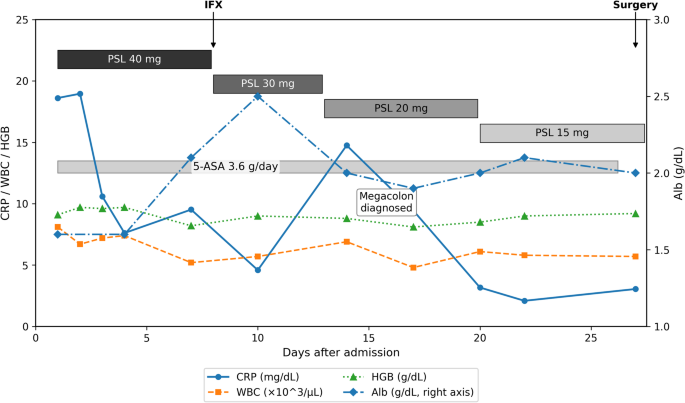
This report presents a single elderly patient with long‑standing ulcerative colitis whose transverse colon progressively dilated on serial imaging despite intensive medical therapy (high‑dose corticosteroids and infliximab). She did not meet clinical criteria for toxic megacolon but underwent surgery after multidisciplinary reassessment.
Surgical pathology of the resected, dilated segment showed deep mucosal ulceration and extensive loss/disruption of the muscularis propria with scar replacement, indicating advanced mural injury rather than purely reversible inflammation.
The authors suggest clinicians should consider the trajectory of colonic diameter on serial radiographs and repeat surgical assessment when dilatation persists or progresses, even in the absence of systemic toxicity. The article is a single case report and does not provide generalizable outcome data or treatment recommendations.
Keep In Mind
This is a single case report from a peer‑reviewed journal; findings are hypothesis‑generating rather than definitive. The patient received high‑dose steroids and infliximab before surgery; the report emphasizes radiographic progression and pathology rather than treatment efficacy. Summary confidence: medium.
Source Details
Review the original publication for the complete reporting, methods, and context.
This Cure8 brief is based on source text from the linked article. Cure8 is informational only and is not a substitute for professional medical advice, diagnosis, or treatment.
People with ulcerative colitis who have had colectomy can rarely develop inflammation of the small intestine and high-output stomas that are hard to control.
The review links specific therapies and surgical options to outcomes that matter to people with IBD — mucosal healing, lower hospitalizations, and reduced need for surgery — and highlights that combining medical and...