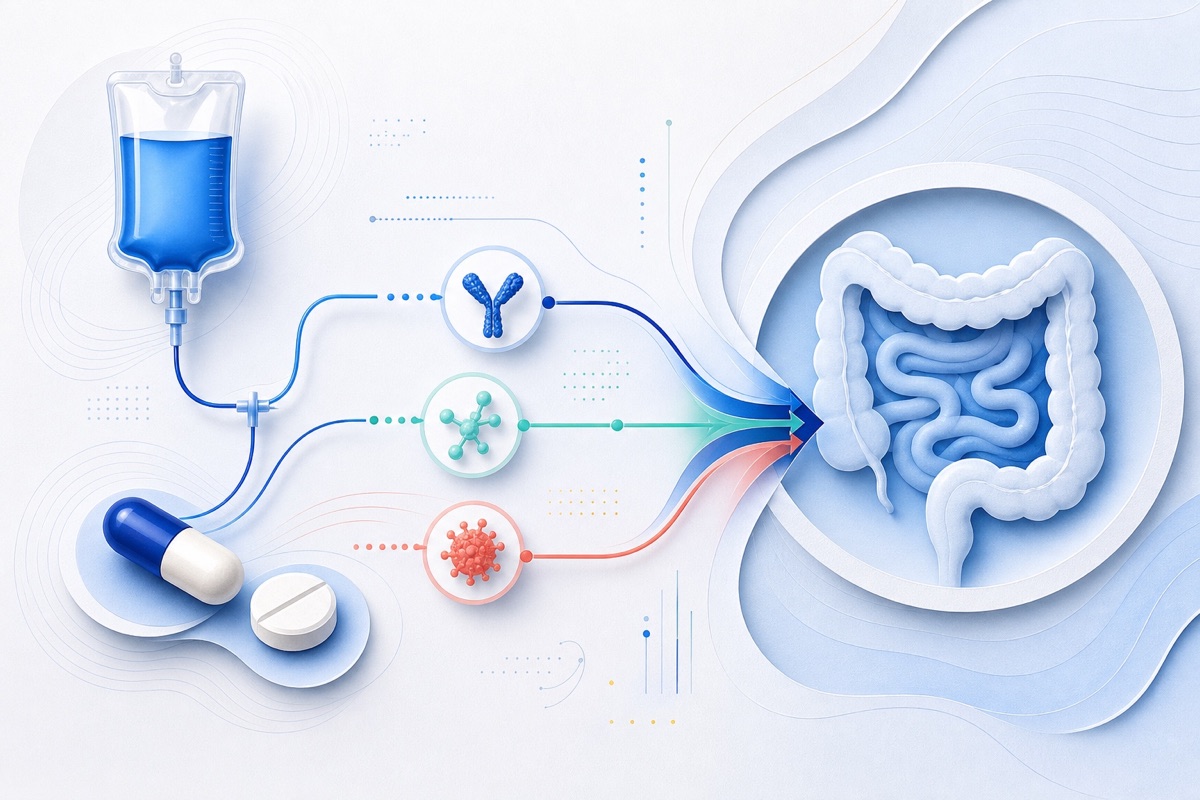
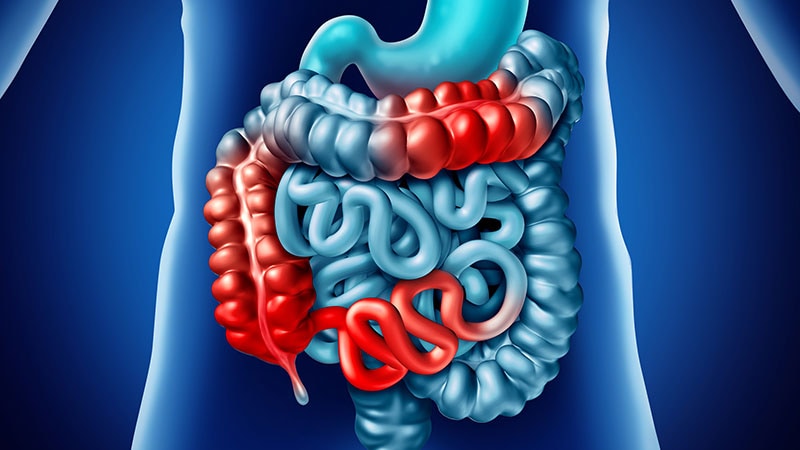
This trial directly tests common clinical strategies for managing loss of response to ustekinumab in Crohn’s disease. The findings may change whether doctors routinely escalate to 4-weekly dosing after an IV reinduction, which affects treatment burden and planning.
Who Should Pay Attention
Adults with Crohn’s disease on ustekinumab, patients experiencing secondary loss of response, clinicians deciding on dose intensification or switching therapy, and IBD researchers.
Study Snapshot
Story typeResearch news
Evidence typePhase 3 clinical trial
Source depthFull source text
What To Know
This article reports results of a randomized, multicenter trial testing two ustekinumab dose-intensification strategies for adults with Crohn’s disease who had a secondary loss of response on maintenance ustekinumab.
All patients received a single intravenous reinduction (~6 mg/kg) and were then randomized to subcutaneous 90 mg every 4 weeks versus every 8 weeks through week 48.
The trial found no clear benefit to routine 4-weekly subcutaneous dosing after intravenous reinduction: steroid-free clinical remission at week 48 was similar between groups (about 15% vs 19%), and higher serum concentrations did not predict better clinical or endoscopic outcomes. Serious adverse event rates were similar.
What this means for treatment choices: if a single IV reinduction does not recapture response within ~24 weeks, the study suggests little reason to escalate to 4-weekly maintenance routinely; consider switching to an alternative advanced therapy rather than ongoing intensification beyond 6 months.
Practical takeaways: this is a prospective randomized trial across multiple centers, so the findings carry meaningful weight for decisions about ustekinumab intensification. Discuss options with your gastroenterology team, especially if you have not regained clear clinical response after an IV reinduction.
Keep In Mind
The study's primary endpoint was steroid-free clinical remission at week 48 and included fecal calprotectin as an objective marker. Clinical remission after IV reinduction was usually achieved within 24 weeks, with no added benefit beyond 6 months—so lack of response by that time favors switching therapies. As always, individual patient factors and clinician judgment matter.
Source Details
Review the original publication for the complete reporting, methods, and context.
Phase 3 clinical trialArticle type assigned from Cure8 classification; confirm details in the original source.
Publicationdocwirenews.com
Indexed viaGoogle News
Source typeResearch news
PublishedJul 9, 2026, 9:57 PM
Content availableFull source text
This Cure8 brief is based on source text from the linked article. Cure8 is informational only and is not a substitute for professional medical advice, diagnosis, or treatment.
Patients considering switching biologics or clinicians choosing a second‑line therapy may care because the study suggests ustekinumab had better long‑term persistence and improving remission rates compared with anti‑TNF...
This article reports positive trial results for ustekinumab, a drug that targets IL-12 and IL-23, showing benefit in people with Crohn's disease who did not respond to anti‑TNF drugs. That could expand options for...
This study suggests risankizumab may improve quality of life and reduce common symptoms (fatigue, mood, urgency) more than ustekinumab for patients with moderate-to-severe Crohn’s disease who didn’t respond to anti-TNF...