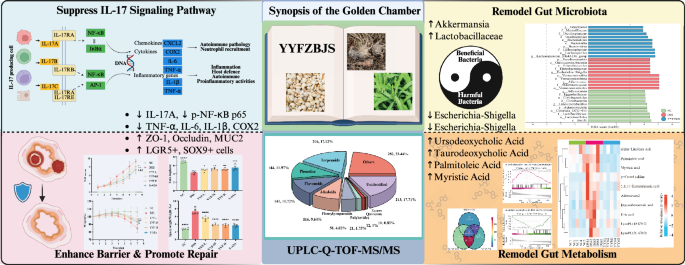
The study suggests a multi-component herbal formula may affect inflammation, the intestinal barrier, epithelial repair, the gut microbiome, and fecal metabolites in a mouse colitis model—topics relevant to understanding new multi-target therapies for IBD.
Who Should Pay Attention
Researchers studying microbiome–host interactions, preclinical IBD therapeutics, and clinicians interested in emerging basic-science evidence about multi-component natural-product approaches.
Study Snapshot
Story typeResearch paper
Evidence typeResearch paper
Source depthJournal abstract
What To Know
The researchers combined network pharmacology, chemical profiling, a DSS-induced mouse colitis model, 16S rRNA sequencing, and untargeted metabolomics.
They found dose-dependent improvement in disease activity, histology, and markers of barrier integrity (ZO-1, Occludin, MUC2), reduced pro-inflammatory cytokines and NF-κB activation, changes in intestinal epithelial/regeneration markers (LGR5, SOX9, CHGA), enrichment of some beneficial bacterial groups, and shifts in fecal metabolites such as fatty acids and bile acids.
The report is preclinical (mouse model) and uses multiple laboratory assays to suggest mechanisms along a gut barrier–microbiota–metabolism axis. These results do not demonstrate safety or efficacy in people and should not be taken as clinical advice.
Keep In Mind
This is preclinical work in a DSS mouse model and reported at the abstract/full-text level in a journal; it does not provide clinical trial data or human safety/efficacy evidence.
Source Details
Review the original publication for the complete reporting, methods, and context.
This Cure8 brief is based on source text from the linked article. Cure8 is informational only and is not a substitute for professional medical advice, diagnosis, or treatment.
The study identifies a plant-derived compound that reduced inflammation and liver injury in a mouse model of ulcerative colitis and ties its effects to both JAK2/STAT1 inhibition and changes in the gut microbiota—two...
A natural compound (C3G) reduced inflammation and changed gut bacteria and metabolites in an experimental colitis model, pointing to possible new mechanisms or leads for IBD therapies.
The study describes a new oral nanotherapy that delivered apremilast to the inflamed colon in mice and reportedly reduced gut inflammation and behaviors resembling anxiety/depression—suggesting a combined...