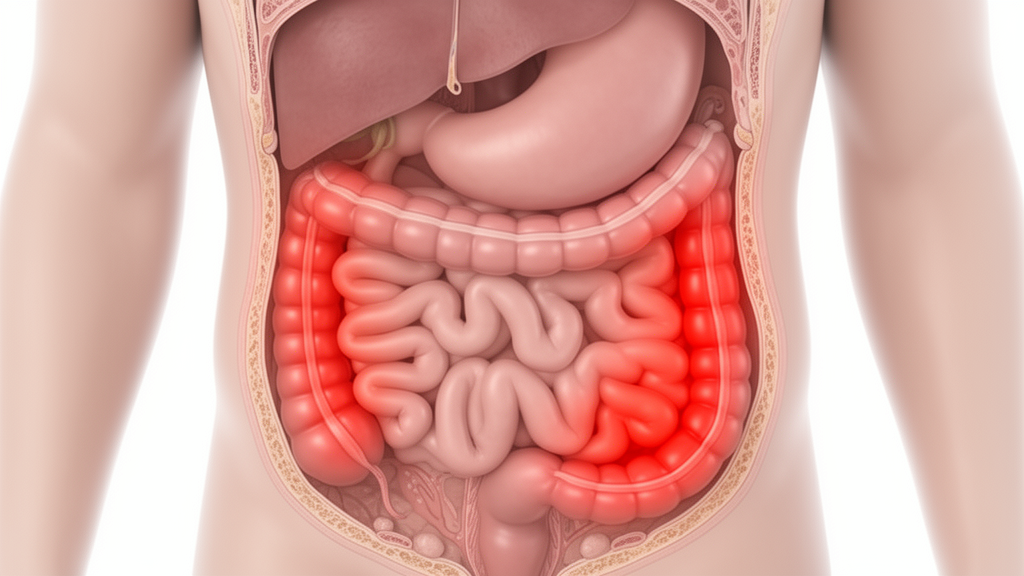
A noninvasive MRI measure that tracks intestinal inflammation could reduce the need for endoscopy and biopsies for some patients and help quantify disease severity objectively.
Who Should Pay Attention
Clinicians who manage IBD (gastroenterologists, radiologists), researchers studying imaging biomarkers, and adult patients with Crohn’s disease or ulcerative colitis interested in noninvasive monitoring options.
Study Snapshot
Story typeResearch news
Evidence typeClinical study
Source depthFull source text
What To Know
A recent prospective clinical study compared diffusion-weighted magnetic resonance enterocolonography (DWI MREC) ADC values with endoscopic and histopathologic measures in 50 patients with active IBD (35 Crohn’s, 15 UC).
Lower ADC values correlated with higher histologic and endoscopic activity; ROC analysis suggested ADC could distinguish mild versus moderate-to-severe inflammation using a proposed cutoff. DWI MREC was performed on a 1.5 T scanner without IV contrast and biopsies/ileocolonoscopy were done within one week as the reference standard.
The study found similar mean ADCs in CD and UC but significant negative correlations between ADC and disease-activity grades, and ADC differences between inflammatory versus fibrotic strictures in Crohn’s disease. This report presents the study’s abstract/summary and does not replace reading the full paper.
It suggests DWI MREC may be a useful noninvasive imaging biomarker to complement endoscopy, especially when endoscopy is contraindicated, but further larger or longitudinal studies are needed.
Keep In Mind
Single-center, prospective study with a relatively small UC subgroup and cross-sectional design; ADC thresholds and performance need validation in larger, multicenter and longitudinal cohorts before routine clinical adoption.
Source Details
Review the original publication for the complete reporting, methods, and context.
Clinical studyArticle type assigned from Cure8 classification; confirm details in the original source.
Publicationbioengineer.org
Indexed viaGoogle News
Source typeWeb article
PublishedNov 10, 2026, 9:44 AM
Content availableFull source text
This Cure8 brief is based on source text from the linked article. Cure8 is informational only and is not a substitute for professional medical advice, diagnosis, or treatment.
New PET tracers like FAPI could better detect fibrosis and stromal activity than standard FDG-PET, which may improve imaging of fibrostenotic Crohn's disease. For people with IBD, improved imaging might eventually help...
AI could help make IBD assessments (endoscopy, histology, imaging, biomarkers) more objective and faster, which may improve monitoring, treatment selection, and early detection of complications for people with Crohn’s...
Early-phase data suggest PALI-2108 reaches the ileum and colon and produced rapid reductions in endoscopic inflammation and fecal calprotectin in small Phase 1b cohorts—results that could matter if confirmed in larger...