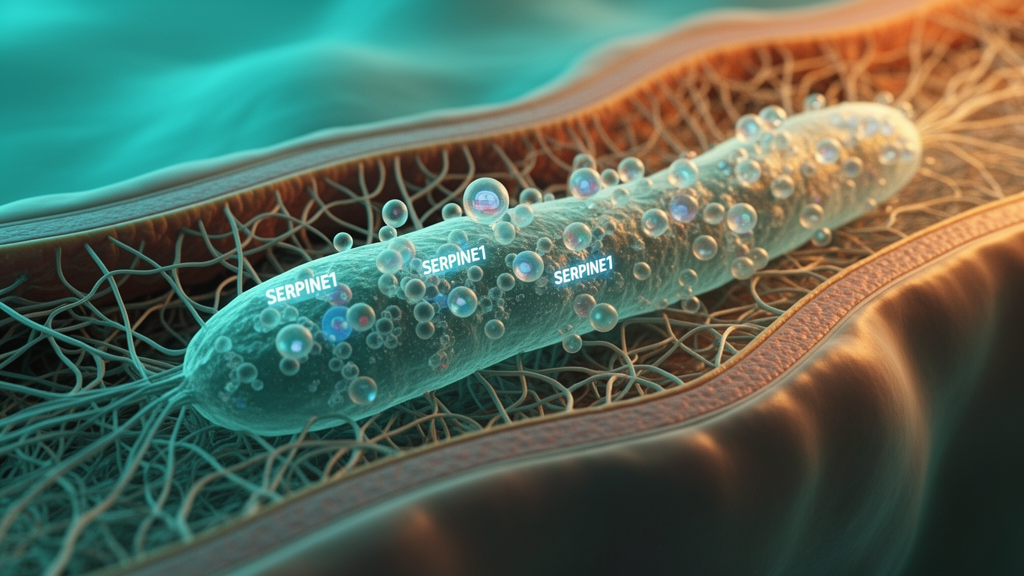
The study identifies a specific senescent fibroblast population that may drive intestinal inflammation in Crohn’s disease and tests a small-molecule inhibitor (TM5441) that reduced colitis in mouse models—pointing to a possible new therapeutic approach if validated in humans.
Who Should Pay Attention
Researchers studying IBD pathogenesis or senescence pathways, translational scientists and drug developers interested in anti-senescence or cGAS–STING targets, and clinicians following emerging preclinical therapies for Crohn’s disease.
Study Snapshot
Story typeResearch paper
Evidence typeEarly laboratory research
Source depthFull source text
What To Know
The research team used bulk and single-cell transcriptomics from Crohn’s disease patient samples to define a SERPINE1+ fibroblast subset with high senescence signatures and pro-inflammatory signaling.
Interaction analyses and macrophage–fibroblast co-cultures implicated IL1RN+ macrophage–derived TNF-α as a trigger for fibroblast senescence in the inflamed mucosa. Mechanistic experiments indicate SERPINE1 promotes release of mitochondrial DNA into the cytosol, activating the cGAS–STING pathway (partly via LRP1) to sustain the senescent phenotype.
In two mouse colitis models (DSS and TNBS), pharmacologic inhibition with TM5441 reduced colitis severity, supporting the idea that blocking SERPINE1 can modify inflammation in preclinical systems.
This work suggests SERPINE1 and the cGAS–STING–senescence axis are potential therapeutic targets in Crohn’s disease, but findings are preclinical and require clinical testing.
Keep In Mind
Results come from transcriptomic analyses, in vitro co-cultures, and two mouse colitis models; animal and cell data do not prove safety or efficacy in humans. The article is a report of basic-science research published in Biology Direct and should be interpreted as early-stage evidence.
Source Details
Review the original publication for the complete reporting, methods, and context.
This Cure8 brief is based on source text from the linked article. Cure8 is informational only and is not a substitute for professional medical advice, diagnosis, or treatment.
The study points to SERPINE1-driven fibroblast senescence via cGAS–STING as a contributor to Crohn’s disease inflammation and shows that pharmacologic inhibition (TM5441) reduced inflammation in a mouse model, suggesting...
CAR-based cellular therapies could offer a new way to reset immune responses in some forms of IBD, potentially helping patients who do not respond to existing biologics or small molecules.
TL1A-DR3 is implicated in both inflammation and fibrosis in IBD, so targeting it could address active disease and reduce fibrotic complications that lead to strictures. New TL1A-blocking antibodies are already in...