Europe PMC
Cure8 research brief
Cure8 research brief
The study proposes a new oral nanoparticle that targets neutrophil-driven oxidative stress linked to mucosal barrier damage, a mechanism relevant to IBD pathology. If translatable, this approach could add a new modality distinct from current biologics and small molecules.
Researchers in IBD pathogenesis, translational scientists developing nanomedicines or redox therapies, and clinicians following preclinical therapeutic advances.
This is a preprint describing laboratory and animal work, not a clinical trial. The authors engineered manganese tetroxide–decorated graphdiyne nanoparticles intended to scavenge reactive oxygen species and reduce neutrophil infiltration.
In mice the material reportedly showed gastric stability, inflammation-associated intestinal retention, reduced oxidative stress and neutrophil markers, improved barrier integrity, and greater benefit than GDY alone or 5-aminosalicylic acid on several endpoints.
The findings are early-stage and primarily mechanistic: promising for a new redox-targeted oral nanomedicine approach, but safety, dosing, and effectiveness in humans are unknown. Translation from murine colitis models to clinical IBD is uncertain, and preprints are not peer reviewed.
Preprint (not peer reviewed) and results are from transcriptomic analyses and murine colitis models; human safety, dosing, and clinical efficacy are not reported.
Review the original publication for the complete reporting, methods, and context.
This Cure8 brief is based on source text from the linked article. Cure8 is informational only and is not a substitute for professional medical advice, diagnosis, or treatment.
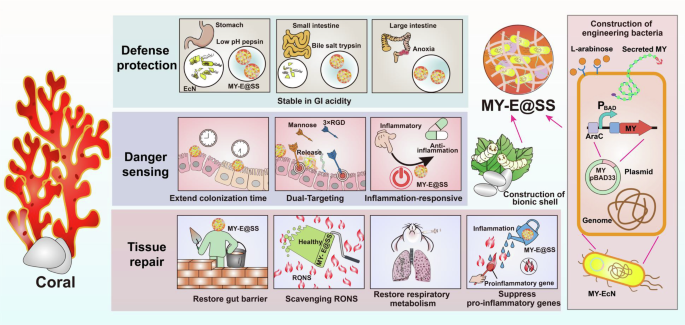
This study presents an engineered probiotic delivery platform that could improve survival and targeted action of live microbial therapies for IBD, potentially reducing local inflammation while affecting the gut...
This research explores a novel way to deliver probiotics and antioxidant molecules directly to inflamed colon lesions — a potential path to therapies that locally reduce oxidative stress and inflammation in IBD without...
The study targets oxidative stress and the TXNIP/NLRP3 inflammasome axis, both implicated in IBD inflammation and barrier damage. If translatable, nanozyme-assisted probiotic therapy could offer a novel, targeted way to...