
Nature communications
Cure8 research brief
Cure8 research brief
This study presents an engineered probiotic delivery platform that could improve survival and targeted action of live microbial therapies for IBD, potentially reducing local inflammation while affecting the gut microbiome.
Researchers developing microbial or biologic delivery systems, translational IBD scientists, GI clinicians interested in novel local therapies, and biotech developers working on engineered probiotics.
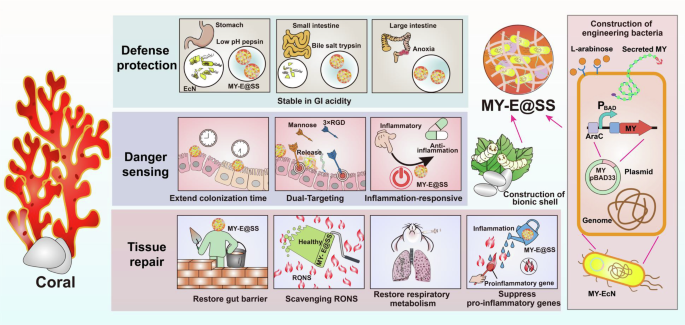
The authors designed a core–shell microcapsule (MY-E@SS) to shield engineered bacteria from gastric acid and enable targeted release in inflamed intestinal tissue.
In a male mouse model of inflammatory bowel disease the system reportedly improved barrier integrity, reduced systemic inflammation and oxidative stress, altered respiratory metabolism, and shifted the gut microbiome toward homeostasis. The proposed mechanism involves inhibition of TNF-α/NF-κB signaling.
The work is preclinical and conducted in mice; findings are promising but do not establish safety or efficacy in humans. The article provides mechanistic and microbiome analyses supporting the platform concept rather than proof of clinical benefit.
Follow-up studies would be needed to test long-term safety, dosing, manufacturability, and performance in larger animal models or clinical trials.
Structured content depth: abstract — this brief is grounded in the article abstract and partial extracted text. The study is preclinical (mouse model) and does not demonstrate human safety or efficacy. Details on manufacturing, regulatory path, and clinical translation are not provided in the abstract.
Review the original publication for the complete reporting, methods, and context.
This Cure8 brief is based on source text from the linked article. Cure8 is informational only and is not a substitute for professional medical advice, diagnosis, or treatment.
IBD is increasingly linked with anxiety, depression, and cognitive symptoms; this study suggests gut microbes may change tryptophan metabolism in colitis and contribute to those brain-related symptoms, which could point...
The paper proposes a specific molecular link between elevated glycocholic acid (a bile acid altered in IBD) and impaired intestinal stem cell renewal via the TRIB3–ID1 pathway, which could help explain poor mucosal...
Cure8 found this source from sciencedirect.com, but the page could not be read reliably yet. It is tagged for Crohn's disease, Inflammatory bowel disease, and Research and clinical trials. Open the original article for...

