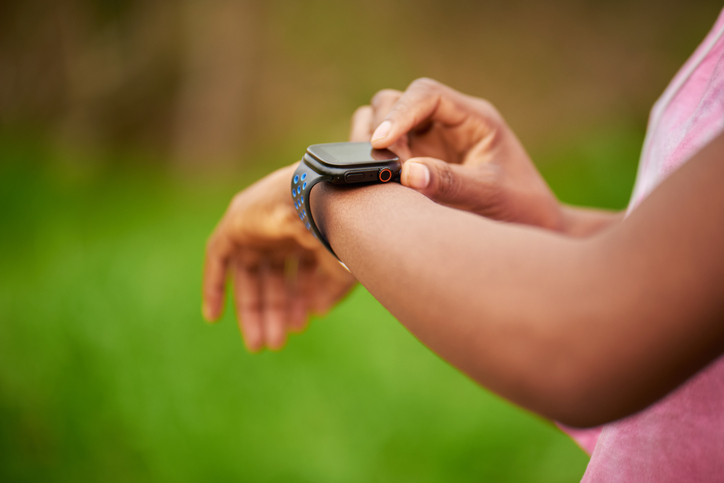
A wearable sweat sensor that tracks CRP and calprotectin could offer a noninvasive, continuous way to monitor inflammation in IBD, which might help detect changes between clinic visits and reduce dependence on blood draws or stool collection for some monitoring tasks.
Who Should Pay Attention
Adults with IBD (Crohn’s disease or ulcerative colitis), clinicians who monitor IBD inflammation, and researchers developing noninvasive biomarker technologies.
Study Snapshot
Story typeResearch news
Evidence typeClinical study
Source depthFull source text
What To Know
A University of Texas at Dallas team tested a wearable, noninvasive perspiration sensor that continuously sampled sweat to measure CRP and calprotectin and compared those sweat results with paired blood (CRP) and stool (calprotectin) measurements in 33 people with IBD.
Sampling was continuous (every 60 seconds) while patients wore the device for 40–130 minutes during the study’s standard-of-care assessment window.
The investigators report that sweat CRP and calprotectin levels showed consistency with corresponding serum and stool measurements overall, and that patterns varied by diagnosis (Crohn’s vs UC), disease location (colonic vs ileal), and age groups.
The study used principal component analysis to explore contributors to variance and incorporated endoscopic scores in a subset.
This is a cross-sectional clinical study with 33 patients reporting concordance between sweat-based biomarkers and traditional samples; it describes feasibility and early validation rather than clinical outcomes or diagnostic approval. It does not establish that the device can replace standard testing yet.
If you’re reading the published article, check the original paper in Inflammatory Bowel Diseases for full methods, statistical details, and limitations.
Keep In Mind
Small, cross-sectional study (33 patients) reported in a medical-news summary of a peer-reviewed paper; findings describe feasibility and biomarker concordance but do not equate to regulatory approval or broad clinical validation. The original Inflammatory Bowel Diseases article should be consulted for full data and limitations.
Source Details
Review the original publication for the complete reporting, methods, and context.
Clinical studyArticle type assigned from Cure8 classification; confirm details in the original source.
Publicationdocwirenews.com
Indexed viaGoogle News
Source typeWeb article
PublishedNov 7, 2026, 12:51 AM
Content availableFull source text
This Cure8 brief is based on source text from the linked article. Cure8 is informational only and is not a substitute for professional medical advice, diagnosis, or treatment.
A wearable sensor that reliably measures inflammation markers (CRP and calprotectin) from sweat could make inflammation monitoring less invasive and more frequent for people with IBD, potentially helping detect flares...
Wearable-derived digital biomarkers could enable earlier, less burdensome detection of IBD flares and better remote monitoring if they reliably predict mucosal inflammation.
Noninvasive fecal biomarkers are widely used to track IBD activity. Knowing whether different FC assays give comparable results and whether combining tests adds value affects how patients and clinicians interpret...