Revista de gastroenterologia del Peru : organo oficial de la Sociedad de Gastroenterologia del Peru
Cure8 research brief
Cure8 research brief
Patients with IBD often undergo frequent monitoring; knowing that many prefer noninvasive tests like intestinal ultrasound may influence shared decision-making and clinic workflows. Understanding patient perceptions can help clinicians offer monitoring strategies that balance accuracy and acceptability.
Adult IBD patients, gastroenterology clinicians, clinic managers, and researchers focused on patient-centered monitoring approaches.
This cross-sectional survey from a specialized gastroenterology clinic in Panama asked 51 adults with confirmed IBD about their experiences and preferences for common monitoring tests: colonoscopy, intestinal ultrasound (IUS), CT/MRI, and fecal calprotectin (FC).
Participants reported highest satisfaction and acceptability with intestinal ultrasound, and most said IUS was the single test they would prefer to repeat for ongoing monitoring. However, patients still viewed colonoscopy as providing the most useful clinical information and as the test that best helped them understand their disease status.
The authors suggest that patients favor less invasive monitoring when available, and that better patient education about IUS’s clinical value could support wider, patient-centered use in routine care.
Study is a cross-sectional survey from one specialized clinic in Panama with 51 respondents; findings reflect perceptions and preferences rather than diagnostic performance. The content is grounded in the article abstract.
Review the original publication for the complete reporting, methods, and context.
This Cure8 brief is based on source text from the linked article. Cure8 is informational only and is not a substitute for professional medical advice, diagnosis, or treatment.
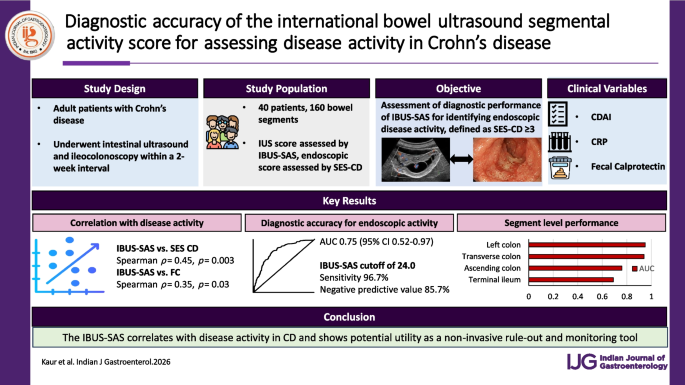
Standardized intestinal ultrasound scoring could help non-invasively monitor Crohn’s disease activity and reduce reliance on colonoscopy for some assessments. A high-sensitivity IUS score may be useful to rule out...
Noninvasive monitoring matters for children with UC because endoscopy is burdensome. If ultrasound (and simple measures like bowel wall thickness) can reliably detect moderate-to-severe disease, families may avoid some...
The study will test whether routine point‑of‑care intestinal ultrasound changes clinical decisions compared with standard monitoring, which could make monitoring less invasive and more responsive if effective.