Mutagenesis
Cure8 research brief
Cure8 research brief
Altered tryptophan metabolism and AhR signaling were linked to fecal-water-induced DNA damage in IBD samples, suggesting a possible pathway connecting inflammation and epithelial genotoxic stress — a mechanism relevant to long-term cancer risk and mucosal health in IBD.
Researchers in IBD pathogenesis, translational scientists, clinicians monitoring long-term epithelial health in IBD patients.
This study analyzed fecal water from people with IBD and controls to see which metabolites are linked to epithelial DNA damage and activation of the aryl hydrocarbon receptor (AhR).
Samples from 80 IBD patients and 20 healthy controls were tested in cell-based assays (comet assay for DNA damage; EROD assay for AhR activity) and by LC–MS to measure metabolites.
The authors report that altered tryptophan metabolism in IBD—specifically higher kynurenine associated with more DNA damage but lower AhR activity, and serotonin associated with higher AhR activity and less DNA damage—may link inflammation, AhR signaling, and epithelial genotoxic stress.
These findings come from ex vivo fecal water experiments and cell assays, not from direct measurements of tissue damage in patients; they identify associations and pathways for further study rather than clinical effects or treatment recommendations.
Findings are based on fecal water exposures to cell lines and metabolomic association analyses; they show associations and biological plausibility but not proven causation or patient-level outcomes.
Review the original publication for the complete reporting, methods, and context.
This Cure8 brief is based on source text from the linked article. Cure8 is informational only and is not a substitute for professional medical advice, diagnosis, or treatment.
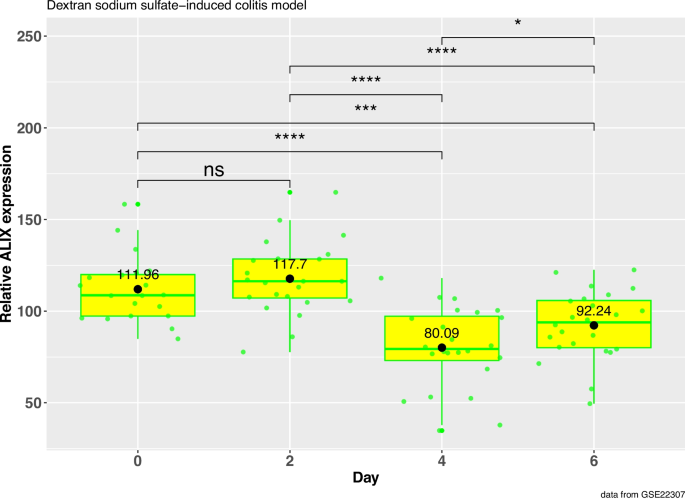
The paper suggests a new molecular link—low ALIX expression—to inflammatory cell death (pyroptosis) that might help explain mucosal inflammation in ulcerative colitis. If validated, that pathway could point to biomarkers...
If confirmed, αvβ6 autoantibodies could help identify people at higher risk for ulcerative colitis and point to a new mechanism (blockade of epithelial TGF‑β activation) that contributes to mucosal inflammation.
The paper suggests that loss of microbial bile acid transformations in IBD reduces activation of the TGR5 receptor, and that lower TGR5 bioactivity correlates with higher inflammatory activity — a potential mechanism...