Journal of agricultural and food chemistry
Cure8 research brief
Cure8 research brief
The work suggests a fungus-derived metabolite can reduce experimental colitis through AhR and NF-κB pathways, highlighting a potential new direction for microbiome‑based therapies or postbiotics that could eventually affect IBD treatment strategies.
Researchers studying the gut microbiome/mycobiome, immune pathways (AhR, NF-κB), and experimental therapeutics; clinicians interested in emerging preclinical IBD research; patients curious about microbiome-related science (as early-stage, preclinical findings).
The paper describes experiments in a DSS-induced colitis model in mice where gavage with A. ruber lessened weight loss, disease activity index, colon shortening, and tissue injury. Metabolomics of fungal cultures identified 3‑methyldioxyindole; treatment with the purified compound reproduced beneficial effects.
Mechanistic data in the abstract indicate the effect was AhR‑dependent and blocked by an AhR antagonist, with associated reductions in markers of NF-κB activation. This is reported at the abstract level in a Journal of Agricultural and Food Chemistry article; the extract provided is partial and focused on preclinical mouse and in vitro work.
The results are promising for basic research into microbiome‑derived metabolites but are not clinical evidence that this approach is safe or effective in people. Researchers should view this as a preclinical, mechanism‑focused study that supports further investigation of fungal metabolites and AhR signaling in colitis.
this is preclinical research reported in an abstract and uses a mouse DSS model plus in vitro assays. Findings in animal models do not necessarily translate to humans; safety, dosing, and efficacy in people would require substantial further study.
Review the original publication for the complete reporting, methods, and context.
This Cure8 brief is based on source text from the linked article. Cure8 is informational only and is not a substitute for professional medical advice, diagnosis, or treatment.
Researchers are exploring plant-derived polysaccharides as potential therapies that might reduce inflammation and protect the intestinal barrier. For people with UC, therapies that reduce pyroptosis and restore...
The study suggests a plant-derived AHR-activating mechanism that reduced inflammation and repaired the intestinal barrier in preclinical ulcerative colitis models, a pathway that could be relevant to future therapies or...
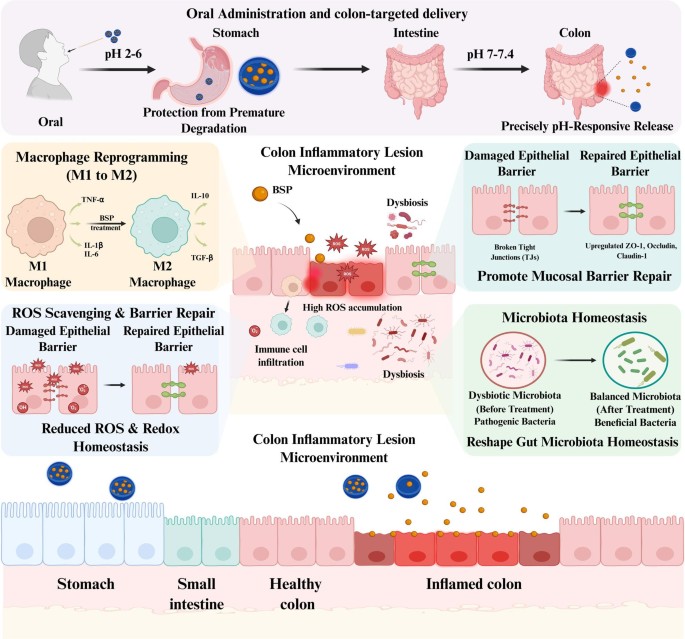
The study describes a new oral, colon‑targeted delivery system that improved outcomes in a mouse model of ulcerative colitis and shifted immune and microbiome markers—research that could inform future therapies focused...