Scandinavian journal of gastroenterology
Cure8 research brief
Cure8 research brief
AIP-2 is a pancreas-specific autoimmune condition that commonly co-occurs with IBD, especially ulcerative colitis. Recognizing AIP-2 is important because it may present like acute pancreatitis or a pancreatic mass and often responds to corticosteroids.
Management decisions can affect both pancreatic disease and IBD control.
Adults with IBD (especially ulcerative colitis), gastroenterologists, and clinicians managing pancreatitis or IBD.
This narrative review summarizes literature on autoimmune pancreatitis type 2 (AIP-2) and its strong association with inflammatory bowel disease, particularly ulcerative colitis.
The authors note suspicion should be raised in IBD patients with acute pancreatitis, painless jaundice, or an unexplained pancreatic mass; definitive diagnosis relies on representative histology obtained preferentially via endoscopic ultrasound–guided needle biopsy.
Corticosteroids are first-line for acute AIP-2 flares, and maintenance therapy may be considered for relapsing or steroid-dependent cases. The review recommends considering relapse-prevention strategies that address both IBD and AIP-2.
This item is a narrative review based on a systematic PubMed search up to November 2025; it summarizes existing literature but does not present new primary data. Diagnosis often requires histology from endoscopic ultrasound–guided biopsy; treatment recommendations reflect consensus from case series and reviews rather than large randomized trials.
Review the original publication for the complete reporting, methods, and context.
This Cure8 brief is based on source text from the linked article. Cure8 is informational only and is not a substitute for professional medical advice, diagnosis, or treatment.
Iliopsoas abscess is an uncommon but serious penetrating complication of Crohn’s disease that can present with non-specific symptoms and be missed. The review compiles case-level evidence about presentation, diagnosis,...
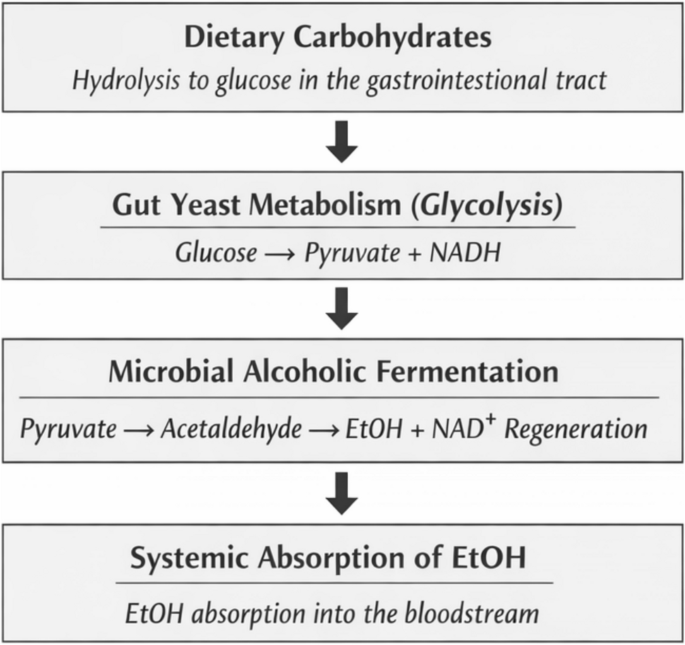
Auto-brewery syndrome can cause unexplained intoxication-like symptoms and may be under-recognized in people with Crohn’s disease. Recognizing gut fermentation as a possible cause can affect diagnostic testing and...
Bronchiectasis can be an overlooked extraintestinal manifestation in people with IBD and may cause respiratory symptoms long after IBD diagnosis. Recognizing this link could speed diagnosis and lead to different...