Patients with refractory IBD or those not fully responding to single targeted therapies may be interested because ACT aims to control multiple inflammatory pathways and could offer improved symptom and endoscopic outcomes for selected patients.
Clinicians and researchers should note this is an evolving strategy with potential benefits but important unknowns about safety, duration, and which patients benefit most.
Who Should Pay Attention
Patients with refractory Crohn’s disease or ulcerative colitis, patients on biologics, gastroenterology clinicians, and IBD researchers.
Study Snapshot
Story typeResearch paper
Evidence typeResearch paper
Source depthJournal abstract
What To Know
This review (abstract-level) discusses "advanced combination therapy" (ACT) in IBD, meaning use of two targeted therapies together to try to control multiple inflammatory pathways.
The authors summarize biological rationale, available observational and early prospective data, safety considerations, and practical issues such as patient selection, sequencing, duration, de‑escalation, long‑term safety, and cost-effectiveness.
Available evidence cited is mainly observational with some emerging prospective studies; the abstract reports possible improvement in clinical and endoscopic outcomes in selected patients and no clear short‑term rise in serious adverse events, but emphasizes many remaining uncertainties.
If you have IBD and are treatment-refractory or have extraintestinal immune conditions, ACT is an area of active research rather than routine practice; discussions about combining targeted agents typically occur in specialized centers or clinical trials.
Clinicians and researchers are prioritizing trials to define optimal combinations, patient selection, monitoring strategies, and long-term safety and cost-effectiveness.
Keep In Mind
This record is an abstract-style review (preprint) summarizing existing observational and early prospective data rather than reporting new randomized trial results. Findings are preliminary; ongoing clinical studies are needed to establish efficacy, safety, and practical guidance.
Source Details
Review the original publication for the complete reporting, methods, and context.
This Cure8 brief is based on source text from the linked article. Cure8 is informational only and is not a substitute for professional medical advice, diagnosis, or treatment.
This reports phase 2b trial results showing a fixed-dose combination of two biologics (anti‑TNF + anti‑IL‑23) improved outcomes in people with refractory IBD compared with one biologic alone.
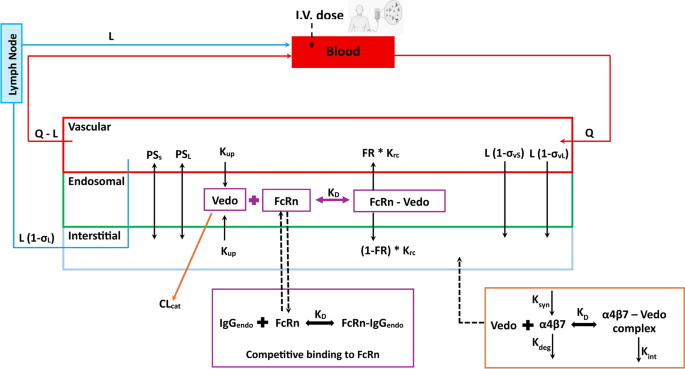
Vedolizumab blood levels can vary with disease activity; a model that links intestinal α4β7 expression to drug exposure helps explain why some patients have lower drug levels and may need different dosing. This could...
Researchers are testing whether blocking three inflammation pathways at once can reduce tissue inflammation more than single drugs. If ex vivo results show stronger effects, it could guide development of multi-target...