Magnetic Resonance Imaging Clinics of North America
Cure8 research brief
Contents
Tests and monitoring
Mri Enterography
Clinical study
Clinicians
Adult patients
Researchers
Crohn's disease
Inflammatory bowel disease
Cure8 research brief
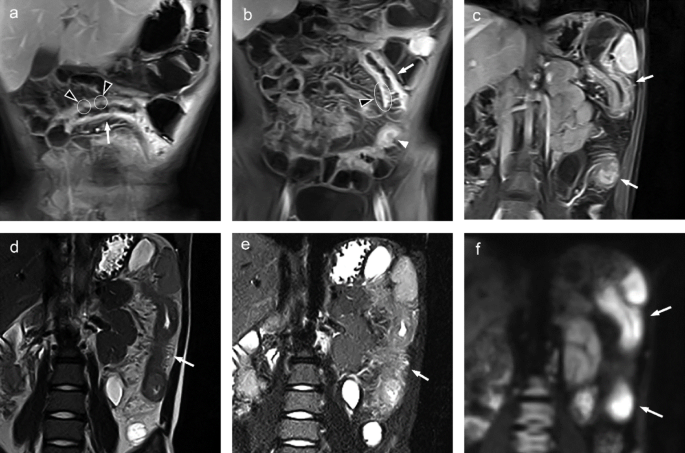
MRE is a noninvasive imaging test commonly used to evaluate small-bowel Crohn’s disease, especially when disease is beyond the reach of endoscopy or when repeated follow-up imaging is needed. It helps detect complications that affect treatment decisions.
Clinicians managing Crohn’s disease, adult patients with small-bowel Crohn’s disease or suspected extra-mucosal complications, and researchers studying imaging biomarkers or disease monitoring.
This source abstract describes MRE as a well-established modality for diagnosing, assessing, and monitoring small-bowel Crohn's disease.
It emphasizes MRE’s role in evaluating disease activity, guiding treatment decisions, monitoring therapeutic response, and identifying complications that go beyond mucosal inflammation (for example, penetrating disease and stricturing disease).
MRE is particularly useful when endoscopy cannot reach affected small-bowel segments or when repeated imaging is required to follow disease over time because it avoids ionizing radiation.
If you’re a patient, clinician, or researcher interested in noninvasive imaging for Crohn’s disease, this article appears to summarize current clinical uses of MRE based on the abstract provided.
Structured content depth is an abstract from a journal issue; the brief summarizes the abstract-level points and does not represent a full review of the complete article or issue. The extracted text is partial.
Review the original publication for the complete reporting, methods, and context.
This Cure8 brief is based on source text from the linked article. Cure8 is informational only and is not a substitute for professional medical advice, diagnosis, or treatment.
Baseline MRE features may help predict which Crohn's strictures will not improve with advanced medical therapy, informing monitoring and surgical planning. Better stratification could guide decisions about earlier...
People with Crohn’s disease who have an ileostomy have limited noninvasive ways to monitor small-bowel inflammation. This study suggests measuring fecal calprotectin from ileostomy output could help detect postoperative...
MRE is a key radiation-free imaging tool for children with Crohn’s disease; this review summarizes its clinical utility and how it fits with other pediatric-focused diagnostic approaches in Japan.