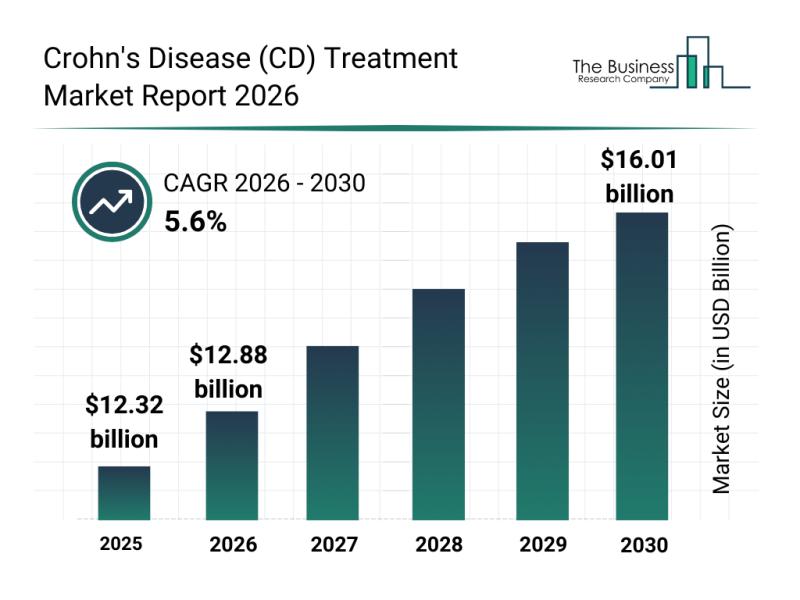
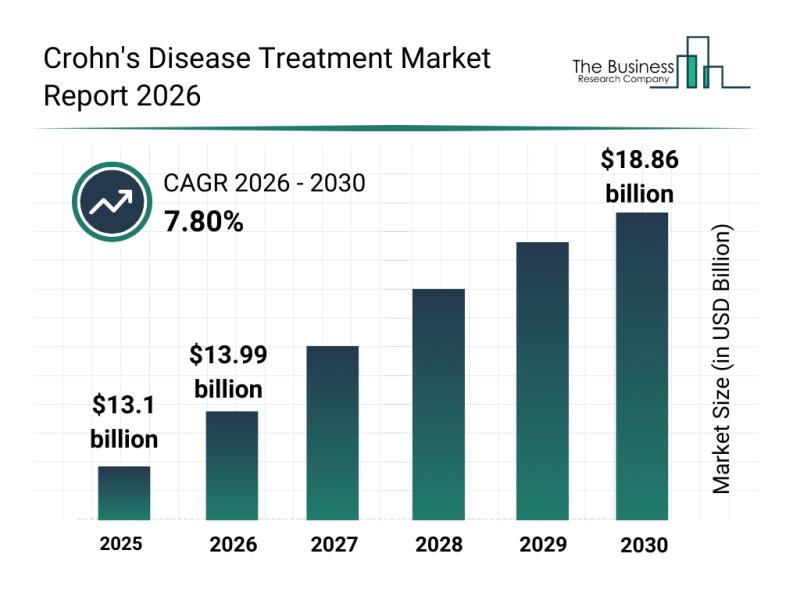
Market growth and industry activity can affect drug availability, prices, and the pace of new treatments or diagnostics reaching patients. Increased investment in biomarkers and targeted therapies may lead to better diagnostic tools and more personalized Crohn’s treatments over time.
Who Should Pay Attention
Adult patients with Crohn’s disease, caregivers, clinicians, researchers, and people following pharmaceutical industry developments or new diagnostic technologies for IBD.
Study Snapshot
Story typePress release
Evidence typeMarket or Business News
Source depthFull source text
What To Know
This is a market research summary describing projected market growth, leading companies, recent industry deals, and treatment-sector trends for Crohn’s disease therapies.
It highlights expected market size and CAGR, lists major pharmaceutical players, and notes trends such as growing use of biologics, targeted small molecules, non‑invasive biomarker diagnostics, and personalized treatment approaches. The piece is a commercial market report summary rather than clinical guidance or a research study.
It mentions specific drug classes and several drug names (antibiotics, aminosalicylates, corticosteroids, immunomodulators, biologics, JAK inhibitors) as part of market segmentation and gives examples of diagnostic technology (IBDSENSE) and company activity (Merck acquisition of Prometheus).
If you’re interested in treatment options or new diagnostics, this article points to companies and technologies to follow but does not report clinical trial results or give medical recommendations. For personal treatment questions, consult your clinician.
Keep In Mind
This article is a commercial market report summary from a business research firm and focuses on industry projections and company activity rather than primary clinical data. It does not present clinical trial outcomes; follow-up with peer‑reviewed studies or regulatory announcements is needed to understand therapeutic benefits and safety.
Source Details
Review the original publication for the complete reporting, methods, and context.
This Cure8 brief is based on source text from the linked article. Cure8 is informational only and is not a substitute for professional medical advice, diagnosis, or treatment.
Market shifts — including more biosimilars, expanding biologic and small-molecule options, and wider online pharmacy access — can affect how quickly and affordably new Crohn’s treatments reach patients. Patients on...
Market reports can signal which drugs, companies, and biosimilars are becoming more available and may affect access and cost. Announcements about biosimilars could influence treatment affordability and prescribing...
This article is a market research summary about the global Crohn’s disease treatment market — it describes sales forecasts, industry players, and market trends rather than new clinical findings or patient-focused...