
openpr.com
Cure8 news brief
Cure8 news brief
Market shifts — including more biosimilars, expanding biologic and small-molecule options, and wider online pharmacy access — can affect how quickly and affordably new Crohn’s treatments reach patients. Patients on biologics or considering newer drugs may see more choices and possibly lower costs over time.
Adult patients with Crohn’s disease, caregivers, clinicians treating IBD, and researchers or industry stakeholders tracking drug availability and market trends.
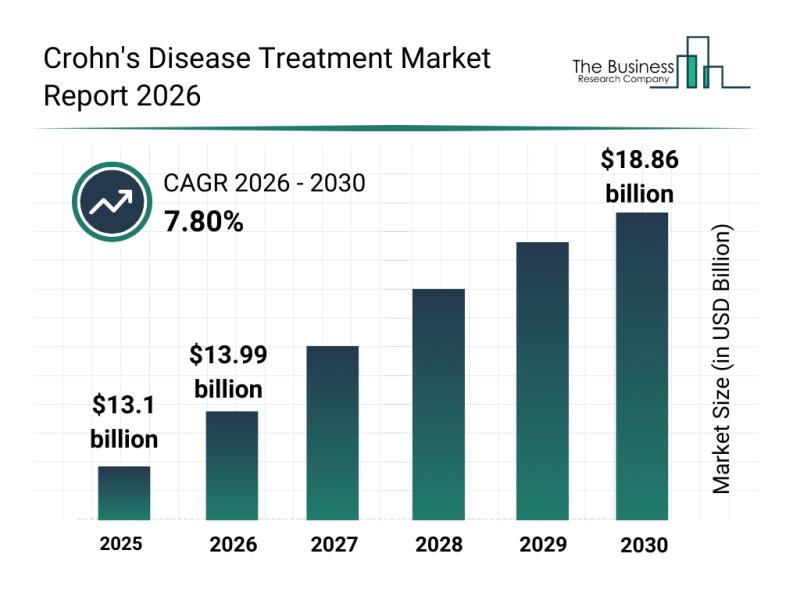
This is a market research / industry report summary covering projected market growth, key companies, and trends in Crohn’s disease treatment, including mentions of biologics, biosimilars (e.g., biosimilar ustekinumab/Pyzchiva), small molecules, and common drug classes used in Crohn’s care.
The piece highlights market drivers such as increased biologic and small-molecule pipelines, adoption of biosimilars to broaden access, online pharmacy growth, and commercial activity (e.g., Merck’s acquisition of Prometheus). It is a commercial market analysis rather than clinical guidance.
If you’re looking for clinical advice about treatments or the implications of specific drugs for individual care, discuss with your gastroenterology clinician; this article is about market trends and product availability rather than new clinical trial results.
This is a commercial market report summary and not primary clinical research. It references product launches and corporate activity (e.g., Sandoz Pyzchiva launch, Merck acquisition) to illustrate market trends; it does not present new clinical trial data or treatment recommendations.
Review the original publication for the complete reporting, methods, and context.
This Cure8 brief is based on source text from the linked article. Cure8 is informational only and is not a substitute for professional medical advice, diagnosis, or treatment.
An interchangeable biosimilar to ustekinumab could expand access and lower costs for people with Crohn’s disease and ulcerative colitis who use Stelara. Pharmacists may be able to substitute the biosimilar for the...
A large network meta-analysis found adalimumab reduces risk of clinical relapse in Crohn’s disease and upadacitinib reduces loss of clinical response; these findings summarize comparative maintenance therapy evidence...
Biologics are a common and important treatment option for people with moderate to severe Crohn’s disease; knowing when they’re used and their potential risks helps patients discuss treatment choices with their care team.