
medicalnewstoday.com
Cure8 news brief
Cure8 news brief
Biologics are a common and important treatment option for people with moderate to severe Crohn’s disease; knowing when they’re used and their potential risks helps patients discuss treatment choices with their care team.
The article also covers practical points like infection screening and monitoring that matter before starting these drugs.
Adults with Crohn’s disease, people newly diagnosed or considering escalation to biologic therapy, patients currently on or about to start biologics, and gastroenterology clinicians.
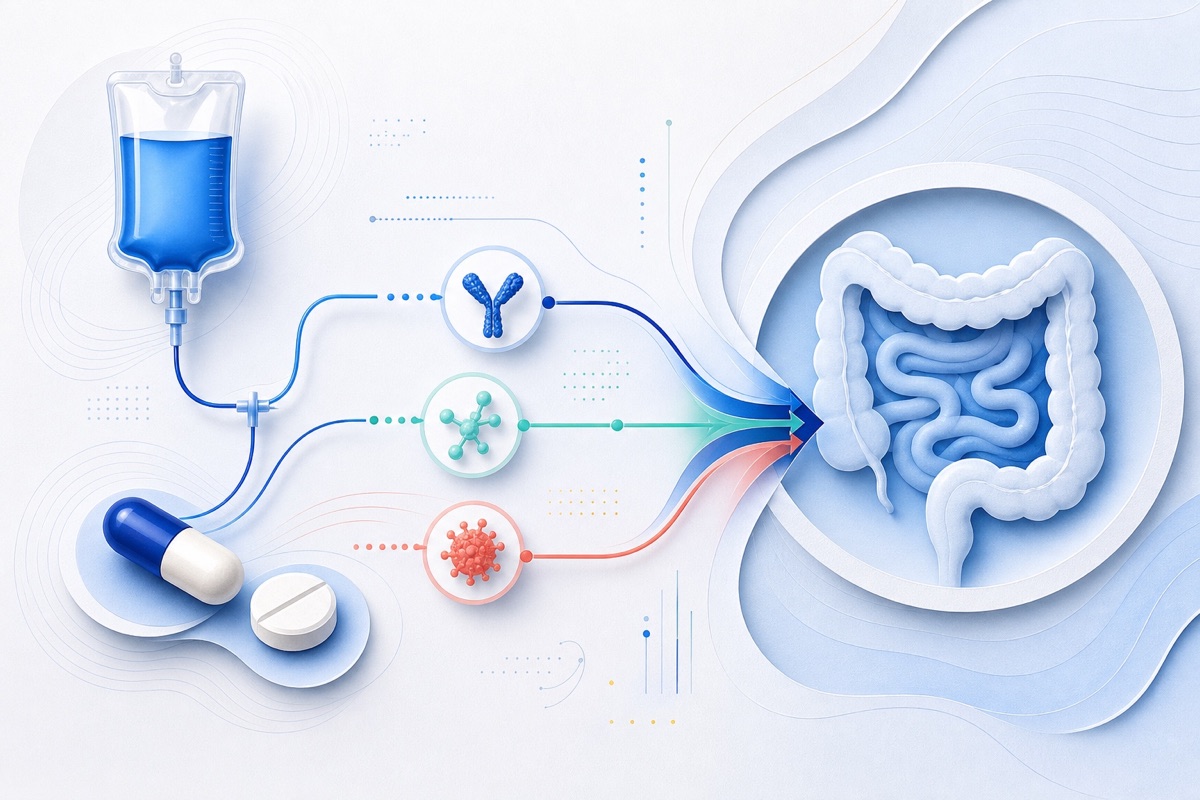
This article explains when biologic drugs are used for Crohn’s disease, how they work, the main drug classes and examples (anti‑TNF agents, integrin blockers, interleukin inhibitors), common routes of administration, typical side effects, infection risks, and monitoring considerations.
It notes that biologics are often used for moderate to severe Crohn’s disease and that guidelines increasingly support earlier use in suitable patients. It lists specific biologic medicines and biosimilars and discusses vaccination and screening for latent infections before starting treatment.
If you’re considering biologic therapy, the article emphasizes discussion with your gastroenterologist about which agent fits your situation and regular monitoring for side effects and infections. For full details, read the original Medical News Today article linked in the source.
This is a patient-education overview summarizing current guidelines and common clinical practices; it is not new clinical trial data. Individual treatment decisions depend on personal health history and clinician judgment. The article recommends screening for infections and staying up to date with vaccinations before starting biologics.
Review the original publication for the complete reporting, methods, and context.
This Cure8 brief is based on source text from the linked article. Cure8 is informational only and is not a substitute for professional medical advice, diagnosis, or treatment.
This video quickly outlines the range of medical treatments now available for Crohn’s disease, including newer approvals. Knowing drug classes and recent options can help patients and clinicians discuss treatment plans...
The study is comparing common biologics given after Crohn's surgery to prevent endoscopic recurrence—a key issue for people who have had bowel resection. Knowing which drugs perform better in real‑world practice could...
This report outlines which drugs and companies are shaping Crohn’s disease treatment options and predicts market shifts that may affect treatment availability, costs, and future therapy choices.