Depleting luminal cysteine with engineered bacteroides vulgatus alleviates experimental colitis by suppressing Th17 differentiation through an ATF6-dependent mechanism
This study describes a new microbiome-engineering approach that reduced inflammation in mouse colitis models by sequestering cysteine and altering T cell behavior. If followed up, it could point to novel future therapies that target gut microbial metabolism to modify immune responses in UC and IBD.
Who Should Pay Attention
Researchers in microbiome and immune-pathway therapeutics, clinicians interested in emerging biologic/synbiotic strategies for IBD, and patients following preclinical advances in microbiome-based treatments.
Study Snapshot
Story typeResearch paper
Evidence typeResearch paper
Source depthJournal abstract
What To Know
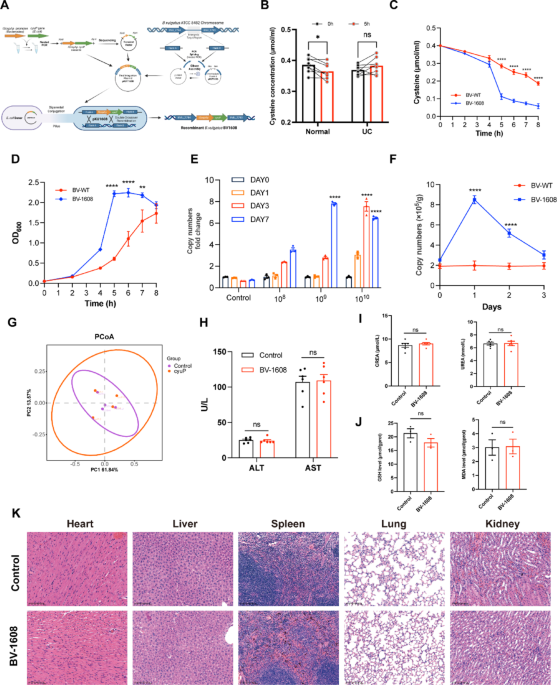
This paper reports an engineered Bacteroides vulgatus strain (BV1608) designed to take up luminal cysteine and create a local cysteine-restricted environment in the gut.
In DSS mouse models of acute and chronic colitis the engineered strain showed better colonization than wild-type and was associated with reduced colitis signs, lower pro-inflammatory cytokines, and improved barrier markers. Mechanistically, the authors link cysteine restriction to reduced differentiation of pathogenic Th17 (IL‑17A+ CD4+) cells.
They present evidence that cystine restriction activates ATF6 in CD4+ T cells and that inhibiting ATF6 partly restores IL‑17A+ CD4+ differentiation; BATF2 is proposed as a downstream transcriptional node. The work is presented as a microbiome-based, metabolically engineered strategy to modulate host immunometabolism and alleviate experimental colitis.
Keep In Mind
Structured-content depth: abstract from a peer-reviewed journal article. The results are preclinical (mouse models and cellular mechanisms) and should not be interpreted as evidence of safety or efficacy in humans.
Source Details
Review the original publication for the complete reporting, methods, and context.
Funding disclosed by the source: National High Level Hospital Clinical Research Funding, award 2024CX21; ational Natural Science Foundation of China, award 32020103002; Beijing Natural Science Foundation, award 7262129; National Natural Science Foundation of China, award 32370837,32571072
This Cure8 brief is based on source text from the linked article. Cure8 is informational only and is not a substitute for professional medical advice, diagnosis, or treatment.
This study describes a new plant-derived nanoparticle (EBDEVs) that reduced inflammation and improved colon health in a mouse model of ulcerative colitis and altered the gut microbiota — early evidence that may guide...
The work links a missing bacterial metabolite (HDCA) to macrophage metabolism and reduced intestinal inflammation in experimental models, highlighting a potential microbiome-derived pathway that could be targeted for...
The study suggests a novel plant-derived nanoparticle approach reduced inflammation and repaired barrier function in a mouse model of colitis and changed the gut microbiome — a potential early-stage route for new IBD...