The paper identifies a specific bacterial metabolite-receptor pathway (succinic acid → SUCNR1 → NF-κB) by which Fusobacterium nucleatum may worsen intestinal inflammation, suggesting new targets for IBD research and therapies.
Who Should Pay Attention
Researchers (microbiome, immunology), clinicians treating IBD, and patients interested in microbiome-related causes and emerging therapeutic targets.
Study Snapshot
Story typeResearch paper
Evidence typeResearch paper
Source depthJournal abstract
What To Know
The researchers combined human fecal/mucosal samples, metabolomics, mouse colitis models, bacterial genetics, and cell assays. They report that F. nucleatum raises intestinal succinic acid, upregulates SUCNR1 on macrophages, activates NF-κB, and drives pro-inflammatory macrophage changes that worsen epithelial injury and colitis. A genetically modified F.
nucleatum strain that cannot produce succinic acid had less ability to trigger these effects, and adding succinic acid back restored them. Blocking SUCNR1 or NF-κB reduced the macrophage inflammatory response in experimental models. These findings point to the F.
nucleatum–succinic acid–SUCNR1–NF-κB axis as a potential therapeutic target, but the work is mechanistic and based on preclinical and translational experiments, not a clinical trial.
Keep In Mind
Findings are grounded in mechanistic experiments using human samples, animal colitis models, and bacterial genetics. This is not a clinical trial; therapeutic implications remain speculative until tested in humans.
Source Details
Review the original publication for the complete reporting, methods, and context.
Funding disclosed by the source: National Natural Science Foundation of China under Grant - 82370542; National Key R&D Program of China under Grant - 2023YFB3906600; Hubei Provincial Health Science and Technology Project - WJ2025M051
This Cure8 brief is based on source text from the linked article. Cure8 is informational only and is not a substitute for professional medical advice, diagnosis, or treatment.
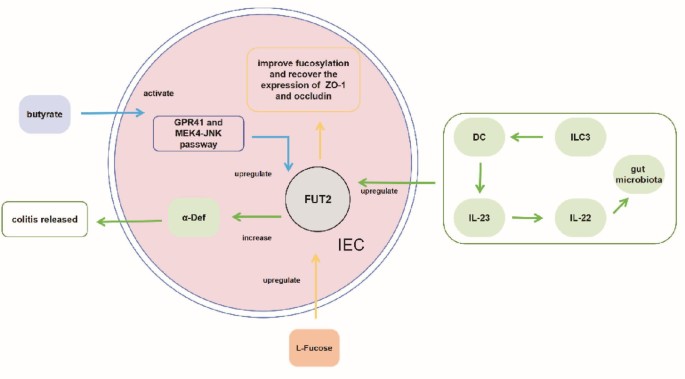
FUT2-mediated fucosylation shapes gut glycans and the microbiome, mechanisms relevant to inflammation and mucosal barrier function in IBD. Understanding these pathways could point to future biomarkers or therapeutic...
The study suggests a plant-derived AHR-activating mechanism that reduced inflammation and repaired the intestinal barrier in preclinical ulcerative colitis models, a pathway that could be relevant to future therapies or...
The study links depleted fatty acid oxidation metabolites—especially butyrate—to impaired regulatory T cell development in IBD, suggesting a metabolic pathway that may influence immune tolerance and disease activity.