Cure8 research brief
Why This Matters
Noninvasive biomarkers that predict response to anti‑TNF drugs could help personalize treatment decisions and identify early who will achieve long‑term endoscopic remission.
Who Should Pay Attention
Pediatric patients with Crohn's disease and their caregivers, clinicians who treat pediatric IBD, researchers studying biomarkers or anti‑TNF response, and patients on biologic therapy interested in response monitoring.
Study Snapshot
What To Know
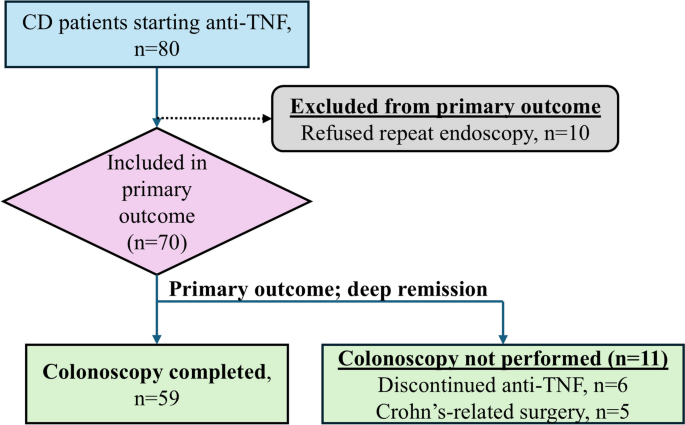
The ENvISION study prospectively enrolled children and teens (2–19 years) before starting infliximab or adalimumab and measured 7,322 proteins with SomaScan at baseline, 3 months, and 12 months.
The investigators report a distinct baseline CD Core Proteome that remains dysregulated after treatment (shifting to a treated‑CD profile rather than returning to control levels).
In an exploratory analysis of how proteins changed from baseline to month 3, they nominate a three‑protein panel (IRF1, NEUROG1, APOA5) whose early change was associated with endoscopic remission at month 12 (reported AUROC 0.94), but the authors state these markers require external validation.
Keep In Mind
Findings come from a prospectively enrolled pediatric cohort and an exploratory proteomic analysis using SomaScan. The three‑protein panel is promising but reported as requiring external validation; do not interpret as a validated clinical test yet.
Source Details
Review the original publication for the complete reporting, methods, and context.
This Cure8 brief is based on source text from the linked article. Cure8 is informational only and is not a substitute for professional medical advice, diagnosis, or treatment.