Journal of Crohn's & colitis
Cure8 research brief
Cure8 research brief
Orofacial granulomatosis often co-occurs with Crohn's disease and appears linked to a distinct Crohn's phenotype and treatment needs. The findings suggest that advanced therapies can be effective for OFG-associated CD and that dose optimization and drug-levels may matter.
Patients with Crohn's disease and orofacial granulomatous features, clinicians managing complex CD (especially with upper-GI or perianal disease), and researchers studying IBD phenotypes and treatment response.
This study pooled records from two UK centers (n=117) and compared clinical features with a large CD control cohort. OFG was linked to younger age at diagnosis and more frequent ileocolonic, upper-GI, and perianal disease.
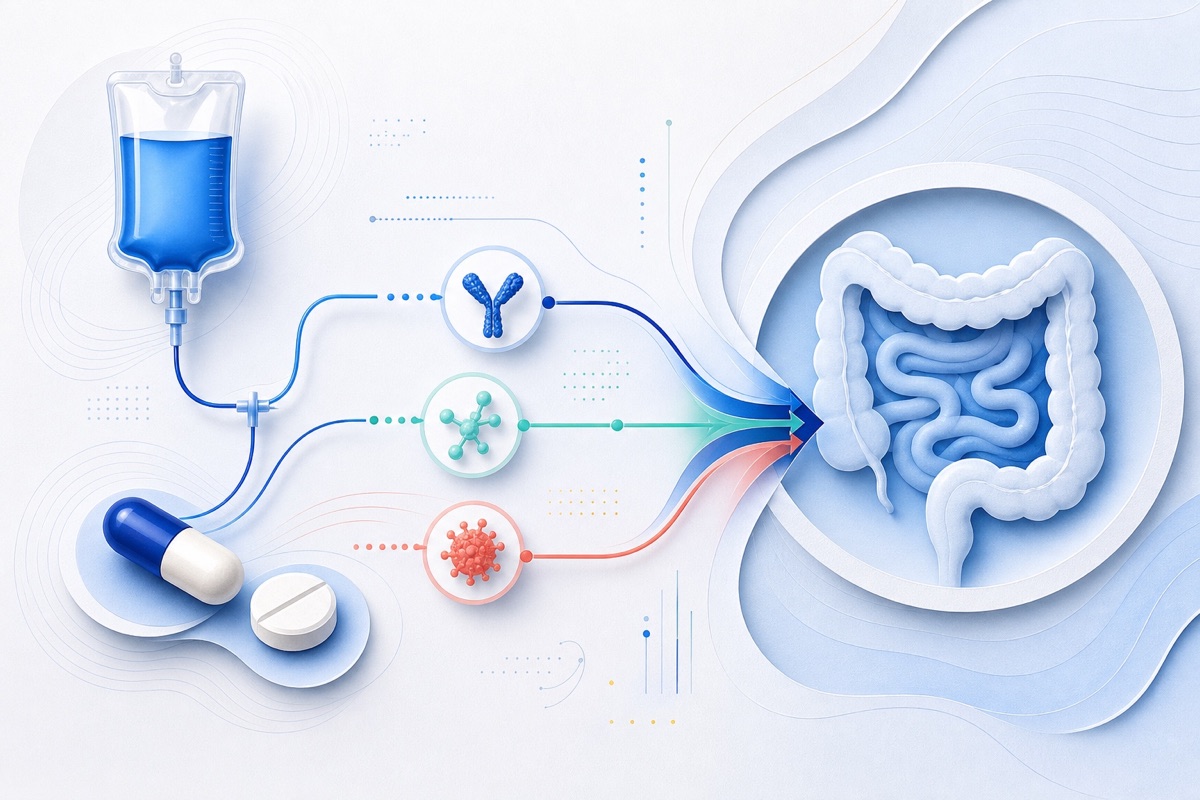
The authors report that anti-TNF therapies (infliximab, adalimumab), anti-IL-23/12-23 agents (ustekinumab, risankizumab), and the JAK inhibitor upadacitinib produced clinical remission in a notable fraction of patients, often requiring dose escalation.
The study also found that higher circulating anti-TNF drug concentrations were associated with greater odds of response. The report is grounded in the article abstract and patient-record data described by the authors; it does not represent new treatment recommendations.
Discussing therapy changes, dose optimization, or drug-level testing with a treating clinician is appropriate for individual care decisions.
This is a retrospective multicenter cohort study using clinical records and comparison with a registry control cohort; results are observational and subject to selection and treatment-choice biases. The structured content depth is abstract-based (summary grounded in the article abstract).
Review the original publication for the complete reporting, methods, and context.
This Cure8 brief is based on source text from the linked article. Cure8 is informational only and is not a substitute for professional medical advice, diagnosis, or treatment.
For people with multi-refractory Crohn’s disease or ulcerative colitis, adding a JAK inhibitor to an existing biologic (advanced combination therapy) may convert partial responses into deeper remission in selected cases,...
This video quickly outlines the range of medical treatments now available for Crohn’s disease, including newer approvals. Knowing drug classes and recent options can help patients and clinicians discuss treatment plans...
This report outlines which drugs and companies are shaping Crohn’s disease treatment options and predicts market shifts that may affect treatment availability, costs, and future therapy choices.