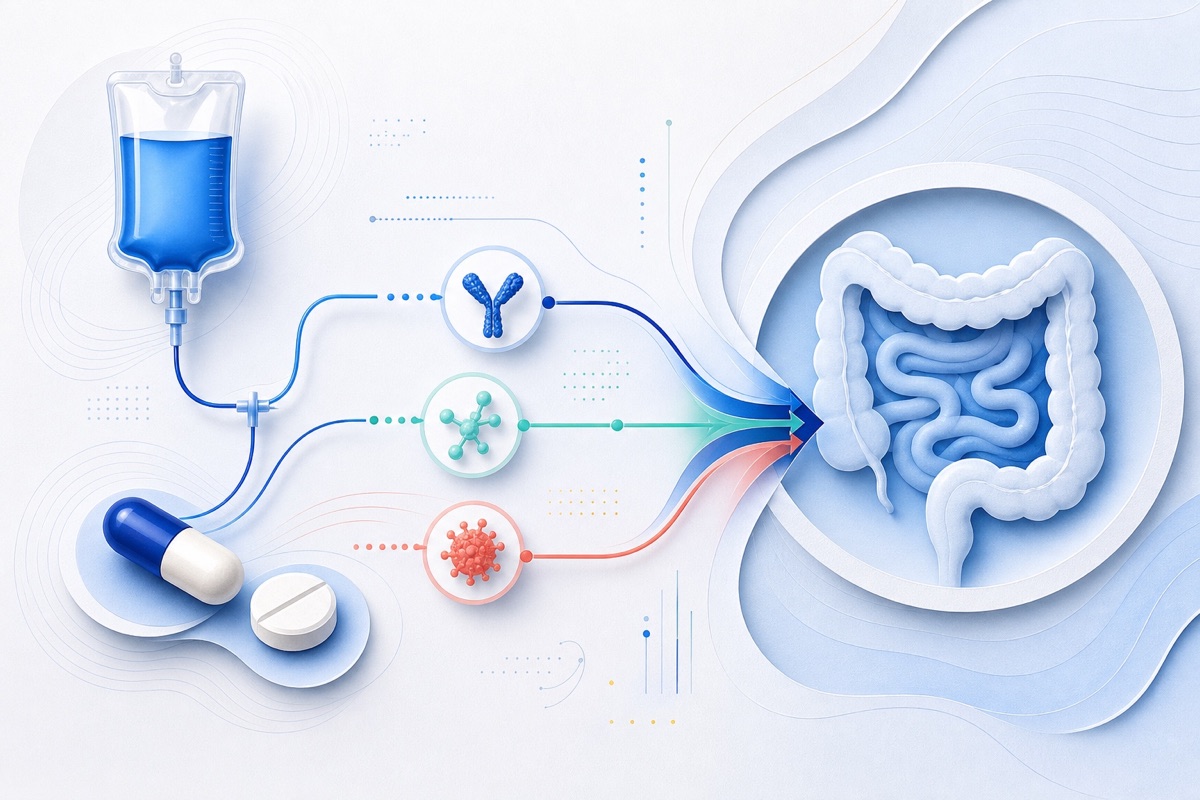
Infliximab dosing can be hard to personalize. This study shows that selecting pharmacokinetic models based on IBD type and severity can improve how well drug levels are predicted, which could help tailor dosing for patients on infliximab.
Who Should Pay Attention
Clinicians/pharmacists using infliximab TDM, researchers in PK modeling, and patients on infliximab interested in precision dosing.
Study Snapshot
Story typeResearch paper
Evidence typeResearch paper
Source depthJournal abstract
What To Know
This study compared 20 published population pharmacokinetic models for infliximab (IFX) across different IBD phenotypes and severity groups to see which models best predict drug concentrations and support model-informed precision dosing (MIPD).
The researchers evaluated models using routine trough concentrations and multiple prediction and simulation diagnostics (MDPE, MAPE, Bayesian forecasts, NPDE, and VPC). No single model met all predefined performance criteria across every subgroup.
However, certain models performed better for specific groups: Matsuoka and Xu models were strong a priori choices for overall and Crohn’s disease respectively; Ternant 2008 and others showed good a posteriori performance in subgroup analyses.
The paper’s main message is that disease phenotype and severity matter when selecting an IFX pharmacokinetic model, and tailoring model choice by subgroup may improve predictive accuracy for individualized dosing.
Keep In Mind
Results are based on retrospective model evaluations using routine trough concentrations; no single model met all performance criteria and the study assesses predictive performance rather than clinical outcomes.
Source Details
Review the original publication for the complete reporting, methods, and context.
Conflict statement: The authors have declared that no competing interests exist.
This Cure8 brief is based on source text from the linked article. Cure8 is informational only and is not a substitute for professional medical advice, diagnosis, or treatment.
Proactive TDM of infliximab was associated with high 1‑ and 2‑year durability in this pediatric Crohn's cohort, and the study flags clinical factors that may predict need to switch biologics. This could be relevant when...
Subcutaneous infliximab may let children on infliximab avoid regular IV infusions while keeping drug levels high and maintaining remission. Results are relevant to families and clinicians considering switching pediatric...
Fatigue is common in people with Crohn’s disease and ulcerative colitis and can persist even when standard measures say the disease is in remission. This study suggests stricter definitions of remission don’t necessarily...