Cell reports. Medicine
Cure8 research brief
Cure8 research brief
The study explores a novel method to reduce gut oxidative stress — a contributor to IBD inflammation — by using an engineered probiotic to edit NOX2, which could point toward new therapeutic strategies if translated to humans.
Researchers, translational clinicians, and those following microbiome- or gene-editing-based IBD therapies.
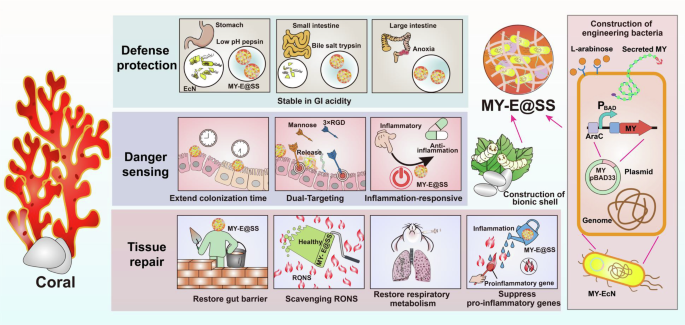
The study reports laboratory and mouse-model results: the authors encapsulated the engineered EcN in a protective hydrogel to boost survival through the gut, achieved partial reduction of NOX2 expression in cell experiments, and observed reduced inflammation in a chemical (DSS) mouse colitis model.
They propose a mechanism involving activation of NRF2-driven antioxidant pathways and increased glutathione. This is preclinical research in cells and mice, not a human study.
The work focuses on a genetic-editing strategy delivered by live bacteria and a hydrogel, which raises additional safety, regulatory, and delivery considerations that need extensive study before any human testing.
Findings are from cell experiments and a DSS mouse colitis model (preclinical). Safety, delivery, off-target editing, and regulatory approval would need thorough evaluation before any human application.
Review the original publication for the complete reporting, methods, and context.
Conflict statement: Declaration of interests The authors declare no competing interests.
This Cure8 brief is based on source text from the linked article. Cure8 is informational only and is not a substitute for professional medical advice, diagnosis, or treatment.
This study presents an engineered probiotic delivery platform that could improve survival and targeted action of live microbial therapies for IBD, potentially reducing local inflammation while affecting the gut...
This study describes a local rectal therapy that combines mesalamine with probiotic‑derived extracellular vesicles to promote mucosal healing and reduce inflammation in ulcerative colitis models, which could point toward...
A natural compound (C3G) reduced inflammation and changed gut bacteria and metabolites in an experimental colitis model, pointing to possible new mechanisms or leads for IBD therapies.