
Advances in Therapy
Cure8 research brief
Cure8 research brief
People with IBD and clinicians often face decisions about whether to stop biologics or small molecules before abdominal surgery.
This large systematic review suggests there is no clear, consistent harmful effect of advanced therapies on postoperative complications after accounting for confounding, so routine preoperative cessation is not supported by current evidence.
Adult patients with Crohn's disease or ulcerative colitis considering or scheduled for abdominal surgery; clinicians (gastroenterologists, colorectal surgeons) managing perioperative drug decisions; researchers studying perioperative outcomes and immunomodulatory therapies.
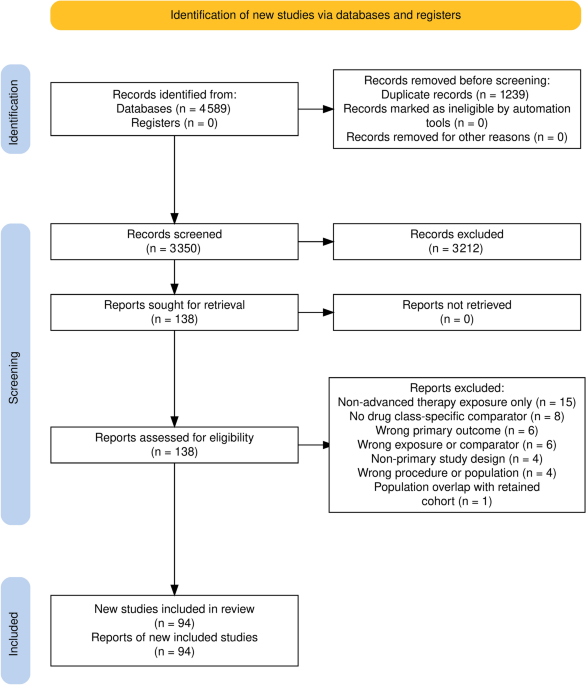
This paper pooled comparative and absolute postoperative complication rates across multiple drug classes and surgical outcomes using both crude and confounding‑adjusted estimates.
The review explicitly included commonly used biologics (eg, infliximab, adalimumab, vedolizumab, ustekinumab) and the JAK inhibitor tofacitinib, and assessed study quality, publication era, and database methodology.
The authors observed that signals suggesting harm were attenuated when studies adjusted for confounders, and that the only study verifying drug exposure by serum level did not show the harmful signal—raising the possibility that sicker patients were more likely to receive these drugs and to have complications (channeling bias) rather than a direct drug effect.
Practical takeaways are cautious: current evidence is heterogeneous and low certainty, so routine blanket preoperative discontinuation of advanced therapies is not justified by these data; individualized perioperative risk discussion and further prospective studies are recommended.
The review graded the certainty of evidence as very low for many outcomes and noted heterogeneity across studies (design, exposure definitions, outcome ascertainment). Findings attenuated after confounding adjustment and were absent in the single study that confirmed drug exposure by serum level, indicating potential channeling/confounding rather than causal drug effects.
This is a meta-analysis of mostly observational cohorts; prospective evaluation of newer agents is needed.
Review the original publication for the complete reporting, methods, and context.
This Cure8 brief is based on source text from the linked article. Cure8 is informational only and is not a substitute for professional medical advice, diagnosis, or treatment.
A broad comparison of many maintenance therapies helps patients and clinicians understand which drugs have trial evidence for preventing relapse or loss of response in Crohn's disease. The review highlights adalimumab,...
The study is comparing common biologics given after Crohn's surgery to prevent endoscopic recurrence—a key issue for people who have had bowel resection. Knowing which drugs perform better in real‑world practice could...
Early changes in stool tests (qFIT and fecal calprotectin) might help predict which biologic‑naive ulcerative colitis patients will relapse or need escalation to biologic/JAK therapy. If validated, such markers could...