Molecular biomedicine
Cure8 research brief
Cure8 research brief
The study identifies thymosin β4 as a protective factor in experimental colitis and suggests an injectable/oral recombinant peptide might reduce inflammation and intestinal fibrosis by suppressing mineralocorticoid receptor signaling—an idea that could lead to new drug development for IBD.
Researchers, translational scientists, drug developers, and clinicians interested in IBD biology, fibrosis, and novel therapeutic targets.
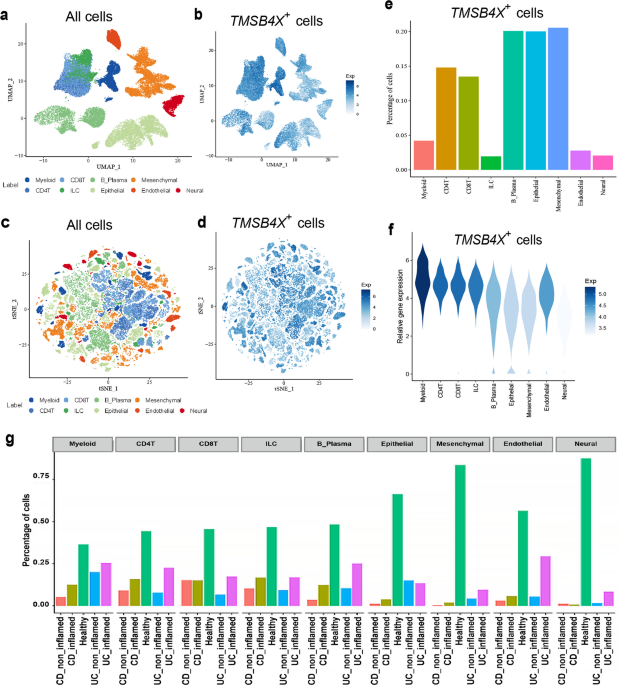
This abstract reports preclinical research showing that thymosin β4 (TMSB4X) is reduced in colonic tissue from people with IBD and that loss of the gene in mice increases susceptibility to DSS colitis.
Giving recombinant human thymosin β4 (rhTβ4) by mouth improved survival, reduced weight loss and epithelial injury, lowered inflammatory cytokines, and reduced markers of intestinal fibrosis in mouse models.
The authors link rhTβ4’s effects to suppression of mineralocorticoid receptor (MR/NR3C2) signaling using transcriptomics, reporter assays, and downstream gene analyses, and propose restoring Tβ4 activity as a potential therapeutic strategy for IBD.
This is preclinical laboratory work (mouse models, molecular assays, and transcriptomics) published as a journal article abstract. It describes candidate-target engagement and disease-modifying effects in animals and supports further research, not clinical use.
Preclinical mouse-model work and molecular assays; not a clinical trial. Findings need replication and human testing before any change in care.
Review the original publication for the complete reporting, methods, and context.
Conflict statement: Declarations. Ethics approval and consent to participate: All experimental procedures were approved by the Animal Laboratory of Laboratory Animal Center, Academy of Military Medical Sciences (IACUC-DWZX-2023–031), and conducted in accordance with the National Institutes of Health Guide for the Care and Use of Laboratory Animals. Consent for publication: Not applicable. Competing interests: The authors declare that they have no competing interests.
This Cure8 brief is based on source text from the linked article. Cure8 is informational only and is not a substitute for professional medical advice, diagnosis, or treatment.
This preclinical study identifies Thymosin β4 as a protective factor in intestinal inflammation and fibrosis and suggests rhTβ4 could be explored as a new therapeutic approach for IBD by targeting mineralocorticoid...
The work identifies an endogenous peptide (Tβ4) that is reduced in IBD and shows that replacing it in mice lessens colitis and intestinal fibrosis, pointing to a new potential treatment target for inflammation and...
The study presents a new oral NRF2 activator that reduced inflammation and tissue injury in a mouse model of ulcerative colitis, suggesting a potential novel therapeutic approach.