Identifies factors that may raise the chance of developing pouchitis after IPAA — useful for patients considering or recovering from proctocolectomy and for clinicians planning perioperative care or monitoring.
Who Should Pay Attention
Patients with ulcerative colitis who have had or are considering IPAA (post-surgery patients), colorectal surgeons and gastroenterologists, and researchers studying postoperative outcomes or pouchitis risk.
Study Snapshot
Story typeResearch paper
Evidence typeResearch paper
Source depthJournal abstract
What To Know
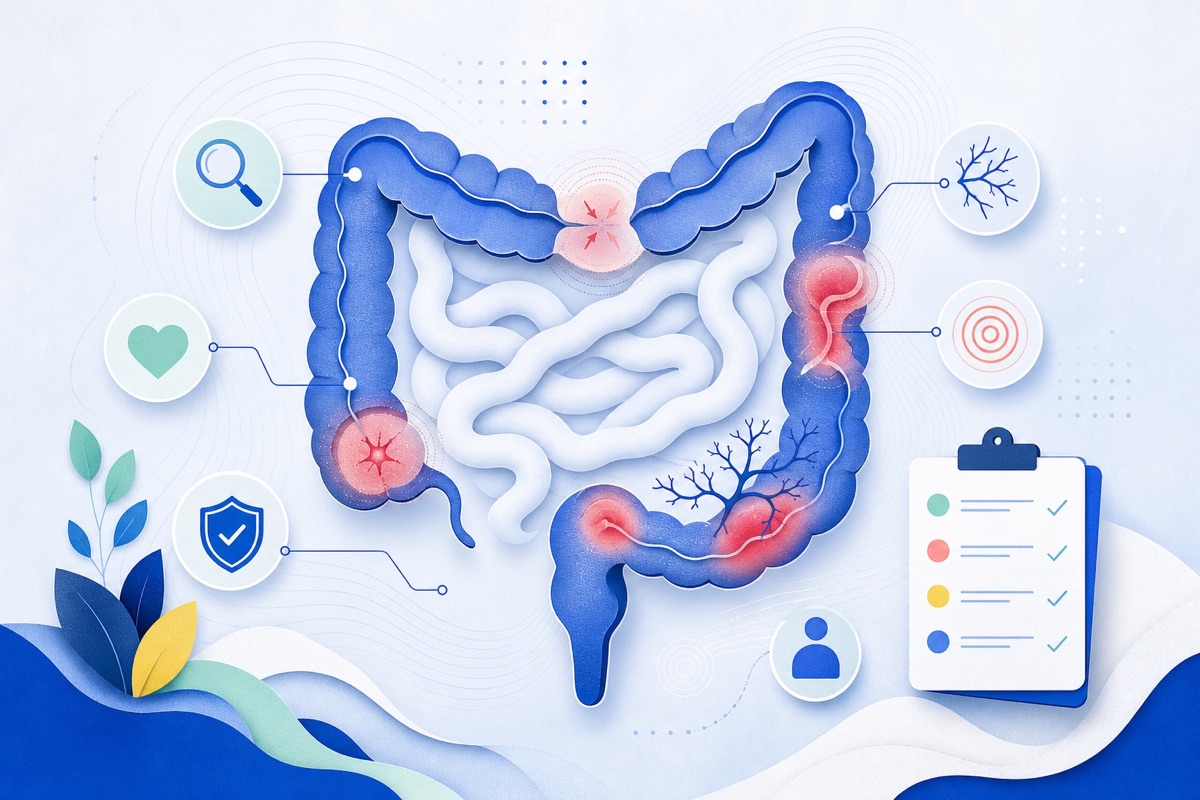
The paper reviewed 49 studies and grouped potential risk factors into clinical, endoscopic, histologic, laboratory, genetic, and other categories. Multivariable analyses across studies most reliably implicated preoperative corticosteroid use and PSC as predictors of later pouchitis.
The authors also report pooled odds ratios showing higher risk with male sex, PSC, preoperative steroids, and preoperative anti-TNF therapy, but note heterogeneity and inconsistent findings for many other proposed risks.
The review emphasizes that methods and diagnostic criteria differed across studies, so some associations remain uncertain and need prospective validation. Clinicians and patients considering IPAA should be aware of these potential risk factors, but individual risk varies and management decisions should be personalized.
Keep In Mind
Findings come from a literature synthesis with heterogenous study designs and diagnostic criteria; the authors stress the need for standardized methods and prospective studies. The article is an abstract-style summary of a systematic review/meta-analysis.
Source Details
Review the original publication for the complete reporting, methods, and context.
This Cure8 brief is based on source text from the linked article. Cure8 is informational only and is not a substitute for professional medical advice, diagnosis, or treatment.
The review links specific therapies and surgical options to outcomes that matter to people with IBD — mucosal healing, lower hospitalizations, and reduced need for surgery — and highlights that combining medical and...
People with UC can develop severe neutrophilic skin complications like Sweet’s syndrome that may reflect active bowel inflammation even when recent tests suggested remission.
Extrapulmonary TB can be triggered or revealed during immunosuppressive biologic therapy and may mimic other causes of liver injury; early recognition and TB-specific testing are important for timely treatment and to...