
Advanced Composites and Hybrid Materials
Cure8 research brief
Cure8 research brief
The study reports a novel nanoparticle method to deliver curcumin specifically to inflamed colon tissue, which in mice improved gut inflammation, microbiome balance, barrier repair, and depression‑like behaviors—areas that matter to people with IBD because of gut inflammation, dysbiosis, and neuropsychiatric comorbidities.
Researchers and clinicians interested in IBD therapies, drug‑delivery platforms, microbiome modulation, and gut–brain interactions; patients and caregivers following experimental IBD treatments or neuropsychiatric comorbidities of IBD.
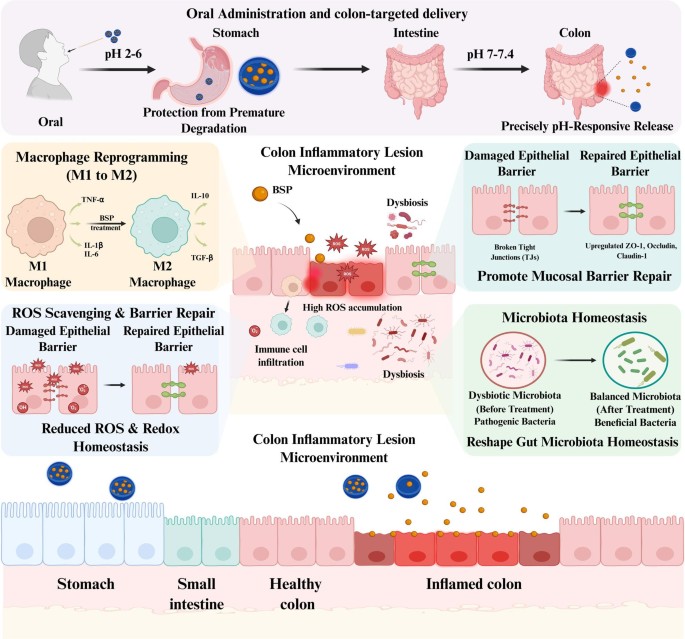
Researchers engineered curcumin-loaded, ROS‑sensitive nanoparticles intended to protect curcumin from gastric degradation and release it selectively in inflamed colon tissue.
In mouse models the treatment reportedly reduced oxidative stress, altered gut microbiota composition toward beneficial species, increased short‑chain fatty acids, and improved barrier function.
The authors also report effects on the gut–brain axis: reduced hippocampal inflammation and improved depression‑like behaviors in mice, suggesting neuro‑immune benefits beyond the gut.
This is preclinical, early‑stage research focusing on a delivery platform and biological effects in animals; it is not evidence that the therapy is safe or effective in people.
this is an animal/laboratory study published in an academic journal. Findings in mice often do not translate directly to humans; safety, dosing, and efficacy in people would require clinical trials. The article focuses on a delivery technology (curcumin nanoparticles) rather than an approved drug.
Review the original publication for the complete reporting, methods, and context.
Funding disclosed by the source: National Natural Science Foundation of China, award 32302280; Youth S&T Talent Support Programme of Guangdong Provincial Association for Science and Technology, award SKXRC2025037; Li Ka Shing Foundation STU-GTIIT Joint-research Grant, award 2025LKSFG06
This Cure8 brief is based on source text from the linked article. Cure8 is informational only and is not a substitute for professional medical advice, diagnosis, or treatment.
The study describes a new oral, colon‑targeted delivery system that improved outcomes in a mouse model of ulcerative colitis and shifted immune and microbiome markers—research that could inform future therapies focused...
The study describes a new oral nanotherapy that delivered apremilast to the inflamed colon in mice and reportedly reduced gut inflammation and behaviors resembling anxiety/depression—suggesting a combined...
People with IBD often have higher rates of anxiety and depression; this study suggests an experimental oral nanotherapy carrying apremilast might treat both gut inflammation and related neuropsychiatric symptoms in...