Researchers exploring new anti-inflammatory or antioxidant compounds for ulcerative colitis may find sanggenol L’s effects on Nrf2/HO-1 and TLR4/p65 signalling of interest. Patients should note this is early-stage, preclinical research in mice, not a clinical treatment.
Who Should Pay Attention
Researchers studying IBD pathogenesis or drug discovery, translational scientists interested in antioxidant and immune pathways, and clinicians following preclinical therapeutic developments.
Study Snapshot
Story typeResearch paper
Evidence typeResearch paper
Source depthMetadata only
What To Know
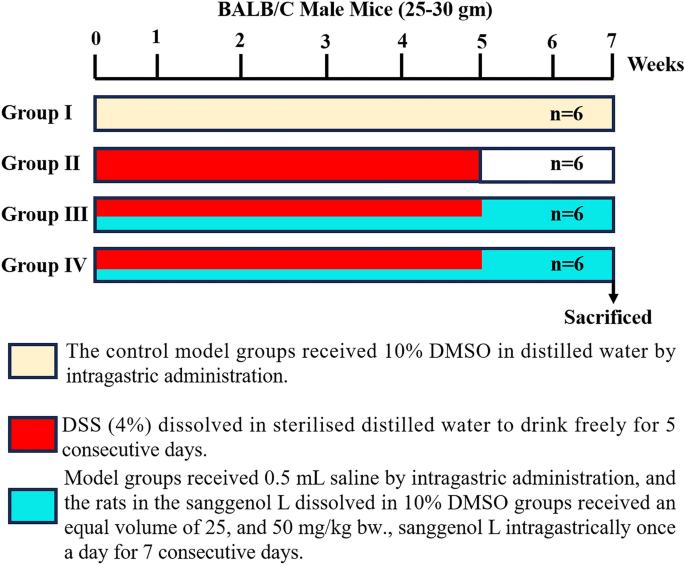
This paper reports a preclinical mouse study testing sanggenol L, a flavonoid from mulberry root bark, in dextran sulfate sodium (DSS)–induced ulcerative colitis.
The authors measured weight loss, colon length, histology, oxidative-stress markers, inflammatory mediators, liver/kidney serum markers, tight-junction mRNA, and signalling pathway activity (Nrf2/HO-1 activation and suppression of TLR4/p65). Effects were dose-related (25 and 50 mg/kg) and reported improvements in multiple endpoints.
The study is an animal experiment in a common chemical model of colitis; it does not provide clinical evidence in people with IBD. The findings are mechanistic and exploratory, focusing on antioxidant and anti-inflammatory signalling pathways rather than clinical treatments.
If you’re interested in natural-product research, antioxidant or immune-pathway targets in IBD, this paper shows preclinical activity that could motivate further research, but it is not a basis for medical treatment or dietary changes.
this is a single preclinical study in mice using the DSS model; results often don’t translate directly to humans and the article is focused on mechanistic biomarkers rather than patient outcomes.
Keep In Mind
This is an animal (mouse) study using DSS to induce colitis; such models are useful for mechanism work but do not establish safety or efficacy in humans. The article appears in a peer-reviewed journal but represents basic-science evidence; clinical studies would be required before any treatment implications.
Source Details
Review the original publication for the complete reporting, methods, and context.
This Cure8 brief is based on source text from the linked article. Cure8 is informational only and is not a substitute for professional medical advice, diagnosis, or treatment.
The study describes a new oral-delivery microsphere that improved loading and gut-targeted release of celastrol and showed beneficial effects in a mouse colitis model and on gut microbiota. If translatable, this approach...
Researchers are exploring methods to make probiotic therapies more stable through the digestive tract and to deliver anti-inflammatory molecules directly where intestinal inflammation produces high reactive oxygen...
The study identifies a previously unrecognized protein (TNFAIP1) that appears to promote inflammation in ulcerative colitis and proposes a compound (Salidroside) that directly binds and inhibits it in lab and mouse...