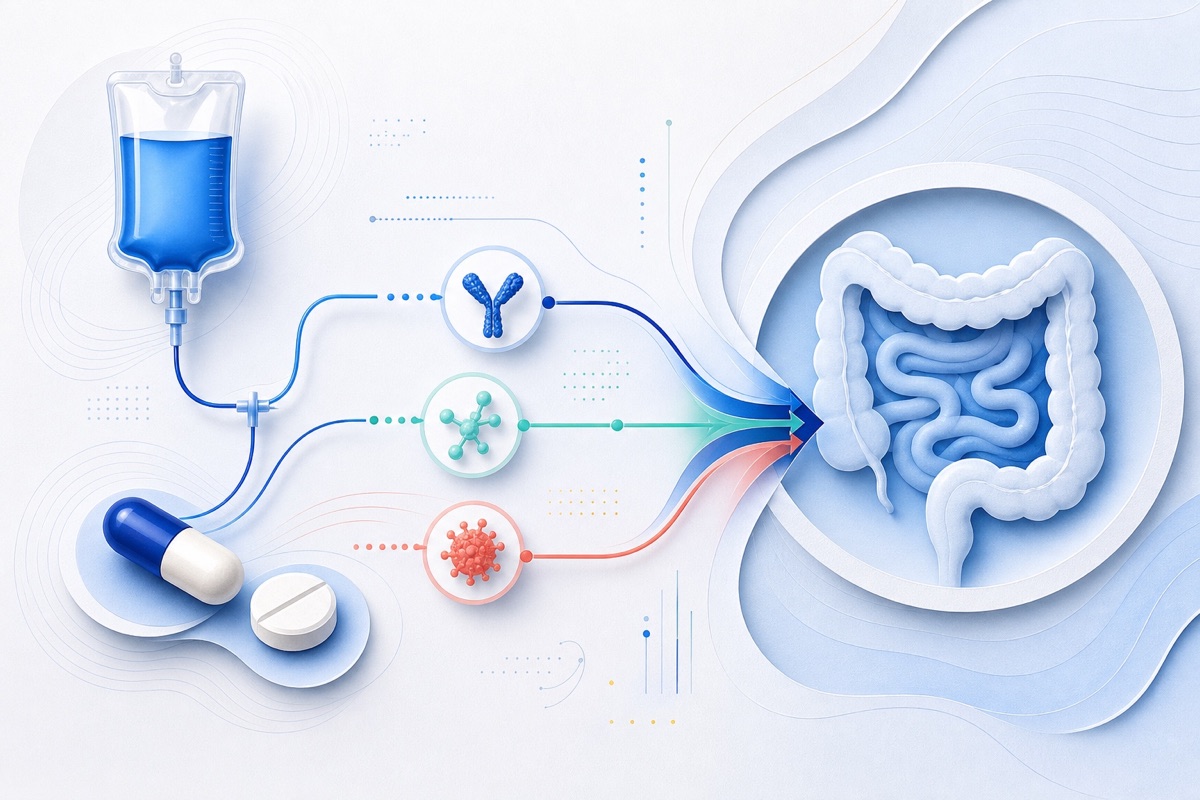
GLP-1 receptor agonists — drugs commonly used to treat obesity and metabolic disease — may help patients with IBD by reducing visceral fat and improving cardiometabolic health.
Early human data suggest they are safe in IBD and could lower hospitalizations and surgical risk, but their effect on gut inflammation remains uncertain.
Who Should Pay Attention
Adults with IBD (Crohn’s disease or ulcerative colitis), especially those with overweight/obesity or cardiometabolic comorbidities; gastroenterologists and primary care clinicians managing metabolic health; researchers studying IBD therapies and microbiome-immune interactions.
Study Snapshot
Story typeResearch paper
Evidence typeResearch paper
Source depthJournal abstract
What To Know
This abstract reviews the role of glucagon-like peptide-1 receptor agonists (GLP-1 RAs) in people with inflammatory bowel disease (IBD).
It summarizes preclinical findings (reduced visceral fat, effects on gut microbiota and barrier function, and dampening of inflammatory signaling) and early human data suggesting GLP-1 RAs are generally safe in IBD and may be linked to lower hospitalization and surgical risk, especially among patients with obesity.
The abstract also notes important practical issues such as gastrointestinal tolerability, endoscopic implications, and potential loss of lean muscle mass.
The review emphasizes that while GLP-1 RAs improve obesity and cardiometabolic comorbidities (including metabolic-associated steatotic liver disease and cardiovascular risk), their direct effects on IBD activity are still unclear and require further randomized trials.
Several randomized controlled trials are underway to evaluate GLP-1 RAs as adjunctive therapy in IBD.
If you have IBD and obesity-related health concerns, this line of therapy is a promising area of research but not yet an established IBD treatment; decisions about GLP-1 RA use should involve multidisciplinary care with your gastroenterology and primary care teams.
Keep In Mind
This entry is based on the article abstract (structured content depth: abstract). The paper is a review of preclinical and emerging clinical data and notes ongoing randomized trials; it does not provide definitive trial results. Practical issues such as GI side effects and potential muscle loss are highlighted as considerations.
Source Details
Review the original publication for the complete reporting, methods, and context.
This Cure8 brief is based on source text from the linked article. Cure8 is informational only and is not a substitute for professional medical advice, diagnosis, or treatment.
Researchers are exploring a way to deliver biologic drugs directly in the gut using engineered B cells that become long-lived plasma cells. If successful, this could allow sustained, localized anti-inflammatory protein...
Vitamin D deficiency is common in people with IBD and may relate to disease activity, complications, and quality of life; understanding this link could influence monitoring and adjunctive care.
Vitamin D may support intestinal barrier integrity and immune regulation—pathways central to mucosal healing and disease control in IBD. Understanding the evidence helps patients and clinicians consider vitamin D as a...