Analytical chemistry
Cure8 research brief
Cure8 research brief
A colon-targeted, enzyme-activated imaging probe could help distinguish early versus late inflammatory stages in IBD and provide a noninvasive fecal fluorescence signal—potentially improving disease monitoring beyond current clinical tools.
Researchers studying IBD biomarkers and imaging; clinicians interested in new diagnostic/monitoring technologies; translational scientists working on molecular probes.
Researchers describe a granzyme A (GzmA)–activatable near-infrared nanoprobe (IR780 NP) that becomes fluorescent when cleaved by GzmA and is formulated with an enteric coating (Eudragit S100) to release in the colon.
In mouse models of dextran sulfate sodium (DSS)–induced colitis, the probe produced stronger colon fluorescence at an early disease stage (day 4) with higher GzmA expression and lower fluorescence at a later stage (day 8). The authors also report that the probe enabled fecal fluorescence readout as a noninvasive adjunct to imaging.
The study is preclinical (mouse models) and presented as an analytical/chemical research article with an abstract-level description. It demonstrates a proof-of-concept molecular imaging agent targeting a protease associated with inflammation, not a tested clinical diagnostic yet.
If this work advances, it could offer a way to noninvasively monitor colitis stage through colon-targeted fluorescence imaging and fecal fluorescence, but safety, efficacy, and translation to humans remain to be established.
This report is an abstract/experimental preclinical study in DSS mouse models; it does not report human data. Translation to clinical use requires additional safety testing, validation in human tissues, regulatory review, and demonstration that the signal adds actionable information beyond established tests. Summary confidence: medium.
Review the original publication for the complete reporting, methods, and context.
This Cure8 brief is based on source text from the linked article. Cure8 is informational only and is not a substitute for professional medical advice, diagnosis, or treatment.
The study describes a new urine-based fluorescent biosensor that detected inflamed intestinal sites and tracked treatment response earlier and more sensitively than fecal calprotectin in a mouse model of IBD, which could...
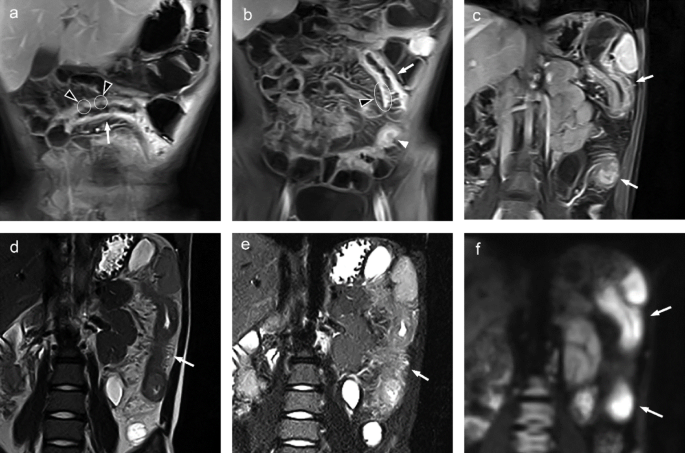
MRE is a key radiation-free imaging tool for children with Crohn’s disease; this review summarizes its clinical utility and how it fits with other pediatric-focused diagnostic approaches in Japan.
People with Crohn's disease who have an ileostomy need reliable, noninvasive tools to monitor for postoperative small-bowel inflammation. This study suggests fecal calprotectin measured from ileostomy output may help...