docwirenews.com
Cure8 news brief
Cure8 news brief
The trial suggests starting infliximab early can delay the need for further biologic escalation in children with moderate-to-severe Crohn’s disease, and that stopping anti‑TNF after induction often leads to relapse.
Pediatric patients with moderate-to-severe Crohn’s disease, parents and caregivers, pediatric gastroenterologists, and researchers studying pediatric IBD treatment strategies.
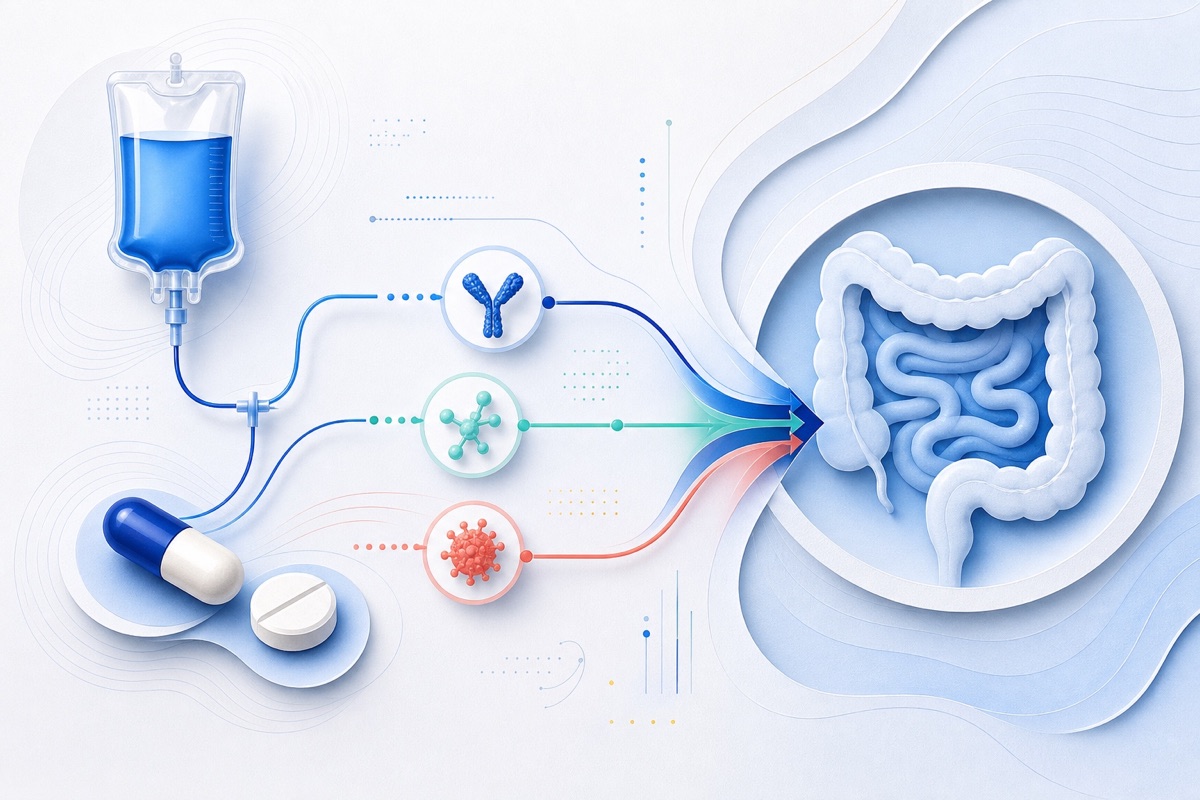
This is a randomized, multicenter pediatric trial (TISKids) comparing induction with five infliximab infusions then stopping versus conventional induction (exclusive enteral nutrition or prednisolone), with azathioprine maintenance in both arms.
After 5 years almost all patients in both groups required additional Crohn’s disease–related therapy, but those initially given infliximab had a longer median time before restarting biologic therapy.
The trial also found azathioprine monotherapy poorly maintained long-term remission and that stopping anti‑TNF after induction led to frequent need for reinitiation. Perianal complications were observed only in the conventionally treated group in this report.
Practical takeaway: the results support considering early and maintained biologic therapy (rather than short-course induction then stop) in children with moderate-to-severe Crohn’s disease, but most patients still needed further treatment over 5 years.
This is a randomized controlled trial (TISKids) with 5-year follow-up. The infliximab arm received five induction infusions and then stopped; many patients later required retreatment. Findings highlight long-term management challenges rather than a cure, and do not replace individualized clinical decisions.
Review the original publication for the complete reporting, methods, and context.
This Cure8 brief is based on source text from the linked article. Cure8 is informational only and is not a substitute for professional medical advice, diagnosis, or treatment.
Combination (dual) therapy is an active area of research because many people with Crohn’s disease don’t achieve lasting remission on a single advanced therapy. New trials suggest some combinations may improve remission...
The study suggests starting anti-TNF drugs early in children with Crohn's could strongly lower the chance of developing anal fistulas, a serious complication that often requires surgery. Preventing fistulas can reduce...
Researchers and clinicians are increasingly studying combinations of IBD drugs because single‑drug remission rates have plateaued; dual therapy may improve outcomes for patients who have failed prior treatments.