Researchers are exploring new anti-inflammatory molecules for ulcerative colitis. Mechanistic data showing inhibition of macrophage M1 polarization, MAPK signaling, and antioxidant activity may help prioritize VpG for further preclinical development.
Who Should Pay Attention
Researchers studying drug discovery, immune pathways, or novel biologically derived anti-inflammatories for IBD; translational clinicians interested in emerging preclinical therapies.
Study Snapshot
Story typeResearch paper
Evidence typeResearch paper
Source depthJournal abstract
What To Know
This paper reports laboratory studies of a sulfated α-glucan called VpG isolated from Volutharpa ampullacea perryi. The authors characterize VpG’s structure and show in cell models that it reduces pro-inflammatory signals (including iNOS and TLR4), lowers the M1 macrophage marker CD80, and inhibits MAPK pathway phosphorylation (p38, ERK1/2, JNK).
The molecule also demonstrated antioxidant radical-scavenging activity. The experiments are preclinical: assays were performed in LPS-stimulated RAW264.7 macrophage cells and the paper references prior mouse work showing benefit in DSS-colitis, but this study does not present new clinical or animal efficacy data.
The findings provide mechanistic insight that could inform early-stage therapeutic research rather than immediate patient care.
If you follow IBD research, this suggests a marine-derived polysaccharide with anti-inflammatory and antioxidant properties that may merit further preclinical development (e.g., dosing, safety, in vivo mechanism) before any consideration of trials.
Keep In Mind
This is an in vitro mechanistic study (cell culture) with prior mouse data cited but no new human or animal efficacy results here. As a preclinical basic-science report, it does not establish safety or effectiveness in patients.
Source Details
Review the original publication for the complete reporting, methods, and context.
Funding disclosed by the source: China National Center for Biotechnology Development, award 2024YFC2816005; award 2024YFC2816005; National Natural Science Foundation of China, award 32571485, 31971201 and 31800665; award 32571485, 31971201 and 31800665; Department of Science and Technology of Shandong Province, award No. 2025CXPT145; award No. 2025CXPT145; Shandong Academy of Sciences, award ZR2024MD015 and ZR2023MC017; award ZR2024MD015 and ZR2023MC017; Shandong University, award SKLMTFCP-2023-06 and SKLMTIJP-2025-03; award SKLMTFCP-2023-06 and SKLMTIJP-2025-03
This Cure8 brief is based on source text from the linked article. Cure8 is informational only and is not a substitute for professional medical advice, diagnosis, or treatment.
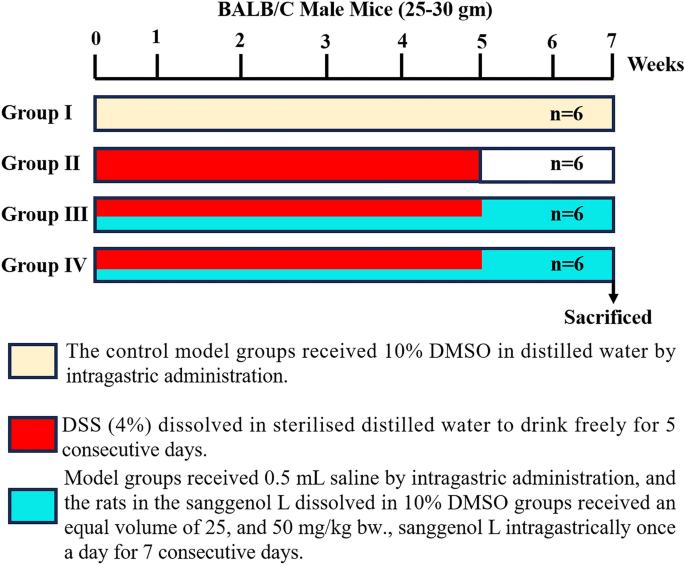
The study suggests a new mechanism—blocking HSP90-mediated necroptosis of intestinal epithelial cells—that may reduce inflammation and tissue damage in ulcerative colitis, which could guide early drug-discovery efforts.
Researchers exploring new anti-inflammatory or antioxidant compounds for ulcerative colitis may find sanggenol L’s effects on Nrf2/HO-1 and TLR4/p65 signalling of interest. Patients should note this is early-stage,...