Food science & nutrition
Cure8 research brief
Cure8 research brief
This preclinical work suggests the gut microbiota and tryptophan-derived metabolites that activate AhR may be important in reducing colitis-related inflammation — a potential route for future therapies relevant to ulcerative colitis and other IBD forms.
If microbiota-dependent herbal or metabolite-based approaches prove effective in humans, they could offer new, non-biologic treatment strategies or adjuncts to existing therapies.
Researchers studying IBD biology, microbiome therapeutics, and AhR signaling; clinicians interested in emerging preclinical mechanisms for UC; patients curious about microbiome-targeted experimental approaches (not clinical recommendations).
This study (abstract) reports that Baitouweng Tang (BTWT), a traditional herbal formula, reduced colitis severity in mouse models by altering the gut microbiota and increasing tryptophan-derived indole metabolites (for example indole-3-lactic acid).
Those metabolites appeared to activate the aryl hydrocarbon receptor (AhR) pathway; BTWT’s benefit was reduced after antibiotic depletion of the microbiota and partially restored by fecal microbiota transplant. In vitro, indole-3-lactic acid reduced inflammation in an HT-29 cell model and increased AhR and CYP1A1/CYP1B1 expression.
BTWT is an herbal preparation tested preclinically in mice and cell systems; the abstract links its effects to microbiota-dependent changes in tryptophan metabolism and AhR activation but does not establish clinical efficacy or safety in humans. The report supports further mechanistic work on the AhR pathway as a therapeutic target for colitis.
This is an abstract-level report of experiments in mice and cell lines (basic science). It does not provide evidence of safety or efficacy in humans. Findings are mechanistic and hypothesis-generating; further work including clinical studies would be required before any treatment implications for people with IBD can be drawn.
Review the original publication for the complete reporting, methods, and context.
Conflict statement: All authors stated that this study was not helped by any AI or AI‐related technologies.The authors declare no conflicts of interest.
This Cure8 brief is based on source text from the linked article. Cure8 is informational only and is not a substitute for professional medical advice, diagnosis, or treatment.
The study identifies a previously unrecognized protein (TNFAIP1) that appears to promote inflammation in ulcerative colitis and proposes a compound (Salidroside) that directly binds and inhibits it in lab and mouse...
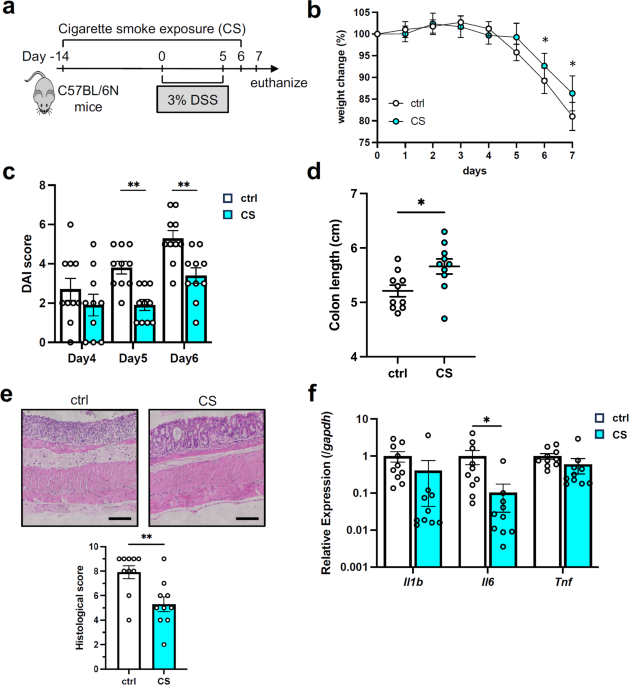
This preclinical study suggests cigarette smoke alters gut microbes and metabolites in ways that can either protect or worsen colitis depending on the model; it identifies 4-HBA as a metabolite that reduced inflammation...
ER stress in intestinal epithelial cells is proposed as a key molecular mechanism in UC development; targeting ER pathways (notably IRE1β) could eventually lead to new treatments that strengthen the gut barrier and...