This preclinical study suggests cigarette smoke alters gut microbes and metabolites in ways that can either protect or worsen colitis depending on the model; it identifies 4-HBA as a metabolite that reduced inflammation in a DSS colitis model, which may point to new therapeutic research directions for ulcerative-colitis-like inflammation.
Who Should Pay Attention
Researchers, translational scientists, clinicians interested in IBD mechanisms, patients and caregivers interested in how smoking and gut metabolites may affect IBD (contextual interest).
Study Snapshot
Story typeResearch paper
Evidence typeResearch paper
Source depthJournal abstract
What To Know
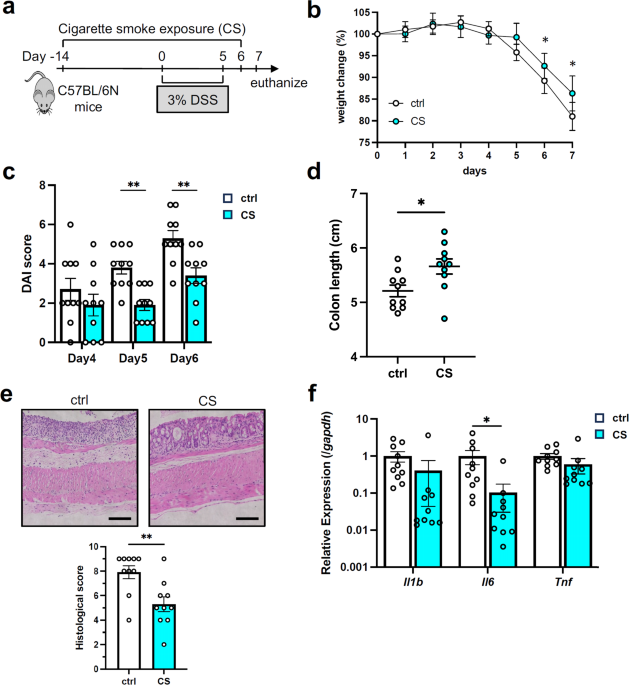
This study (abstract) reports mouse experiments linking cigarette smoke exposure to changes in the gut microbiota, intestinal metabolites, and immune responses that had divergent effects in two chemical colitis models.
In the DSS (dextran sodium sulfate) model—used to mimic aspects of ulcerative colitis—smoke exposure increased regulatory T cells and short-chain fatty acids and raised levels of the metabolite 4-hydroxybenzoic acid (4-HBA).
Giving 4-HBA to mice reduced inflammation in the DSS model and promoted regulatory T cells, while it did not protect in the TNBS model (a different colitis model that more closely models Th1/Th17-driven inflammation).
The report emphasizes mechanisms (microbiota shifts, metabolites, immune cell changes) and identifies 4-HBA as a potential mechanistic mediator and preclinical therapeutic target. The article is an abstract-level presentation of animal-model research, not a clinical trial or human study.
Keep In Mind
Animal-model results (DSS and TNBS in mice) do not equal human clinical evidence. The paper is mechanistic/basic-science and abstract-level; clinical relevance requires further validation in human studies.
Source Details
Review the original publication for the complete reporting, methods, and context.
Funding disclosed by the source: Smoking Research Foundation; Japan Agency for Medical Research and Development, award JP22zf0127007; Japan Society for the Promotion of Science, award 22H00452
This Cure8 brief is based on source text from the linked article. Cure8 is informational only and is not a substitute for professional medical advice, diagnosis, or treatment.
TRPV channels are proposed as integrative mediators of inflammation, angiogenesis, and oxidative stress in IBD, suggesting new mechanistic targets that could eventually yield novel therapies for Crohn's disease and...
This review spotlights non-bacterial members of the gut microbiota (viruses and fungi) that may contribute to IBD by altering barrier function, immune responses, and interactions with bacteria. For people with IBD, these...
Fibrosis and stricturing are key problems in Crohn’s disease with limited therapies; this study identifies a microbiota–bile acid–GPBAR1 pathway by which a specific probiotic mix reduced inflammation and fibrosis in...