The work helps bridge genetic association signals and the specific immune cells in the intestine where they may act, offering new candidate genes and a method that can probe rare cell types important to IBD biology.
Who Should Pay Attention
Researchers studying IBD genetics or immune-cell biology, clinicians interested in disease mechanisms, and patients curious about emerging genetic and cellular findings in Crohn’s disease.
Study Snapshot
Story typeResearch news
Evidence typeEarly laboratory research
Source depthFull source text
What To Know
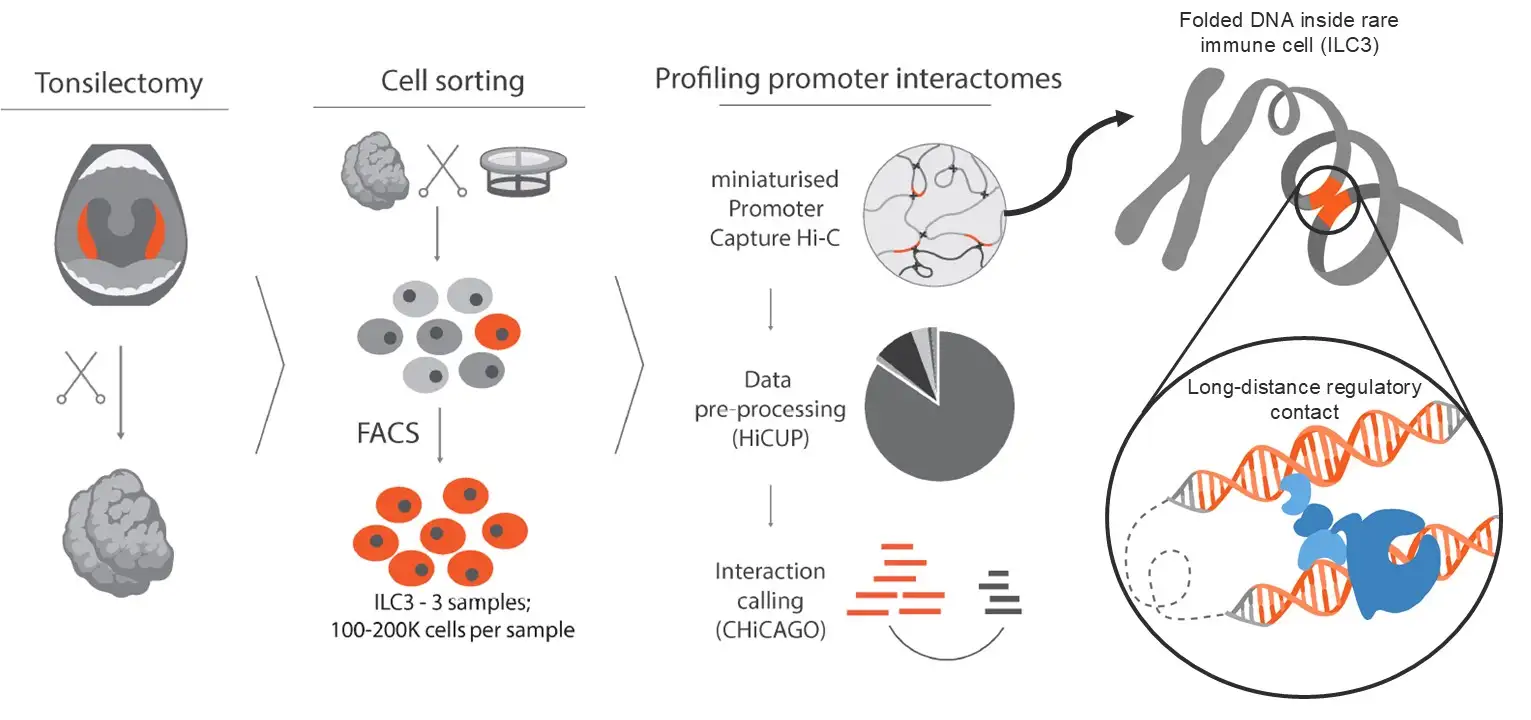
The researchers used a miniaturized Capture Hi-C method to profile promoter interactions in scarce ILC3s, connecting disease-associated regulatory regions to target genes.
They identified over 100 candidate genes influenced by Crohn’s disease–associated variants; about half were previously known and the rest are new links that could become targets for future research.
One notable unexpected candidate was CLN3, a gene previously tied to a neurological disorder; follow-up experiments in the paper suggest it can influence ILC3 inflammatory signaling, illustrating how genes classically associated with one organ system may also regulate immune cells in the gut.
The study provides a cell-type–specific, mechanistic map (promoter contacts) that helps interpret GWAS signals and prioritize genes for functional follow-up, but it does not establish that any single gene causes disease.
Keep In Mind
This is a basic-science study using a specialized genomic technique (miniaturized Capture Hi-C) to map DNA contacts in rare cells. Findings identify candidate genes and mechanisms but do not constitute clinical evidence or immediate treatment implications.
Source Details
Review the original publication for the complete reporting, methods, and context.
Early laboratory researchArticle type assigned from Cure8 classification; confirm details in the original source.
Publicationbioengineer.org
AuthorsBioengineer
Indexed viaGoogle News
Source typeWeb article
PublishedAug 4, 2026, 11:18 AM
Content availableFull source text
This Cure8 brief is based on source text from the linked article. Cure8 is informational only and is not a substitute for professional medical advice, diagnosis, or treatment.
The study helps explain how noncoding genetic variants may influence Crohn’s disease by altering 3D genome interactions in rare gut-associated immune cells (ILC3s), pointing to new genes and pathways that could be...
ILC3s are rare but important for gut immunity; linking Crohn’s disease genetic risk to the genes they regulate helps move from statistical association toward biological mechanisms that could explain disease pathways.