sciencedaily.com
Cure8 news brief
A hidden compound in healthy foods may worsen IBD
Diet and lifestyle
Microbiome
Clinical study
Adult patients
Clinicians
Researchers
Newly Diagnosed
Inflammatory bowel disease
Cure8 news brief
The study suggests a common plant compound (oxalate) may build up in the intestines of people with IBD because transporter proteins are reduced, potentially worsening inflammation. If confirmed, this could influence personalized dietary advice or microbiome-targeted therapies for some patients.
Adults with Crohn’s disease or ulcerative colitis; gastroenterologists and dietitians who manage IBD; researchers studying diet–microbiome–immune interactions.
This University of North Carolina–led study measured oxalate levels, gene activity of oxalate transporters (SLC26A2, SLC26A3, and explored SLC26A6), and diet in people with and without IBD, and performed complementary mouse and cell experiments.
Crohn’s patients had higher stool oxalate despite similar plant-food intake, transporter expression was lower in IBD tissue, and dietary oxalate worsened colitis in several mouse models. The authors note the SLC26A6 finding linking low expression to stricturing Crohn’s is exploratory and needs confirmation in larger cohorts.
Findings combine human measurements with mouse and cell experiments; the association of low SLC26A6 with stricturing Crohn’s is exploratory and requires confirmation in larger studies. The authors do not recommend removing plant foods broadly based on this single study.
Review the original publication for the complete reporting, methods, and context.
This Cure8 brief is based on source text from the linked article. Cure8 is informational only and is not a substitute for professional medical advice, diagnosis, or treatment.
Vitamin D appears linked to immune regulation, gut barrier health, and the microbiome—processes relevant to IBD and other intestinal disorders. Understanding this could affect how clinicians monitor and study vitamin D...
The study links a common plant compound (oxalate) to higher stool levels and worse inflammation in IBD, suggesting diet and gut handling of oxalate could affect disease activity and that microbiome-targeted strategies...
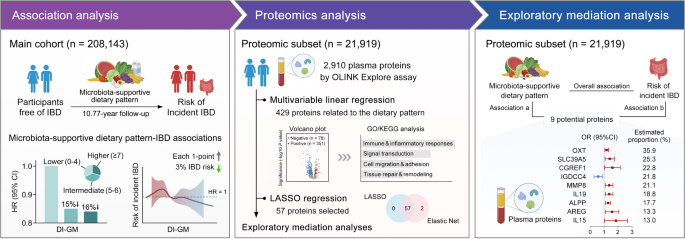
Diet is a modifiable factor that could influence IBD risk through effects on the gut microbiome and immune pathways.