Diet is a modifiable factor that could influence IBD risk through effects on the gut microbiome and immune pathways.
This large prospective study links a microbiota-supportive dietary pattern to a modestly lower IBD risk, especially for ulcerative colitis, and identifies candidate circulating protein signatures that might help explain the association.
Who Should Pay Attention
Adults interested in diet and IBD prevention, patients with ulcerative colitis or at risk for IBD, clinicians advising on lifestyle interventions, and researchers studying diet–microbiome–immune interactions or biomarkers.
Study Snapshot
Story typeResearch paper
Evidence typeResearch paper
Source depthJournal abstract
What To Know
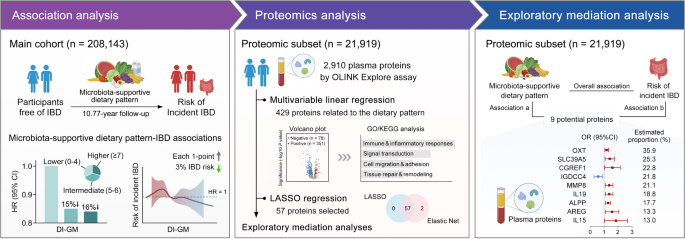
This study analyzed diet questionnaires across a large cohort (n = 208,143) and integrated high-throughput plasma proteomics in a subset (n = 21,919) to identify proteins associated with the microbiota-supportive dietary pattern.
The authors report 429 diet-associated plasma proteins enriched for immune-inflammatory and tissue-repair pathways, and an exploratory mediation analysis nominated nine proteins with nominal signals but none that survived multiple-testing correction. The findings are observational and describe associations, not proof that the diet prevents IBD.
The proteomic results are exploratory and the authors state they need validation in studies that include time-ordered diet, proteomics, and direct microbiome measurements. If you’re considering dietary changes, discuss them with your clinical team; this paper does not provide treatment recommendations.
Keep In Mind
This report is an observational cohort analysis with an abstract-level summary provided by the journal. Associations do not establish causation; proteomic mediation findings were exploratory and did not meet FDR significance. The authors recommend validation with temporally ordered dietary, proteomic, and direct microbiome data.
Source Details
Review the original publication for the complete reporting, methods, and context.
This Cure8 brief is based on source text from the linked article. Cure8 is informational only and is not a substitute for professional medical advice, diagnosis, or treatment.
Vitamin D deficiency is common in people with IBD and this study suggests correcting deficiency may help rebalance immune cells and the microbiome—potentially supporting inflammation control alongside standard...
The study links a common plant compound (oxalate) to higher stool levels and worse inflammation in IBD, suggesting diet and gut handling of oxalate could affect disease activity and that microbiome-targeted strategies...
Vitamin D deficiency is common in people with IBD and may relate to disease activity, complications, and quality of life; understanding this link could influence monitoring and adjunctive care.