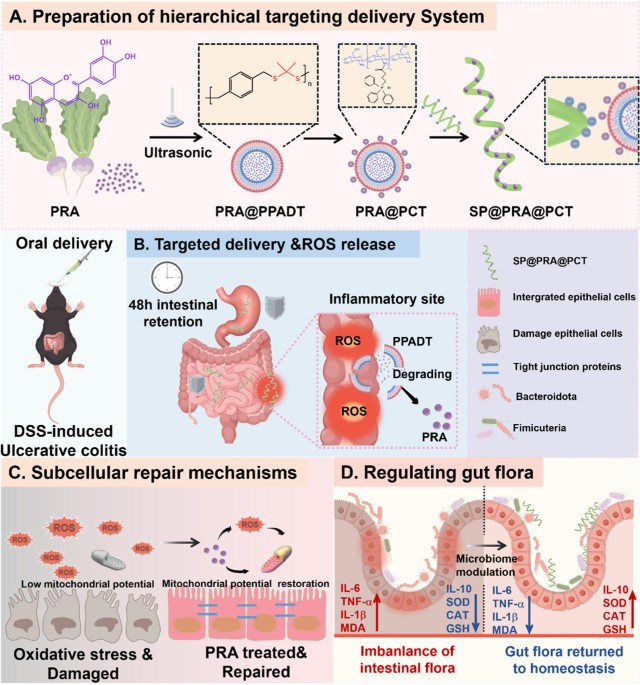
The study targets macrophage mitochondrial dysfunction, a mechanism linked to inflammation in ulcerative colitis, and demonstrates a nanodelivery approach that reduced colitis in mice—an approach that could inspire new metabolic or immune‑reprogramming therapies for IBD.
Who Should Pay Attention
Researchers studying IBD immunology, mitochondrial biology, drug‑delivery and nanomedicine; clinicians following experimental IBD therapies; translational scientists and pharma exploring novel preclinical treatments.
Study Snapshot
Story typeResearch paper
Evidence typeResearch paper
Source depthJournal abstract
What To Know
The authors loaded the plant compound kaempferol into silk fibroin nanoparticles, attached an SS‑31 mitochondrial‑targeting peptide, and added a pH‑sensitive coating for colon delivery.
In cell experiments the particles improved mitochondrial membrane potential, ATP production, reduced ROS, promoted mitophagy, and shifted macrophages from pro‑inflammatory (M1) toward anti‑inflammatory (M2) profiles via the SIRT3/FOXO3a pathway.
In a DSS mouse colitis model, orally delivered nanoparticles accumulated in inflamed colon tissue, lowered disease severity and pro‑inflammatory cytokines, increased IL‑10, restored tight junction proteins, and raised M2 macrophage numbers. The report frames this as a translational nanotherapeutic strategy but findings are preclinical.
Keep In Mind
This classification and brief are based on the article abstract (structured content depth: abstract). The work is preclinical (cell and mouse model) and does not provide human data.
Source Details
Review the original publication for the complete reporting, methods, and context.
This Cure8 brief is based on source text from the linked article. Cure8 is informational only and is not a substitute for professional medical advice, diagnosis, or treatment.
The paper reports a material that preserved barrier proteins and reduced inflammatory signaling in cell and mouse models of ulcerative colitis; this could point to a low-cost adjunct approach for protecting the colonic...
The study proposes a targeted oral delivery method that could help concentrate anti-inflammatory natural compounds at inflamed colon sites, potentially improving treatment effectiveness for ulcerative colitis while...
This study suggests plant-derived exosome-like nanoparticles from a traditional herbal decoction may reduce inflammation, oxidative stress, and alter gut microbiota in a mouse model of colitis — an early preclinical step...