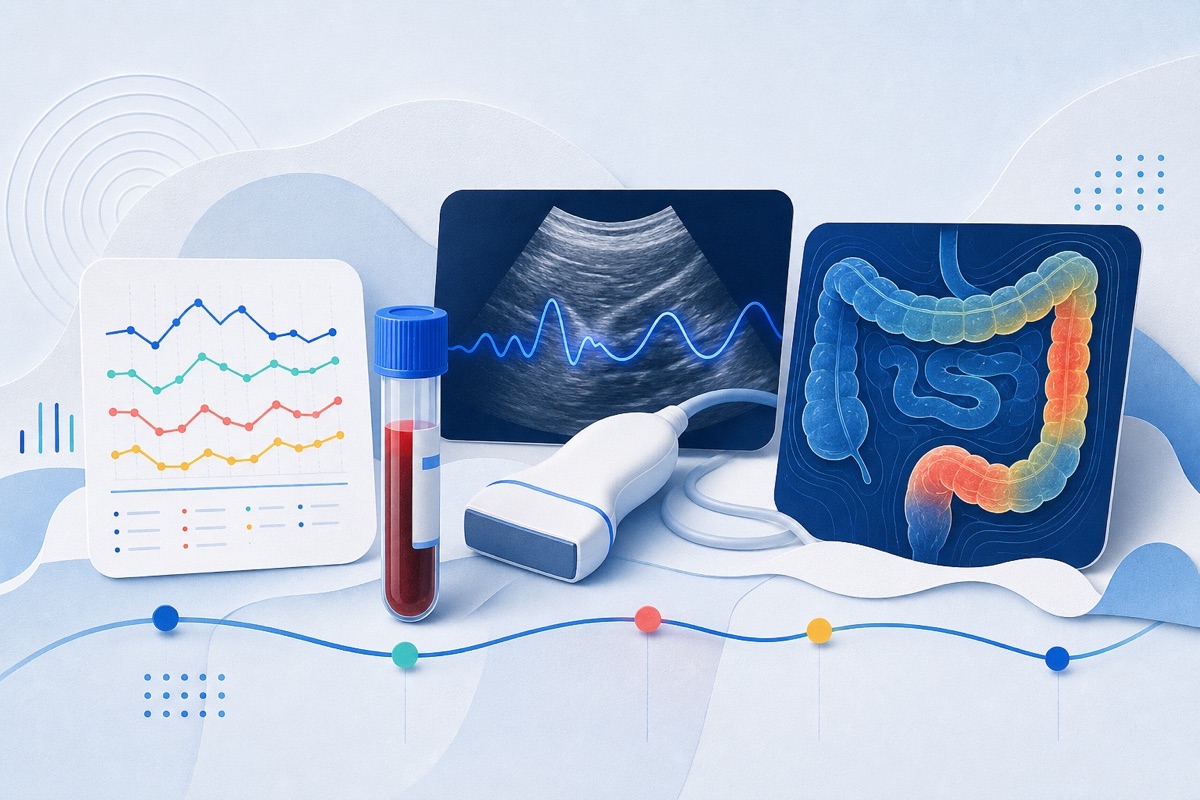
Serum LRG1 is a candidate blood biomarker for mucosal inflammation in UC, but anti-TNF drugs may suppress its levels and cause false-negative results. This affects noninvasive monitoring and decisions based on LRG1 values.
Who Should Pay Attention
Clinicians monitoring UC patients with blood biomarkers, patients receiving anti-TNF biologics, researchers studying inflammatory biomarkers, and developers of IBD monitoring tools.
Study Snapshot
Story typeResearch paper
Evidence typeResearch paper
Source depthJournal abstract
What To Know
This retrospective diagnostic accuracy study compared paired colonoscopy and serum LRG1 measurements from patients on advanced therapies. Overall LRG1 had good discrimination for endoscopic activity, but accuracy was much lower in patients receiving anti-TNF therapy (AUC 0.44) versus non-anti-TNF therapies (AUC 0.91).
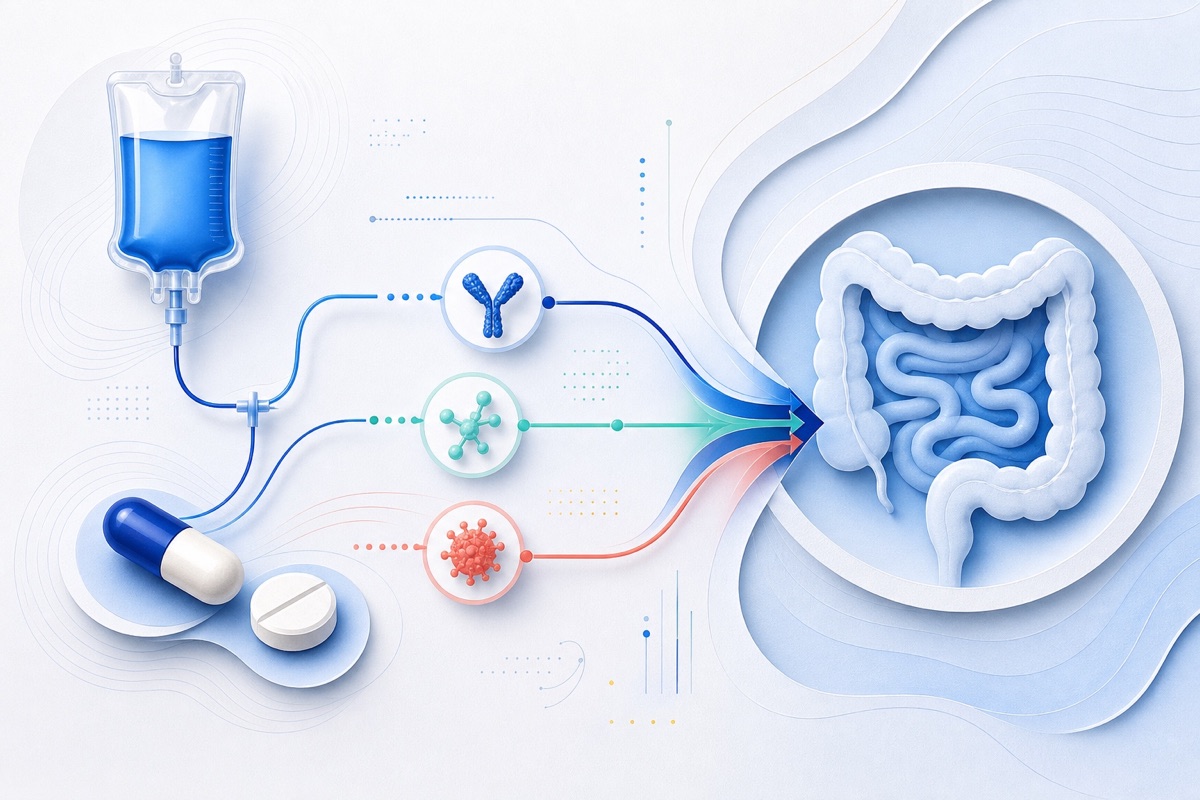
Anti-TNF use was strongly associated with false-negative LRG1 despite active endoscopic disease. By contrast, JAK inhibitor exposure was associated with preserved LRG1 performance.
Clinical takeaway: when interpreting serum LRG1 for mucosal inflammation, clinicians should consider current biologic therapy—particularly anti-TNF treatment—because it may suppress LRG1 and mask endoscopic activity.
Keep In Mind
This report is a retrospective, single-center diagnostic accuracy study using paired colonoscopy and serum LRG1 measurements (April 2021–March 2025). The content provided is grounded in the article abstract (structured content depth: abstract).
The findings describe associations and diagnostic performance; they do not establish causation beyond the study design and should be confirmed in larger, prospective cohorts.
Source Details
Review the original publication for the complete reporting, methods, and context.
This Cure8 brief is based on source text from the linked article. Cure8 is informational only and is not a substitute for professional medical advice, diagnosis, or treatment.
Early changes in stool tests (qFIT and fecal calprotectin) might help predict which biologic‑naive ulcerative colitis patients will relapse or need escalation to biologic/JAK therapy. If validated, such markers could...
Real-world 52-week data suggest mirikizumab can produce meaningful remission and reasonable drug persistence in patients with treatment-experienced ulcerative colitis. This is especially relevant for people who have not...
Patients with UC who fail both anti-TNF and JAK inhibitor therapies have limited options. This report suggests tacrolimus can be used as a short-term bridge or in combination to reach another maintenance drug, with many...