Tests and monitoring tools

Biomarker

Biomarker articles covering signals used to study, predict, monitor, or measure Crohn's disease and IBD activity or treatment response. Monitoring context emphasizes diagnosis, follow-up, disease activity, treatment response, and care decisions.

Page 1 of 2 · 96 articles

Longitudinal visceral adipose heterogeneity supports digital health stratification of infliximab response loss in Crohn disease
Springer Science and Business Media LLC

Longitudinal visceral adipose heterogeneity supports digital health stratification of infliximab response loss in Crohn disease

If validated, an imaging-derived adipose heterogeneity biomarker could help predict who will lose response to infliximab after induction, potentially guiding earlier treatment decisions and personalized monitoring for...

Read Summary
Microbiota-Immune Interaction Landscape of Treg/Th17 Dynamic Balance in Regulating Mucosal Immune Homeostasis: From Molecular Switches to Precision Intervention in Inflammatory Bowel Disease
Discovery Medicine

Microbiota-Immune Interaction Landscape of Treg/Th17 Dynamic Balance in Regulating Mucosal Immune Homeostasis: From Molecular Switches to Precision Intervention in Inflammatory Bowel Disease

Treg/Th17 balance is a central immune mechanism implicated in IBD pathogenesis; understanding how microbes, metabolites, and tissue context control that balance could inform new biomarkers and targeted therapies.

Read Summary
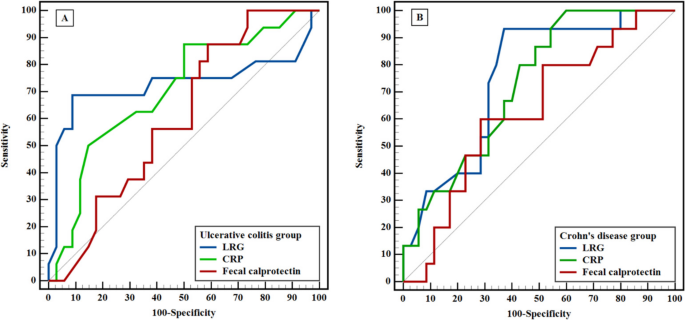
Serum leucine-rich α-2-glycoprotein and monocyte chemoattractant protein-1 as novel biomarkers for predicting vedolizumab response in patients with ulcerative colitis.
Crohn's & colitis 360

Serum leucine-rich α-2-glycoprotein and monocyte chemoattractant protein-1 as novel biomarkers for predicting vedolizumab response in patients with ulcerative colitis.

Blood biomarkers that predict vedolizumab response could help patients and clinicians choose the most effective therapy sooner and avoid ineffective treatments. The study suggests LRG and MCP‑1 may differentiate...

Read Summary
Anti‐Integrin αvβ6 Autoantibodies Distinguish Ulcerative Colitis From Crohn's Disease With High Diagnostic Accuracy and Outperform ANCA and ASCA Status: A Prospective Cross‐Sectional Study
Alimentary Pharmacology & Therapeutics

Anti‐Integrin αvβ6 Autoantibodies Distinguish Ulcerative Colitis From Crohn's Disease With High Diagnostic Accuracy and Outperform ANCA and ASCA Status: A Prospective Cross‐Sectional Study

A blood biomarker that reliably distinguishes UC from CD could help when endoscopy or histology are inconclusive and improve diagnostic confidence. This paper reports a candidate autoantibody (anti‑integrin αvβ6) with...

Read Summary
Endoscopic Activity Prediction in Ulcerative Colitis Using Hemogram-Derived Inflammatory Indices: Impact of Azathioprine Use on Diagnostic Performance
Journal of Clinical Medicine

Endoscopic Activity Prediction in Ulcerative Colitis Using Hemogram-Derived Inflammatory Indices: Impact of Azathioprine Use on Diagnostic Performance

Noninvasive blood indices are appealing because they’re easier than colonoscopy. This study tests whether two such indices (SII and HALP) reliably reflect endoscopic activity in ulcerative colitis and whether...

Read Summary
Analysis of multiplexed SERS-based lateral flow assays: turning qualitative into quantitative for inflammatory bowel disease monitoring.
The Analyst

Analysis of multiplexed SERS-based lateral flow assays: turning qualitative into quantitative for inflammatory bowel disease monitoring.

Quantitative, rapid stool tests could make it easier to track intestinal inflammation without central lab delays. If translated to clinical use, SERS-enhanced lateral-flow assays might allow more frequent, point-of-care...

Read Summary
Anti-Integrin αvβ6 Autoantibodies Distinguish Ulcerative Colitis From Crohn's Disease With High Diagnostic Accuracy and Outperform ANCA and ASCA Status: A Prospective Cross-Sectional Study.
Alimentary pharmacology & therapeutics

Anti-Integrin αvβ6 Autoantibodies Distinguish Ulcerative Colitis From Crohn's Disease With High Diagnostic Accuracy and Outperform ANCA and ASCA Status: A Prospective Cross-Sectional Study.

A blood test that more reliably distinguishes UC from CD could reduce diagnostic uncertainty and help guide appropriate long‑term management for people with colonic inflammatory bowel disease.

Read Summary
Inflammation-driven carcinogenesis in ulcerative colitis: Molecular and immunological pathways
World Journal of Gastrointestinal Oncology

Inflammation-driven carcinogenesis in ulcerative colitis: Molecular and immunological pathways

People with ulcerative colitis face a higher colorectal cancer risk driven in part by chronic inflammation; this review explains the molecular and immune mechanisms behind that risk and highlights biomarkers and...

Read Summary
C-Reactive Protein-to-Albumin Ratio in Pediatric Inflammatory Bowel Disease: Associations with Disease Activity and Comparison with C-Reactive Protein Alone
Diagnostics

C-Reactive Protein-to-Albumin Ratio in Pediatric Inflammatory Bowel Disease: Associations with Disease Activity and Comparison with C-Reactive Protein Alone

This paper evaluates CAR, a simple blood‑based biomarker, in children with IBD and finds it reflects disease severity and changes over time in pediatric Crohn’s disease. That matters because reliable, easy-to-measure...

Read Summary
Plasma Proteomic Profiling Identifies Biomarkers and Therapeutic Targets for Predicting Osteoporosis Risk in Patients with Inflammatory Bowel Disease.
The Turkish journal of gastroenterology : the official journal of Turkish Society of Gastroenterology

Plasma Proteomic Profiling Identifies Biomarkers and Therapeutic Targets for Predicting Osteoporosis Risk in Patients with Inflammatory Bowel Disease.

IBD increases risk of osteoporosis; identifying blood proteins that predict later bone loss could help flag higher-risk patients and reveal biological links between gut inflammation and bone health.

Read Summary
Multiple paths to health: A scoping review of dietary interventions for adults with Crohn's disease and ulcerative colitis.
Therapeutic advances in gastroenterology

Multiple paths to health: A scoping review of dietary interventions for adults with Crohn's disease and ulcerative colitis.

Many people with IBD try dietary changes to manage symptoms. This review summarizes what published adult studies report and points toward whole-food and Mediterranean-style patterns as commonly supported approaches.

Read Summary
Evaluation of pharmacokinetic metrics and pharmacodynamic biomarkers associated with endoscopic healing in pediatric Crohn's disease patients treated with anti-tumor necrosis factor biologics.
Crohn's & colitis 360

Evaluation of pharmacokinetic metrics and pharmacodynamic biomarkers associated with endoscopic healing in pediatric Crohn's disease patients treated with anti-tumor necrosis factor biologics.

Identifies candidate drug‑level and immune biomarker cut‑points linked with endoscopic healing in pediatric Crohn's disease, which could help guide dosing or treatment changes if validated.

Read Summary
Rapid fecal lipidome profiling in inflammatory bowel disease: A novel approach for exploratory disease molecular characterization and therapeutic monitoring.
Journal of pharmaceutical and biomedical analysis

Rapid fecal lipidome profiling in inflammatory bowel disease: A novel approach for exploratory disease molecular characterization and therapeutic monitoring.

Non-invasive fecal lipid markers could help differentiate UC from CD and improve diagnostic molecular profiling in IBD if validated, which may be useful for patients and clinicians seeking less-invasive diagnostic tools.

Read Summary
Inflammatory and Immune Cytoprofiles of Active Ulcerative Colitis from Crohn’s Disease—Insights from Multivariable Modeling
International Journal of Molecular Sciences

Inflammatory and Immune Cytoprofiles of Active Ulcerative Colitis from Crohn’s Disease—Insights from Multivariable Modeling

Distinct circulating immune signatures could help differentiate active UC from CD and suggest disease-specific pathways that might guide future biomarkers or therapies.

Read Summary
Circulating microRNAs as biomarkers of disease activity and treatment response in Crohn’s disease patients receiving infliximab or vedolizumab: a longitudinal cohort study
Frontiers in Medicine

Circulating microRNAs as biomarkers of disease activity and treatment response in Crohn’s disease patients receiving infliximab or vedolizumab: a longitudinal cohort study

If validated, blood microRNAs could become noninvasive biomarkers to help track inflammation and predict biochemical response to infliximab or vedolizumab in Crohn’s disease, complementing CRP and fecal calprotectin.

Read Summary
Azoreductase-Responsive NIR Fluorescent Self-Assembled Probe for Hypoxia Imaging of Tumors, Hindlimb Ischemia, and Ulcerative Colitis
Analytical Chemistry

Azoreductase-Responsive NIR Fluorescent Self-Assembled Probe for Hypoxia Imaging of Tumors, Hindlimb Ischemia, and Ulcerative Colitis

The probe targets azoreductase-driven hypoxia, a mechanism linked to ulcerative colitis and other hypoxia-associated diseases; a reliable real-time imaging method could help research and eventually guide treatments.

Read Summary
Integrated Transcriptomic and Machine-Learning Analyses Identify Shared Na+ Overload-Related Gene Signatures in Inflammatory Bowel Disease and Ankylosing Spondylitis
Genes

Integrated Transcriptomic and Machine-Learning Analyses Identify Shared Na+ Overload-Related Gene Signatures in Inflammatory Bowel Disease and Ankylosing Spondylitis

The study links shared gene-expression patterns between IBD and ankylosing spondylitis and highlights STAT3 as a potential shared biomarker or therapeutic target, which could be relevant for understanding overlapping...

Read Summary
The causal role of plasma protein ratios in ulcerative colitis: insights from mendelian randomization and single-cell sequencing.
Open medicine (Warsaw, Poland)

The causal role of plasma protein ratios in ulcerative colitis: insights from mendelian randomization and single-cell sequencing.

Researchers used genetics plus single-cell sequencing and ELISA to prioritize plasma protein ratios that may causally relate to ulcerative colitis. If validated in larger studies, such biomarkers could help with...

Read Summary
Drug-Drug Interaction Risk Assessment Strategies for Biologics in Inflammatory Bowel Disease: A Literature-Based Evidence Mini-Review.
Clinical and translational science

Drug-Drug Interaction Risk Assessment Strategies for Biologics in Inflammatory Bowel Disease: A Literature-Based Evidence Mini-Review.

If you have IBD and take biologic therapy plus other medicines, inflammation and anti-cytokine treatment may change how your other drugs are metabolized. This review discusses ways researchers are trying to predict and...

Read Summary
Clinical study on the screening of biomarkers for Crohn's disease based on blood metabolomics.
Frontiers in gastroenterology (Lausanne, Switzerland)

Clinical study on the screening of biomarkers for Crohn's disease based on blood metabolomics.

The study suggests blood metabolite patterns differ by biologic therapy and identifies candidate biomarkers that might help develop less-invasive monitoring tools for inflammation and treatment effects in Crohn’s...

Read Summary
C2 Integrative Analysis of Intestinal Transcriptomes UnderscoresUpregulation in IBD, AIG, EoE, and CRC.
Bioinformatics and biology insights

C2 Integrative Analysis of Intestinal Transcriptomes UnderscoresUpregulation in IBD, AIG, EoE, and CRC.

Researchers and clinicians looking for blood- or tissue-based molecular tests for IBD may find these integrated transcriptomic analyses useful because they identify candidate diagnostic biomarkers and highlight shared...

Read Summary
Integrated DIA proteomics of tissue and exudate reveals screening markers for early detection of ulcerative colitis and colorectal cancer.
Clinica chimica acta; international journal of clinical chemistry

Integrated DIA proteomics of tissue and exudate reveals screening markers for early detection of ulcerative colitis and colorectal cancer.

Early, noninvasive biomarkers could help detect ulcerative colitis and related colorectal cancer risk sooner. This study identifies four serum-accessible proteins with promising diagnostic accuracy in the reported...

Read Summary
A Study of the Efficacy and Safety of Guselkumab in Participants With Moderately to Severely Active Crohn's Disease
ClinicalTrials.gov

A Study of the Efficacy and Safety of Guselkumab in Participants With Moderately to Severely Active Crohn's Disease

This registered Phase 2/3 program is evaluating guselkumab (an IL‑23 inhibitor) for moderate–severe Crohn's disease and could expand treatment options if trials show benefit and safety. The studies include clinical and...

Read Summary
Identification of IL1RN, MUC1, and SERPINA1 as key NET-related biomarkers in ulcerative colitis-associated intestinal fibrosis via bioinformatics and experimental validation
BMC Gastroenterology

Identification of IL1RN, MUC1, and SERPINA1 as key NET-related biomarkers in ulcerative colitis-associated intestinal fibrosis via bioinformatics and experimental validation

Intestinal fibrosis is a serious complication of long-standing ulcerative colitis. Identifying NET-related biomarkers (IL1RN, MUC1, SERPINA1) could help researchers develop better diagnostic tools or treatments targeting...

Read Summary
“The role of red cell distribution width in inflammatory bowel disease evaluation: a comprehensive systematic review and meta-analysis”
BMC Gastroenterology

“The role of red cell distribution width in inflammatory bowel disease evaluation: a comprehensive systematic review and meta-analysis”

RDW is part of a routine complete blood count and, if reliably associated with IBD activity, could offer a low-cost, widely available adjunctive biomarker for detecting disease and monitoring activity.

Read Summary
"The role of red cell distribution width in inflammatory bowel disease evaluation: a comprehensive systematic review and meta-analysis".
BMC gastroenterology

"The role of red cell distribution width in inflammatory bowel disease evaluation: a comprehensive systematic review and meta-analysis".

The review suggests RDW, an inexpensive and widely available blood test parameter, is higher in IBD and correlates with disease activity—meaning it might help clinicians monitor disease alongside other tests.

Read Summary
Pharmacometric Targets During Anti-TNF Induction and Their Association with Deep Remission in Pediatric Crohn’s Disease
Clinical Pharmacokinetics

Pharmacometric Targets During Anti-TNF Induction and Their Association with Deep Remission in Pediatric Crohn’s Disease

The study identifies specific induction exposure targets and biomarkers tied to higher chances of deep remission at 12 months in children on anti-TNF therapy, which could inform earlier dose optimization to improve...

Read Summary
Infliximab-linked gut microbiome signatures as candidate treatment response biomarkers in pediatric inflammatory bowel disease: a systematic review.
Frontiers in pharmacology

Infliximab-linked gut microbiome signatures as candidate treatment response biomarkers in pediatric inflammatory bowel disease: a systematic review.

This matters because identifying microbiome patterns linked to infliximab response could help predict which children with IBD are more likely to benefit from the drug and guide personalized treatment decisions in the...

Read Summary
Data-driven subphenotyping uncovers ulcerative colitis subtype with high risk for relapse in Japan: a prospective multicenter cohort study
The Lancet Regional Health - Western Pacific

Data-driven subphenotyping uncovers ulcerative colitis subtype with high risk for relapse in Japan: a prospective multicenter cohort study

The study suggests quality-of-life and patient-reported measures can reveal a subgroup of UC patients in clinical remission who nevertheless have higher relapse risk, which could help personalize monitoring and care.

Read Summary
Lymphocyte-C-Reactive Protein Ratio as Promising New Marker for Predicting Surgical Site Infection in Children With Ulcerative Colitis.
Annals of gastroenterological surgery

Lymphocyte-C-Reactive Protein Ratio as Promising New Marker for Predicting Surgical Site Infection in Children With Ulcerative Colitis.

A simple blood ratio measured before surgery (LCR) may help predict which children with UC are at higher risk of surgical site infection after IPAA, potentially guiding preoperative care.

Read Summary
Evaluating objective nutritional biomarkers for the prediction of sarcopenia in Crohn's disease: development and internal validation of a clinical nomogram.
Frontiers in nutrition

Evaluating objective nutritional biomarkers for the prediction of sarcopenia in Crohn's disease: development and internal validation of a clinical nomogram.

Sarcopenia is common in Crohn's disease and is linked to worse outcomes; a simple GNRI-based prediction tool could help identify at-risk patients without routine CT scanning.

Read Summary
C-reactive protein/albumin ratio as a potential inflammatory marker for predicting clinical outcomes in patients with moderate to severe ulcerative colitis: A retrospective study
Medicine

C-reactive protein/albumin ratio as a potential inflammatory marker for predicting clinical outcomes in patients with moderate to severe ulcerative colitis: A retrospective study

Blood-based inflammatory ratios like CRP/albumin were associated with higher odds of needing anti‑TNF therapy, colectomy, and longer hospital stays in moderate–severe UC, suggesting potential utility as complementary...

Read Summary